Author name: Gary Furr

Employees want to be held accountable Part Two

[vc_row][vc_column][vc_column_text css=””]30365777_s

“Accountability breeds response-ability.”-Stephen Covey

Employees want to be held accountable!

 We should meet with our key employees or managers at least once a month for a one-to-one, good-old-fashioned accountability session. Remind them of our expectations. Help them to grow and improve. Again, when we create clarity of expectations and standards, there is less confusion and more effective delegation and accountability.

As a reminder, we should be very careful about letting our employees become our social friends. We need to remain objective to make decisions in the best interest of the company. Trying to please or be liked by everyone is a sure bet for disaster.

 Give people the responsibility, freedom, resources, and support required to get important things done.

Let them know they will be held accountable for certain results. Continually remind them of our expectations. Monitor their progress and intervene only when necessary. Give them feedback. Praise an employee’s progress on goals in public and criticize their poor performance in private. However, in public, we can feel free to express our disappointment and frustration to our entire team. Just save the harsh criticism for an individual for behind closed doors. Praise in public; criticize in private.

 Here are some basic ground rules for effective accountability:

  • Never let committees, groups or multiple persons be accountable for making things happen.
  • Make sure one person/one champion is responsible and accountable for each key assignment.
  • Establish goals and clarify due dates for results.
  • Conduct regularly scheduled follow-up meetings to gauge progress on goals and hold people accountable.
  • If they consistently fail to get important things done, give them different jobs or replace them with new people.

Do not allow poor implementation to infect your business. We have only two choices; we can establish a culture that tolerates excuses or one that insists on strong performance. Do we want more excuses or execution of goals?   For improved results, we must start leading and holding our people accountable.

 People want to be held accountable and challenged.

They also want constant feedback on their performance. They want to learn and to grow. They even desire a healthy environment of discipline. This helps them develop and reach their potential. Accountability is beneficial feedback that shows we care. Make certain our employees feel appreciated and important – they crave it!

Keep reminding yourself and your management team that the greatest assets of your business are your people![/vc_column_text][/vc_column][/vc_row]

--- END POST ---

Employees want to be held accountable Part One

[vc_row][vc_column][vc_column_text css=””]Goals-Success-The-Growth-Coach-Portland“The ancient Romans had a tradition: whenever one of their engineers constructed an arch, as the capstone was hoisted into place, the engineer assumed accountability for his work in the most profound way possible: he stood under the arch.”-Michael Armstrong

Employees want to be held accountable!

Keeping employees accountable for their responsibilities, assignments, goals, promises, etc. is a critical success factor. As leader, you too need to remain accountable to your word and promises. Without accountability, a culture of excuses takes over an entire organization – it is a deadly cancer.

Too many leaders do not hold their people accountable for reaching established goals or performance standards. Such lack of accountability is one of the deadly business mistakes.

What’s currently happening in most small businesses?

Meetings are held, issues are discussed, solutions are proposed, and goals are set. Unfortunately, the story usually ends there. Implementation is weak at best. Follow-up is missing. Follow through is missing. Accountability is missing. Ideas, strategies, and tactics never get off the ground. Many promises fall through the cracks. What a waste of time and talent.

Why does this mistake happen?

Because many owners are not truly functioning as leaders. They are not monitoring progress on goals. They are often too busy in the details of the business to focus on the performance of others or the overall performance of the company.

Moreover, too many business owners try to be liked instead of respected. Holding people accountable can be confrontational at times. Many owners avoid tension, conflict, and on-going performance reviews. Such avoidance is dangerous to your business and the development of their employees. Business owners can’t be everyone’s buddy. As a leader, you need to be respected, not necessarily liked. Above all else, you are their boss and a challenging coach that demands the best of each player.

Your leadership and other strengths are not worth much if you are not able to achieve leverage and results through other people. Keep reminding yourself and your management team that the greatest assets of your business are your people![/vc_column_text][/vc_column][/vc_row]

--- END POST ---
Are you Great at Time Management – or Priority Management

Are You Great At Time Management Or Priority Management

Ask Yourself the Question:  Are You Great at Time Management – or Priority Management?

When a recent college grad puts together his or her first resume for the real world, it can be tough. For most people, it means finding ways to fill a page with relevant work and school experience coupled with those all-important skills lists. If you take a look at any resume – fresh out of college or not – you’ll likely find some sort of reference to proficiency in time management. Everyone wants to believe they can manage their time effectively, and being able to stay on task certainly makes you an attractive job candidate.

But honestly, what does great time management even mean? Are you saying that you can tackle tasks quickly and still have time to check your Twitter feed? Can you squeeze your work into 35 hours and take leisurely lunches? Are you able to step out to that doctor’s appointment without an issue?

Why it’s time to change the way we think about time management.

Whether you’re seeking new employment – or running your own business – it’s time to change the way we think about time management. What if, instead, we said we were great at priority management? Having excellent priority management skills likely says what you actually mean anyway: When you are charged with a certain list of needs, you can prioritize the most important tasks, accomplish those first and then manage the following priorities.

If you are a business owner or leader, having a priority management mindset also will help you to find the time to work ON your business instead of just IN your business.

  • Once you’re able to manage your priorities and put them in the order you need to, you’ll easily be able to identify those low level tasks that probably don’t need your direct attention.
  • Rather than trying to take care of everything on your own, try delegating those lower level tasks to your staff or find a way to systematize the business so those tasks don’t come to you in the first place.

Essentially practicing excellent priority management can help you better manage the hours you work each day, find ways to remove lower level tasks from your plate and free up time to work on developing your business! If you had even five extra hours per week, what could you do to make your business stronger? We bet you could find ways to improve your systems, beef up your marketing efforts, learn new business trends and more.

--- END POST ---

Managing People is Knowing What our Employees Want

10493603_s

Managing is like holding a dove in your hand. Squeeze too hard and you kill it, not hard enough and it flies away.”-Tommy Lasorda

What do employees really want? As the leader and Strategic Business Owner, it’s imperative that you know the answer to this question.

Employees:

  • Want to know where the company is headed and why
  • Want to know their roles, responsibilities and what is expected of them
  • Want to know how they will be evaluated and rewarded
  • Want to utilize their talents in the best way possible
  • Want to feel appreciated and valued – that their work and ideas matter
  • Want to be coached – challenged, motivated and held accountable
  • Want to have the right tools, training and authority to do their jobs
  • Want to contribute in a meaningful way to the company and its mission
  • Want to grow and develop – to reach their potential
  • Want to have an emotionally connected, competent manager/leader of character support their success

True leaders care about their people, their on-the-job education and their development. Make sure you have a fair, annual performance review process in place. Employees crave feedback on how they are performing. When it comes to your employees, view yourself as an educator and developer of people.   Make sure they know your system as well as your expectations for their roles and responsibilities within it. Continually share your vision with them. Clarity of purpose is critical to employees. Give them a defined structure, order, sense of purpose and meaning. In short, take care of the team; the team will take care of your customers and business.

Remember, money is usually not the major reason or motivation for employees staying with the company. Also, don’t ever forget that employees are people first!

Our leadership and other strengths are not worth much if you are not able to achieve leverage and results through other people. We need to keep reminding ourselves and our management team that the greatest assets of our business are our people!

--- END POST ---

Are You Holding Employees Accountable – Effective People Management

 “My main job was developing talent. I was a gardener providing water and other nourishment to our top 750 people. Of course, I had to pull out some weeds, too.”-Jack Welch

How are you doing in the following areas?

Teamwork-Reach-Goals-The-Growth-Coach-Portland

  • Holding employees accountable?
  • Giving them adequate training and support?
  • Striving to be respected, not necessarily liked?
  • Hiring slowly, firing quickly?
  • Firing emotionally disengaged, poisonous/cancerous employees?
  • Spending time and effort with the top 20% of your employees?
  • Holding meetings, empowering your people and holding them accountable for taking action?
  • Hiring people with character and passion in addition to skills?

Read those questions above again. There are a lot of critical issues as it relates to people management contained in those questions. Don’t put these issues off. Get the right people on your team and the wrong ones off. You are the head coach. It’s up to you to bring on and develop the right players on your team.

Are you working at improving your people management skills?  If not, you are stunting your success and personal balance. Your leadership and other strengths are not worth much if you are not able to achieve leverage and results through other people. Keep reminding yourself and your management team that the greatest assets of your business are your people!

--- END POST ---

Strive for Better – Not Perfect


Take-Action-The-Growth-Coach-PortlandWe all know it’s impossible to be perfect. Or it would be impossible if we could even agree on what perfect meant in the business world. And yet, even if it’s secretly, most of us want to be perfect and we want our businesses to be perfect too.

Strive to be Better Not Perfect

Here’s a challenge for your summer: stop trying to measure yourself and your business against the impossible measuring stick of being perfect. Stop facing the daily frustration of feeling less than perfect (especially since we’re ALL less than perfect) and instead create a path to improvement so you can celebrate your journey later.

Dream Big and Set Your Goals

The official start of summer was on June 21, my birthday, it was a good time to sit down and think about where we want our businesses to be by the end of the year. We don’t have to worry about being perfect – just focus on improving. Where do you want your sales to be? What do you want your team to accomplish? Is there a profit number you’d like to meet? Be reasonable about what you want to be able to do in the next six months and then write those goals down.

Take Action

Once you’ve set those maybe challenging – but reachable – goals, think about what you need to do to meet each one. Maybe you need to look at rearranging your schedule or delegating tasks to find more time to get out and sell or meet with your best clients. Or maybe you need to have a company retreat to explain the goals company-wide and refocus each member of your team. Could it be that you need to find ways to cut costs to help reach that profit goal? If you find yourself struggling with how you can meet your goals, set up a free consultation with me and I will help guide you along the path.

Review and Compare

But wait – the challenge doesn’t end there. Once we’ve decided where we want to take the business, we need to take time to reflect on the progress we’ve already made. Whether we’ve been open for sixteen years or six months, we’ve made it through certain struggles, we’ve learned to adapt to changing needs and we’ve grown as a business owner. With that experience, evaluate what’s worked, what hasn’t worked and how far you’ve already come. Also be sure to take note of where you are today. If you stick to your improvement plan and meet those goals you’ve set, you’ll want a starting place for comparison.

As you’re facing the beginning of this challenge over the next few weeks, remember that part of being able to be successful in business is having balance in life. Don’t forget that being successful isn’t all about making money – it’s also about building a business that allows you to spend time with your friends and family doing the things you love. Once you’re able to meet those goals and find balance, you’ll see that perfect isn’t so important after all. Or maybe we just need a new definition for the word.

--- END POST ---

People Management is the key to success

People Management Is The Key To Success

“The best executive is the one who has sense enough to pick good men to do what he wants done, and self-restraint enough to keep from meddling with them while they do it.” – Teddy Roosevelt

At times it is wise and profitable to revisit the basics and the obvious. There is a huge difference between knowing what to do and actually doing what we know. So let’s look at some basics regarding People Management.

You cannot reach your vision and goals without the help of others. Your greatest asset is people – the “right” people. People that share your company’s values, ethics, personality, culture and vision. Our primary objective is to get the right people on our bus, those people in the right seats on the bus and the wrong people off, and then direct the course of the bus yourself. Therefore, recruiting, training/coaching, developing and retaining your competent employees are critical success factors for your company and some of your primary responsibilities as a leader. Our focus should be to develop others and create the right conditions for their success. In short, unleash the full human potential of your organization.

We should challenge our employees and then hold them accountable. Without adequate accountability, we are making a deadly mistake. Countless times business owners, executives, managers, etc. hold meetings, have great interaction and conversation, decisions are made, and then there is no follow through. Everyone gets up and walks out of the meeting and things just don’t get done.

In addition, we should be very careful about letting your employees become your social friends. We need to remain objective to make decisions in the best interest of the company. Trying to please or be liked by everyone is a sure bet for disaster. Instead, strive to be respected.

Our leadership and other strengths are not worth much if we are not able to achieve leverage and results through other people. Keep reminding yourself and your management team that the greatest assets of your business are your people!

--- END POST ---

People Management

15658561_s


“There is no such thing as a self-made man. You will reach your goals only with the help of others.”-George Shinn


The importance of leading and managing people properly can not be stressed enough. It is a big misconception to think some people are just “natural born leaders” and/or have an innate ability to be people managers. On the contrary, these are learned skills just like every other topic we cover in our coaching process.

The concept of leverage is essential! What is leverage? Leverage is achieving the greatest return with the least amount of effort. As an owner, executive or manager, you gain tremendous leverage through your business systems and your people. Systems and people allow you to maximize your growth and profits.

J. Paul Getty said, “It doesn’t make much difference how much other knowledge or experience an executive possesses; if he is unable to achieve results through other people, he is worthless as an executive.” If you are not achieving superior results through your systems and people, you are probably working too hard, earning too little, not growing your revenues and profits, and performance has reached a plateau.

Continue to spend time working “ON” your business. It’s vital that you have time for reflecting, thinking, planning, and reviewing your business.

Your leadership and other strengths are not worth much if you are unable to achieve leverage and results through other people. Keep reminding yourself and your management team that the greatest assets of your business are your people!

--- END POST ---

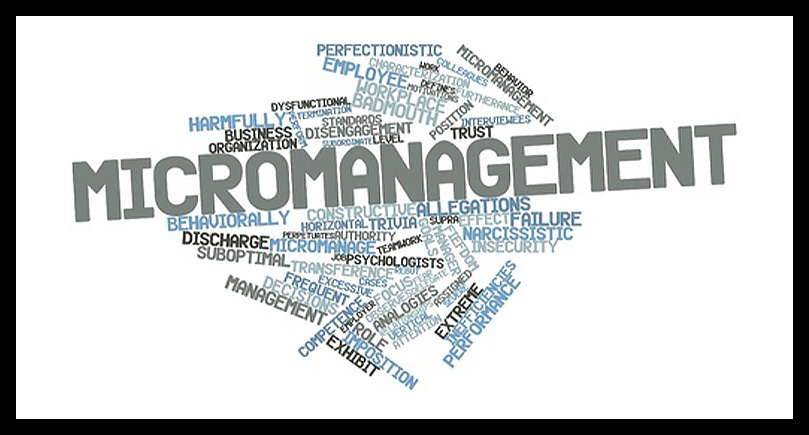
We should avoid micromanagement of our staff and employees

We Should Avoid Micromanagement Of Our Staff And Employees

“If you allow staff to own a project, you must trust in their capacity and avoid micromanagement. Be there to provide support when needed, but don’t force yourself into the picture.”-Barbara Moses

Are you still battling the temptation to micromanage?

Real leadership is rare; micro-management is all too common. We need to stop trying to play every instrument ourselves and start conducting the orchestra. If we don’t conduct, who will?

Let’s review some key concepts regarding a Strategic Business Owner: As a Strategic Business Owner, our primary aim should be to develop a self-managing and systems-oriented business that still runs consistently, predictably, smoothly, and profitably while we are not there. We should shape and own the business system and employ competent and caring employees to operate the system. We should document the work of our business so that we can effectively train others to execute the work. We must make ourselves replaceable in the technical trenches of our business. To repeat, define and document the specific work to be done and then train and delegate.

Stop the “I’ll do it myself” and “No one does it as well as I do” attitudes. Learn to delegate. If someone else can do something 80-90% as well as you, give it up! Do not spend a dollar’s worth of time on a dime task. Know your areas of brilliance and delegate most everything else. Do those things that only you can do as CEO and delegate the rest. You need to free up time to do CEO activities that make the vision a reality.

To help with delegation, you must have the work to be done well defined. You cannot delegate non-specifics. Next, you must adopt the attitude that your time is valuable and learn to discriminate between various activities. Before doing a task, ask, “Does this task lead directly to increased profits, significantly reduced costs, improved customer satisfaction, or to me building a better business?” If it doesn’t, dismiss the task or delegate it. Or ask, “Is this task worth $200 per hour?” If not, find someone else internally or externally to do this task at a cheaper rate. You must realize that your CEO thoughts and actions (building systems, leading, planning, holding people accountable, coaching other leaders, etc.) are worth at least $200 per hour. If not, you will never learn to be effective at delegation.

By all means, get out of the way of your managers and workers.   Don’t meddle. Instead of doing their jobs, help them to clarify their roles, responsibilities, goals, and tasks and then simply hold them accountable for getting things done. Be sure to monitor your employees’ performance but don’t try to control them. Coach more and play less in the game.

Once they demonstrate competency and character, give your employees the authority to make things happen. Let them do their jobs. Let them tackle stuff on their own and come to you only when they need further guidance. Instead of micro-managing the process, manage by results. If you set up your systems correctly and train properly, you will be able to manage by numbers and on an exception-only basis.

Leadership is less about doing, more about thinking, planning, and overseeing what others do. You are to create jobs, not work a job!

--- END POST ---

Creative Ideas Flourish with a Spirit of Fun

12336543_l

“Creative ideas flourish best in a shop which preserves some spirit of fun. Nobody is in business for fun, but that does not mean there cannot be fun in business.”-Leo Burnett

 A business leader is responsible for establishing the VISION and the FOCUS of the organization. HAVING FUN is a critical focus area. Focus on making business fun. Celebrate worthwhile progress toward your goals. Celebrate your company’s successes often and reward your employees for superior performance.

Come up with excuses to praise your team and recognize success. Share the joy. Make coming to work a meaningful and fulfilling event. In fact, appoint a CFO (Chief Fun Officer). Empower this person to come up with clever ideas, based on employee feedback, which will put some excitement and fun into the work environment.

Never forget, often as important as a paycheck, good employees want to learn and grow, be challenged and rewarded, and fulfill their cravings to be social beings. Make your culture an enjoyable place to work! How are you doing keeping yourself and employees focused on having fun?

Never lose sight of the fact that your primary responsibility as a Strategic Business Owner is LEADING!

--- END POST ---

Scroll to Top