Business Growth

Something to Talk About

Something to Talk About

Do you enjoy making recommendations? On my last trip to Shanghai, I went out to dinner with a group of expats to a restaurant called People 7. The person who made the reservation was given a two-digit code: 64. When we approached the restaurant, all we could see was a concrete wall with an opening. There were no lights and no signage— just a dark staircase lit by candles, leading up to a grouping of nine lights in three rows of three.

One member of our party reached out and touched the 6th light and the 7th light, and a door opened on our right, revealing nothing more than a mirror: we had gotten the two-digit code wrong. He then pressed the 6th and 4th lights, and a door opened on our left letting us into the restaurant packed with patrons. The restaurant does no advertising, and there isn’t even signage or lighting to alert people to its presence. It’s all word of mouth.

PLEASE DON’T TELL

Recently I was in Chicago for a conference and had the opportunity to listen to Jonah Berger, PhD, a researcher for the Wharton School of Business. Dr. Berger is the author of two books, Contagious: Why Things Catch On and Invisible Influence, and he was discussing social currency. Dr. Berger told an interesting story of a hot dog stand in New York City marked with a large hot dog–shaped sign with the words “eat me” written in what appears to be mustard. A long flight of stairs leads down to a hole-in-the-wall restaurant offering 17 varieties of hot dogs. But sitting in the corner of the restaurant is a vintage phone booth with a classic rotary phone. If you pick up the phone and dial the #2, release it, and hold the receiver to your ear, a voice will come on the other end of the line and ask, “Do you have a reservation?” Of course you do not have a reservation, but today is your lucky day and apparently they can let you in. The back of the phone booth then swings open and you are allowed to enter a secret bar called “Please Don’t Tell.” No signs, no advertising—just an entrance through a small phone booth—and the bar is always packed. It has never advertised, yet it is the most sought after drink reservation in New York City, according to Dr. Berger.

Jim Meehan, the brains behind “Please Don’t tell” says, “The most powerful marketing is personal recommendation. Nothing is more viral or infectious than one of your friends going to a place and giving it their full recommendation.”

According to Dr. Berger’s research, 40 percent of what people talk about is their personal experience or personal relationships. People are more than willing to share their opinions and experiences, and there is substantial research and science behind the reasons why. Clearly word of mouth is a prime marketing tool for business.

What are your clients and customers saying about you? Have you asked them why they like to do business with you? When was the last time you actually talked to your customers or clients? Do you call them rather than emailing them? Have you asked them for a referral?

The more your clients or customers hear from you, the more they can buy from you. If you would like to find out how to increase your revenue and grow your business by word-of-mouth advertising, give us a call.

--- END POST ---

Make 2018 Your Best Year Ever

                                    Make 2018 YOUR BEST YEAR EVER!

As you approach a New Year, it is a good time to reflect on 2017 and ask yourself some serious questions in order to make 2018 your best year ever. This will lay the groundwork for a fabulous 2018. Planning for the upcoming year is the best way to get better results. If you make a good start to the New Year, you will most likely have a good finish next December.

 Here are some questions to ask yourself to prepare for an even better year in 2018. Take some time to think about these questions, and be honest with yourself. Without honesty, this will be a fruitless exercise. Successful business owners are intentional about the results they want. Then they apply intense focus to achieve those results.

In order to have the best year ever in 2018, we need to understand where we have been and where we want to go.


  1. What went well this year?
  • List the things that you accomplished.
  • Compare the list to the goals that you set for 2017.
  • How did you do? What can you do better?
  1. What didn’t go so well this year?
  • What can you improve on moving forward?
  • What strategies have you already tried to improve your business that worked or didn’t work?
  1. What do you want to accomplish in this New Year?
  • What is your vision for 2018, 2019, and 2020?
  • What will be your goals be in the next 90-days to help you accomplish your one year vision?
  • What do you think you need to do to double your business this year?

4. How can you develop more clarity of direction?

  1. How can you develop a relentless focus to succeed?
  2. How can you become more disciplined to accomplish your goals?
  3. What would it take to make 2018 the most extraordinary year ever?

These are just a few of the questions you can ask to prepare for a prosperous 2018. The coming year will turn out as you choose and what you are intentional about. In business, things don’t just happen. Without belief and without goals, you won’t put in the necessary effort or resources. In 2018 develop an intense focus to achieve your vision and goals and realize amazing results.

We can help you plan for the most successful year ever. Give us a call. 503-312-3145

We are here to help you achieve dramatic success in 2018. http://www.garyfurrconsulting.com


--- END POST ---

Gary Furr Consulting—The Most Helpful Family Business Professional

              Gary Furr Consulting—The Most Helpful Family Business Professional


At the November 2017 Excellence in Family Business Awards presented at the Austin Family Business Program, a part of Oregon State University, our client The Higher Taste, a vegan and vegetarian food processor, was awarded the Generational Development Award. In turn, The Higher Taste named Gary Furr Consulting as the most helpful family business professional.

The Higher Taste was founded in 1987 when Hans and Rhonda and their two children relocated to Portland, Oregon, from New York. Thirty years later, The Higher Taste is still very much a family business, and the second generation is helping to run the company alongside their parents.

Gary Furr Consulting has been working with the owners of The Higher Taste to develop a business growth plan that will allow them to expand into a new 15,000 square foot facility and develop a frozen food product line. We helped them get their financials in order and developed metrics to improve both forecasting and business plan development for this next phase of growth. This process has included working with their banker and Business Oregon to bring this next phase to fruition.

Gary Furr Consulting has helped hundreds of owners and executives gain greater results in their businesses and personal lives. Become the effective, focused, and productive business person you want to be. Call or email us today and let us help you achieve more of what you want and less of what you don’t.

--- END POST ---

Developing a Gratitude Framework

Developing an Attitude of Gratitude

“Gratitude can be cultivated at any age,” said Jennifer Breheny Wallace in a recent Wall Street Journal article.* The author cited a 2012 national online poll of 2000 adults, which found that 59 percent of those surveyed thought that most people today are less likely to have an attitude of gratitude than 10 or 20 years ago. She goes on to show that a growing body of research points to the many psychological benefits of regularly counting your blessings.

The article reminded me of the time I heard Tony Robbins speak at a five-day business mastery conference in London. Something he said really struck a chord: that we should be grateful for the trials and tribulations we have gone through because they have made us the person we are today. We need to have an attitude of gratitude for these experiences; doing so helps us to reframe them for our benefit. Robbins said that the more we acknowledge and appreciate our lives and the opportunities we have to grow, the more that positive things will show up—and we should make time to express gratitude for all of it. https://www.tonyrobbins.com

Robbins also suggested that we should not live in a suffering state because it is a lousy state to be in. We should choose to live in a beautiful state each day, no matter what, because life is too short to suffer. By changing how we frame things, we can choose to live with an attitude of gratitude for everything that comes our way.

I meet many business owners who are living in a suffering state because their business is not performing the way they envisioned it. We can help you diagnose what isn’t working in your business and get it back on track. Let us help you use your trials as the launch pad to achieving what you’ve always dreamed of. Call or email today.

*Jennifer Breheny Wallace, “How to Raise More Grateful Children,” Wall Street Journal, Feb. 24, 2018.


--- END POST ---

Are You Feeling Lucky?

Improve Your Odds of Success

When things don’t go as we like, it’s easy to blame bad luck—it spares us from blaming ourselves! But a recent Wall Street Journal article* calls that idea into question. The writers, Janice Kaplan and Barnaby Marsh, assert that luck is a combination of random chance, talent, and hard work.  They suggest that attributing success to random chance is misleading, and if we think luck is somehow going to fall from the sky, we’re probably not going to get lucky or recognize it if we do.

Although there isn’t much we can do about random chance, there are things we can do to influence the other factors that contribute to “luck”:

  • Pay attention:Be more observant of your environment and increase the probability that you will notice opportunities.
  • Get off the standard path:Stop following the herd. Get off the beaten path, and look for a less crowded space to occupy. The outliers tend to find what others have missed.
  • Change the odds:One of the best ways to improve your luck is to stop worrying about failure and take more chances. Keep trying, and accept that failure will happen—it’s part of the process. The more times you swing the bat, the better your odds of hitting a home run.
  • Think yourself lucky:Psychologist Martin Seligman, author of Learned Optimism,says that if he were looking for a lucky person, the number one ingredient that he would select would be optimism. Believing that you have some control over what happens to you and your life causes you to try more often.

The writers conclude that many of us act on only a fraction of the opportunities around us. We can increase our odds of success by paying better attention, getting off the beaten path, and thinking of ourselves with a positive mindset.

Grant Cardone’s book The 10X Rule says luck is actually a byproduct for those individuals who take the most action—in other words, those who completely commit themselves to success seem to get lucky in life. It takes hard work and effort to generate luck.

Are you feeling lucky in your business or do you want to put talent, knowledge, experience, and hard work together to increase your odds? Contact us at 503-312-3145 to put our 40-plus years of C-level business experience to work for you and increase your odds of getting lucky.

* “Make Your Own Luck,” Wall Street Journal, March 3, 2018.

garyfurr@garyfurrconsulting.com

--- END POST ---

Learning the Language of Business


Learning the Language of Business

 I was recently sitting at the chef’s counter of my favorite restaurant, the Hairy Lobster, watching the chef and sous chefs work their magic to produce what I consider the best food in Portland, I was thinking about mastery and the language required to achieve it. These chefs have learned the language of cooking—teaspoons,tablespoons, cups, pinches,temperature, seasoning, and much more—allowing them to produce amazing results. The language is such a part of them, it’s as if they’ve become native speakers.

It is the same with musicians. The ones that move us with their songs have learned the language of music—flats, sharps, chords, and keys. Their investment in learning the language produces the compositions we spend our time listening to.

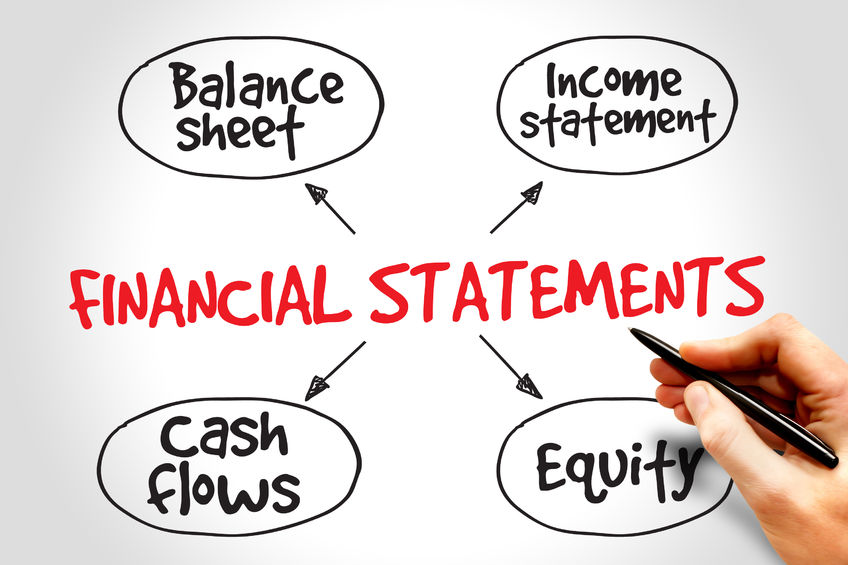
As a business owner,you are responsible for learning the language of business:accounting. Understanding the P&L and balance sheet and how they are interconnected is critical to the success of your business. But these two tools both look backwards. Their informationis already dated by the time you get your reports. What has happened has already happened,and you can’t do much to change it.

Business owners need one more tool to produce great results—the cash flow projection. The cash flow projection is the only tool you have that looks ahead at what is coming in your business so you can forecast your cash needs.

Business owners often think that net income on the bottom line of their P&L is cash, but it is actually only the theory of cash since the P&L does not account for debt payments. This highlights the need for a cash flow projection, which takes your debt payments into account (which is a use of cash).

If you would like to learn the language of business and master the finances of your business as well as the business metrics that will create amazing results, give us a call. We can help. 503-312-3145.

garyfurr@garyfurrconsulting.com

--- END POST ---

Cash Flow


            What Cash Flow Can Tell You

Inadequate cash flow is like Kryptonite was to Superman; without cash your business will suffer and eventually die.

Yet most business owners I meet are not tracking their cash flow. They look at their P&L and balance sheet, but they do not conduct a cash flow analysis of their business.

The Problem

Here’s the problem:The P&L and balance sheet are a look at what has already happened in the business, and there isn’t anything you can do to change that.Their usefulness is as comparison tools to measure how your business is performing compared to other months, quarters, or YTD. The past is important, but what about the future?

Revenue-Expenses=Profit

Too often business owners look at net income or profit and think they are making money. Your profit is simply the amount that your revenue exceeds your expenses; it is not cash but the theory of cash since your P&L does not take into account debt service. It does not matter how much profit you make if the amount of cash you receive is less than or equal to what you are spending. If you cut into your cash reserves long enough, you will eventually be broke.

Cash Flow

Cash flow is the net amount of money that is flowing in and out of your business, and a cash flow analysis focuses on the timing of when cash comes in and when it goes out. The cash flow projection is the only tool you have to look ahead, and the future is where we want to go. By understanding your cash flow and how it can positively or negatively impact your business, you can make more informed decisions about how to run your business.

If you want to know how to manage your cash flow and create a sustainably successful business, give us a call. We are experts in the business of managing your business: 503-312-3145.

garyfurr@garyfurrconsulting.com

--- END POST ---

You Should Pay the Tax Man

You Should Pay the Tax Man

It seems that more and more businesses are operating in tax-avoidance mode. I understand the desire to not pay The Tax Man more than your fair share, but in minimizing your tax burden, you may be creating bigger problem.

The Problem

As a business owner in tax-avoidance mode, you are likely trying to spend your money at the end of the year to avoid taxes. But this is a short-term strategy that will likely have a long-term negative impact on your business. Unless you are spending that money on assets that will generate additional revenue moving forward, then you should reconsider.

Here’s Why

When you’re thinking about avoiding taxes, you are not thinking about creating wealth. As business owners we should be more focused on maximizing after-tax revenue to build wealth rather than focusing on tax avoidance. I run into many business owners who have been in tax-avoidance mode, and when they need to borrow money from their bank or another lending source, they run into trouble. The problem is that bankers don’t lend from the P&L or income statement; they lend from the balance sheet. When the business owner presents their financials, the banker turns to the second page of their balance sheet and looks at retained earnings, or wealth (equity), in the business. That’s where the trouble starts: the tax-avoidant business owner has not built any wealth, which makes the banker reluctant to lend them any money.

Bankers like to apply a simple ratio to your business—the debt-to-equity ratio—and this is how they set limits on how much you can borrow. Typically, it’s a two-to-one ratio, meaning for every dollar of equity you have retained in your business, the bank will let you borrow two dollars. No equity or retained earnings, no borrowing. Quite simply, minimizing taxes reduces your borrowing power.

Selling Your Business

Another common pitfall related to tax avoidance occurs when it comes time to sell your business. Because you have been in tax avoidance, your business is not worth as much as it could be. Small businesses typically have a range of value at a 3–5 multiple of EBITDA—that is, earnings before interest, taxes, depreciation, and amortization. Mid-market companies tend to have a valuation of 5–7 times EBITDA. When business owners have been avoiding paying taxes, they have not maximized after-tax revenue, and therefore they have not built wealth (retained earnings), which impacts their business valuation. In other words, your business is not worth as much as it could be because you have been in tax avoidance rather than wealth creation. As my mentor and friend Phil Symchych likes to say; “maximizing earnings will maximize your wealth.” We should be focusing on wealth creation, not tax avoidance.

If you would like to earn more money, gain better control of your business financial situation, and maximize your wealth, give us a call at 503-312-3145. Or visit: http://garyfurr@garyfurrconsulting.com

--- END POST ---

BEGIN WITH THE END IN MIND

At the start of this new year, I am thinking again about beginning with the end in mind, a concept brought to my attention in 1989 by Stephen Covey. This is habit two in Covey’s pivotal book The Seven Habits of Highly Effective People, which I have read five times. I required the management staff at my previous company to read it as well, because I consider it a must read for any business leader.

This concept of beginning with the end in mind is a critical underpinning to creating one of your best years ever. Isn’t that what you want for 2019? If you do, it starts by knowing where you want to go.

It is so easy to get caught up with being busy and running faster and faster in an effort to get everything done. That busyness may blind you to the fact that you’re running faster and faster in the wrong direction, hence the need to know where you are going.

As Covey says, it is possible to be very busy without being very effective. You may even be very efficient, but unless you have a clear idea    of where you are going, you won’t be very effective in getting there. You have to begin with the end in mind.

If you want your business to be more successful than it was in 2018, you need to clearly define what that success looks like. Then you need to organize your business in such a way to achieve your desired future. If you leave it to chance, it is unlikely that you will arrive at your desired destination.

Covey’s second principle, begin with the end in mind, is based on the principle that all things are created twice: first in your mind and then in the real world by making it happen.

What do you want 2019 to look like? Have you created it in your mind? Have you written it down so that your subconscious mind can go to work to help you achieve it? Will you now organize your business and personal life to create the results you want? Without investing the time to envision and write down your goals and plans, it is unlikely that 2019 will be any different than 2018.

We can help you to begin with the end in mind and then help you put into action the steps necessary to bridge the gap between your current state and your desired future. Give us a call. We are experts in business and helping business owners achieve dramatic results.

www.garyfurr@garyfurrconsulting.com/ 503-312-3145

--- END POST ---

Discover What NO Can Do for You

As you begin 2019 with the end in mind—the goal of creating your best year ever—some things will probably need to change. One big thing is learning to say no to time wasters and “busyness.” These are traps that keep you from achieving the results you desire.

Many business owners think that because they are busy, they are being productive, but of course this is not always the case. Too many business owners, executives, and staff are distracted by clutter, white noise, and the lack of clear direction and priorities.

Here are a few questions to help you bring clarity and focus to the year ahead:

  • What is the 20 percent of your activities that will generate the greatest return on your investment of time, energy, and money?
  • What is the 20 percent of that 20 percent?
  • What habits can help you develop more clarity of direction and a greater focus on success?
  • How can you become more disciplined to accomplish your goals for 2019? Can you block time each week for each priority?
  • What are some of your common activities that take a lot of time but generate few results?
  • What should you be saying no to in order to focus on your priorities?

Every day you are faced with multiple opportunities to be involved in some sort of activity, whether it is a fundraiser, meeting, club, networking event, or new project. When you’re faced with these opportunities, ask yourself whether it will get in the way of achieving your priorities.

Time is a limited resource. If you want to have greater personal and professional success in 2019, you have to take charge of your time and learn to Just Say No to activities that take you away from focusing on your priorities.

One technique that I have used myself and with others is to create a Stop Doing List. This is a list of everyday activities that are not the highest and best use of your time, energy, and money. Take some time to write down which activities are wasting your valuable resources, and then figure out how to eliminate, automate, or delegate these items.

Michael Porter, the author of over eighteen books has said that “the essence of strategy is choosing what not to do.”

If you need help in choosing what not to do and what is critical to your success in 2019, give us a call. As a former COO of a $40 million company with seven locations I am an expert in business and can help you make 2019 on of your best years ever. www.garyfurrconsulting.com/ 503-312-3145

--- END POST ---

Scroll to Top