Business Leadership

How to Face Uncertainty

Last week I posted an article written by my oldest son, Nathan Furr,* for Harvard Business Review, which you can find here or on my website. Nathan discusses his interview with Nobel Prize winner Ben Feringa, who shares his wisdom about uncertainty.

Mr. Feringa says that we need to be resilient in the face of the frustration that comes with uncertainty; of course, we could not be in more uncertain times than now. On April 2, I posted an article about resilience, which was part of a recent Crisis Management for Small & Medium Enterprises publication; I noted that if we can skillfully manage these problems and struggles, then we would become stronger as individuals while also helping our organizations emerge stronger. What we are experiencing now and the ways in which we learn to adapt can and will continue to serve us, and our organizations in the future.

In an interview with Australian filmmaker Benjamin Gilmour, Mr. Gilmour was quoted as saying, “Most people see obstacles and they interpret it as a sign to stop. I’ve learned to see obstacles as a sign I was heading in the right direction.”

Talent and skill are important for success, but resilience and persistence are just as critical. We all face obstacles, and we need to exercise resilience and persistence to overcome them. Now as always, focus on what is within your circle of control and influence. Be vigilant, remain calm, and take prudent caution. The current crisis will pass.

Are you sticking to the plan you made in late 2019 or early 2020? The landscape has changed and your plans should too. It’s time to be flexible and adapt to this change. If you need guidance, I am here to help you:  503-312-3145

*If you are interested in reading more from Nathan Furr, a strategy professor at Insead, the International Business School in France, he has written four books: Nail It, Then Scale It, (2011), The Innovator’s Method (2014), Leading Transformation (2018), and Innovation Capital (2019).

--- END POST ---

Don’t Let Uncertainty Paralyze You

We are currently facing tremendous uncertainty as a result of the economic impact of a nationwide shutdown of business. This uncertainly about the future creates a great deal of stress and causes us to focus on the immediate situation rather than the broader possibilities that may become available to us.

In his recent article for Harvard Business Review, “Don’t Let Uncertainty Paralyze You,” my oldest son, Dr. Nathan Furr, a strategy professor at INSEAD in France, examines how innovators, entrepreneurs, CEOs, gamblers, and even surfers approach and navigate turbulent times. Not surprisingly, all of them are skilled at discovering the hidden potential in uncertainty.

You can read the article here: https://lnkd.in/gcSSqiz

If you would like to discuss how you might navigate the current situation and discover the potential opportunity for you and your business, give me a call. The call is free.  503-312-3145

--- END POST ---

WHAT’S WRONG WITH THIS PICTURE?

Recently the Hertz rental car agency filed for Chapter 11 bankruptcy protection. The company was unable to meet their $11 billion financial agreement to their secured lenders. In addition, the company listed more than 100,000 creditors that they owed money to.

Hertz was a $25 billion company that was highly leveraged. It was dependent on operating revenue to service its debt and maintain the business; with the recent dramatic drop-off in travel due to COVID-19, Hertz went rapidly into decline.

Corporate bankruptcies are not unusual. Typically, when a company gets into serious trouble with no visible path toward solvency, they either file for a Chapter 7 or Chapter 11 bankruptcy. Chapter 7 bankruptcy liquidates the company’s assets, while Chapter 11 allows the business to continue to operate under a reorganization plan.

But let’s look closely at the case with Hertz. A few days prior to filing for bankruptcy protection, the Hertz company paid out more than $16 million in bonuses to senior managers, including their new chief executive (according to the Wall Street Journal, May 27, 2020). And Hertz is not the only company to pay out bonuses just before filing for bankruptcy protection. J.C. Penny paid out $10 million to top executives just before filing. Chesapeake Energy paid out $25 million to senior executives. These companies refer to these bonuses as retention bonuses. I guess that allows them to justify the payments while their creditors are left on the sidelines hoping to get paid.

The law doesn’t allow companies to pay out such bonuses after they file for bankruptcy, and by doing so prior to filing, they are essentially evading the law. Companies who participate in these tactics state that they need to do so to keep top executives from jumping ship.

My contention is that the creditors who worked with these companies in good faith that they would get paid are getting the short end of the stick. Many of these companies are small to mid-market companies that cannot afford to take such a hit, getting pennies on the dollar while the executives reap big bonuses. If a business is unable to pay its creditors in a timely manner and is in such financial trouble that they need to file bankruptcy, then they shouldn’t be paying out large bonuses to their executives. This is not much different from the federal government bailing out the auto industry during the recession and the auto manufacturers turning around and paying their executives large bonuses for their less than stellar performance.

I am interested in what you think about this topic. Write me and let me know your thoughts: garyfurr@garyfurrconsulting.com

If you would like help navigating your way out of the ramifications of COVID-19 on your business, call us. We can help you come out on the other side of this—heathier and more profitable. We are experts in business growth. 503-312-3145

--- END POST ---

Vision and Direction

The first time I visited my client’s two locations in China I immediately recognized the symptoms of the lack of a clear vision and direction. The team was working hard every day without a clear understanding of what the end results should be and why they were doing what they were doing. This made it difficult to hit short-term performance goals. Why? Because, the individuals performing the work need clarity in order to ask better questions and make better decisions when it comes to execution. To achieve superior results in business you have to know where you want to go. Every business requires a clear vision and direction.

  1. Clarity of Direction: Success depends on having clarity of direction. Clarity of where the business is going provides a picture of the future and the opportunity to set the course to get there. Without it the business will meander aimlessly off course and likely will not even meet short-term and long-term performance goals. Every journey starts with a clear vision of where you are currently and where want to go. It is not any different in business. Successful businesses have clarity of direction and a compelling vision for their organization.
  2. Communication: Once the organization has created a clear direction for the future of the company, it must be communicated to everyone within the organization. This gets everyone in the same boat and rowing in the same direction—and the only way to accomplish this is with regular and effective communication. Communicating the vision of the future gives those working within your organization confidence and hope for a brighter future that they can be a part of. It also provides meaning and purpose because most employees want to be a part of something bigger than themselves.
  3. Goals: With a clear vision and direction in place, the business and staff now need goals and action plans to help bridge the gap between the current state and the desired future. Creating a map to guide you from where you are to where you want to go is critical to your success. We create maps by chunking down your vision and direction into 90-day goals and action plans. Goal setting marks your path, and meeting those goals provides ongoing propulsion to power you toward your desired destination.


--- END POST ---

Leadership and Your Management Team

The most important aspect of business success is leadership. Peak performance depends on it. Leaders set the direction and then help everyone head in the same direction.

I often run into leaders who are trying to do it all. They usually tell me that no one can do it as well as they can so they figure it is better to just do it themselves. This is a significant problem, because there is no way to grow the company without leveraging their skills. Eventually they become the roadblock to future success because one person can only make so many decisions and solve so many problems. Nothing of any great significance is ever accomplished by one person alone. It always takes others to help create success.

Directly out of college I started working for one of the brothers in a growing company. A year after I started, the brother decided to sell his share in the company and retire. I took over as COO and during that time I worked for the younger brother; that is when I learned about poor leadership. This younger brother treated everyone in a negative manner. I was eventually asked to do something I considered unethical with the employees and I declined and decided it was time for me to move on. My philosophy was that our employees were assets and as such should be treated as assets, and this philosophy was at odds with the owner of this company. I wanted to treat people with respect and kindness while at the same time holding them accountable to their roles and responsibilities, and I believed this could be done in a positive manner.


  1. Organizational Structure: The organizational structure needs to be outlined and understood by everyone in order to create consistent chain of authority and eliminate confusion. Leaders need to make sure they are getting the right people in the right seats to scale their business. Every organization needs a structure to help determine how decisions will be made and to whom staff and employees report to. It should be remembered that a leaders role is to set vision and direction and to help their staff and employees be successful.
  2. Management and Employee Development Plan: All leaders need to have a management and employee development plan in order to bring others up through the organization who can take over key positions as the organization grows. Think of your business like a sports team. Typically in sports the “A” players are on the field until something goes wrong and the team needs to bring someone off the bench to take their place. If there is no one on the bench, it will be nearly impossible for the team to win. It is the same in business: You need to have a bench to draw upon if someone decides to leave or gets sick and can no longer fill their role. This requires planning ahead.
  3. Management Succession Plan: Every business should have discussed and put in place a management succession plan. Who will move up within the organization should the leader decide to retire or move on? Succession planning typically happens in one of four places—the dining room table, the boardroom, the hospital room, or the funeral parlor. The last two are not good options. Organizations need to think about succession before it is time to sell the business and also in case something should happen to ownership. Any type of succession plan takes time, and waiting until a crisis happens is not a plan.

Do you need help in taking your business to the next level? Give us a call, we are experts in business growth. 503-312-3145

http://www.garyfurrconsulting.com

--- END POST ---

Operations

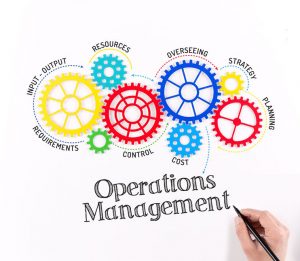
The need for organizations to improve productivity and quality is at an all-time high. With competition increasing exponentially, effective operations management and decision-making can have a major impact on your organization’s success. Operations is at the core of most businesses because it tends to consume the most resources in labor, materials, equipment, energy, and capital to manufacture products and deliver services. We are living in a global economy with competition coming from countries with lower cost of operations. Operations management is essential to gaining a competitive edge.

I worked with a company to improve their ordering and delivery process. When I started with them, I discovered that they did not have any kind of documented process for ordering material produced by a third-party provider. There were no documented procedures on how to process the material received and then deliver the final product to their customer. The current undocumented process was random and changed each day. In order to correct this problem we value-stream mapped how they thought they did it (their current state) and then process mapped each step to discover how they really performed. Once we completed that, they could see why there was chaos within the organization. We redesigned the process to make it significantly more linear and then documented it so they could follow it each and every time. This created a standard process, which generated consistency of operations.


  1. Processes and Procedures: Every organization needs documented processes and procedures to create consistency as to how work gets done. Without documented processes and procedures, there is randomness, which is the enemy of efficiency. A process is made up of a variety of functions and we cannot improve the whole without improving the various parts. Process improvement is necessary to be competitive in the marketplace, and that starts by having well-documented processes and procedures in place.
  2. Standard Work: Creating standard work procedures is the foundation for organizational improvement. Standard work represents the current understanding of the best way or the right way to perform work to create consistent results, eliminating confusion and chaos. If you watch a professional golfer, you will notice that they have a methodical, structured approach that creates consistency within their actions. This is usually the result of considerable time with coaches and trainers to create a standard operating procedure that will generate predictive results. It is the same in business. If we want to generate consistent, predictable results, we need processes and procedures that create standard work.
  3. Capacity: Capacity is the productive capability of the organization to achieve a specific output of products or services within a given period of time. Capacity is typically measured as a quantity of output per unit of time. Capacity planning is critical to an organization’s success. If the company has too much capacity, its inventory levels can rise, or it may underuse its workforce and equipment. If the company has too little capacity, it can lose customers to the competition because of the lack of ability to meet demand. Capacity decisions are important, because increasing capacity usually involves a large capital outlay. Maximizing capacity increases throughput and reduces cost per unit.

Want to improve operational efficiency adding bottom-line profit to your P&L? Give us a call. We are experts in operational efficiency. 503-312-3145

garyfurr@garyfurrconsulting.com

http://www.garyfurrconsulting.com


--- END POST ---

Scroll to Top