Blueprints for Success: Understanding Organizational Structures | Part-One

In 2007 I decided to build a custom home on a lot I had purchased. It was a beautiful lot that backed up to greenspace and had a view of Mt. Adams. The reason to build a new house should be reserved for another story. Had I known what the economy was going to do in late 2007 and the start of 2008, I may have postponed the construction.

Part of building this new house was to find a house plan that would be a good fit for the lot and maximize the usage of the land. I spent hours in a Portland based architects office going over various options for my future house. I needed blueprints that I could provide the contractor that was going to construct my new house.

Building a house from the ground up is similar in a lot of ways to building a business. Both require a well thought out plan. In construction it’s the architectural plans. In business it’s the organizational structure.

Just like building a house requires a solid foundation for the house’s stability, a well-defined organizational structure provides a stable base for a business’s operations.

There are many different architectural plans that can used to build the house, there are also many different forms of organizational structures that refer to the manner in which a company or organization is designed and arranged when it comes to roles, responsibilities, expectations, and relationships among staff and employees.

Many companies think that organization structure refers to the organizational chart. While the organizational chart is an important aspect of organizational structure, it is not all of it.

The specific structure can vary depending on the size of the company, and the goals of the organization. There are several common types of organizational structures.

  • Functional Structure: The organization is divided into functional areas or departments, such as marketing, finance, sales, operations, and human resources. Each department is responsible for its specific functions and reports to a higher-level manager. This particular structure is often used in smaller organizations or those with a singular product or service.
  • Divisional Structure: The organization is divided into separate divisions, each with its own set of functions and resources. Divisions are typically organized by product, geography, customer type, or a combination of each. Each division operates somewhat autonomously and has its own management structure.
  • Matrix Structure: This structure combines elements of both functional and divisional structures. In this structure, employees report to both a functional manager and a project or product manager. This structure is often used in organizations that need to be flexible and responsive to changing projects or customer demands.
  • Flat Structure: A flat organizational structure has few to no layers of middle management between staff and top-level executives It promotes open communication, quick decision making, and a focus on teamwork. Often this structure is used for startups and small companies.
  • Hierarchical Structure: These type of structures have multiple layers of management with each layer overseeing the one below. Decision making authority typically flows from the top down. This structure is common in larger organizations.
  • Team-based Structure: The emphasis is on self-managed teams that are responsible for specific projects. Team member collaborate closely, and decision making is often decentralized.

Of course, there are other organizational structures, but these are a few of the more common ones.

All organizations have a structure in place even if they did not have the intention of creating one. Often they are poorly designed from the onset, or in many cases the organization has outgrown the original structure.

Poorly designed, no structure or one that has been outgrown can be costly to the business. They can create chaos within a business. And chaos is the enemy of efficiency.

There are several common problems and challenges associated with a poorly designed organizational structures that hinder effectiveness.

  • Lack of Clarity: When organizational roles and responsibilities are not clearly defined, confusion often will arise. Employees may not know who to report to or what their specific duties are, leading to inefficiency and frustration.
  • Communication Barriers: In hierarchical structures, information may not flow smoothly between different levels and individuals within the organization. This can result in miscommunication, misunderstandings, and the withholding of critical information.
  • Silos and Departmentalism: Organizational structures that are too rigid or compartmentalized can lead to the development of isolated departments or teams that don’t collaborate effectively. This can hinder innovation and problem solving.
  • Inflexibility: Some structures are too inflexible to adapt to changing circumstances or market conditions. This lack of adaptability can make it difficult for organizations to respond to new challenges or opportunities.
  • Bureaucracy: Excessive layers of management and a complex decision-making process can result in inefficiencies. This can slow down decision making, stifle creativity, and increase operational cost.
  • Power Struggles and Politics: In some organizations, power struggles and political maneuvering can become prevalent, particularly in structure with unclear lines of authority. This can undermine teamwork and the ability to achieve organizational goals.
  • Overlapping Roles: Poorly designed structures may lead to overlapping roles and responsibilities, causing conflicts and duplication of efforts.
  • Lack of Accountability: When responsibilities are not clearly assigned or enforced, it can be challenging to hold individuals or teams accountable for their actions and results.
  • Resistance to Change: Employees and managers may resist changes to the organizational structure, even when such changes are necessary for the organization’s success. This resistance can impede progress and innovation.
  • Cultural Mismatch: Organizational structures should align with the organization’s culture. A mismatch between the structure and the culture can lead to employee dissatisfaction and reduced morale.
  • Complexity: Overly complex structures with many layers and reporting relationships can be difficult to navigate and manage. Simplifying the structure may be necessary to improve efficiency.
  • Lack of Customer Focus: Some structures may prioritize internal processes and hierarchies over the customer. This can result in poor customer service and a loss of competitiveness.

From my experience there is a natural tendency in business to create complexity within the business. The organizational structure can help reduce complexity within your organization. Having a well-defined organizational structure creates order. This well-designed structure can reduce bottlenecks and maximize efficiencies. It defines roles, responsibilities, and communication channels. A well-designed structure can improve efficiency, decision-making, and adaptability, ultimately impacting revenue and profit positively.

The key to successfully manage and sustain growth within an organization is to have a thorough understanding of what your company looks like today and what it needs to look like in the future. It’s starts with clarity of who you are as an organization today and who do you want to be in the future.

The organization structure goes far beyond just the reporting relationships within a company. As leaders and owners or organizations, we need to consider our vision, purpose and values that will help guide the organization. We have to develop our goals that will be implemented and made operational. We have to establish the reporting relationships, communication standards, decision making procedures for not only making decisions, but also solving problems, the rules of conduct for organizational staff and employees, the accountability and reward system for goal achievement.

The organizational structure just like the structure to build a house cannot be taken for granted. It goes far beyond the organizational chart.

Stay tuned for Part-Two of Organizational Structure

--- END POST ---
Executive Coaching Focused on Improving Your Business Results

As a business owner, you work hard. Why not create the business and the life that you want and deserve? Step up to the plate and get a mentor or executive coach to hold you accountable and help you achieve dramatic results.

Our executive coaching is designed to focus on specific issues that impact you and your business. It allows for drilling down into problems and issues to create long-term success rather than settling for business as usual.

Our Process Supports Your Success

Our proven process — 7 Steps to Accelerated Business Growth — helps you visualize and implement the future you want for your business, using a set of clear, concrete concepts:

Step 1—Clarity of direction
Step 2—Communication
Step 3—Have a plan
Step 4—Intense focus
Step 5—Discipline
Step 6—Results
Step 7—Motivation

Seven Common Mistakes Business Owners Make – Are your problem areas on the list? If so, we can help!

Gary Furr’s 40+ years of business experience coupled with an MBA in organizational development can help you correct or even avoid the seven mistakes that business owners make over and over again. See if you’ve made any of them in your business.

Read or Click to Listen | Don’t have time to read? Download the PDF

You may have started your business based on the technical skills that you acquired through working at other businesses, but you may not have acquired the skills and tools necessary to be successful in business. For instance, in business you need to know the language of business, which is accounting. You also need to understand sales and marketing and human resources, particularly how to manage people as well as how to hire, onboard, and train other individuals, because as your business grows, you can’t do it all by yourself. You have to leverage your time and energy, and you do that by hiring people who have the skill sets that you may not possess.

1. Lack of Basic Business Skills

You may have started your business based on the technical skills that you acquired through working at other businesses, but you may not have acquired the skills and tools necessary to be successful in business. For instance, in business you need to know the language of business, which is accounting. You also need to understand sales and marketing and human resources, particularly how to manage people as well as how to hire, onboard, and train other individuals, because as your business grows, you can’t do it all by yourself. You have to leverage your time and energy, and you do that by hiring people who have the skill sets that you may not possess.

2. Lack of Clear Direction

If you aren’t able to achieve the kind of results that you desire in your business, the problem could be that you haven’t been clear on exactly what you want to achieve. No different than Alice in Wonderland. If you don’t know where you want to go, you’re not going to get there or you’re not going to recognize it when you do. Clear direction is paramount. What do you want to achieve? Where do you want to go in your business? What do you want your business and personal life to look like five years from now? If you’re not asking these questions, then you are most likely not going to create the future you want.

3. Lack of Communication

The lack of clear communication creates chaos within a business, especially if you have employees. You may know where the business is going, but have you communicated that clearly to your management staff and employees? It’s not enough for you to know where you want to go. You have to get everybody on the same page, headed in the same direction, in order to achieve the success, you desire. That doesn’t happen without clear communication.

4. No Action Plan

You could be blocking your path to success by not having a plan on how you’re going to bridge the gap between your current state and your desired future. Even if you know where you want to go and have effectively communicated it, you still need to have a plan of action. How do it execute on the direction you have clearly articulated to your employees? How do you break that down into manageable pieces so that your employees understand how it applies to them? What are they going to do in their job to move the company closer to its vision and direction? What are they going to do day-to-day that will bridge the gap and help the organization reach its desired future?

5. Lack of Focus

If you and your business are not achieving the kind of results you want, it is likely because you are distracted by clutter and non-essential work. This usually happens in the absence of clear direction on your destination and the lack of a plan to get you there. Business owners have many distractions since much needs to be done, and they often need to be coached into how to be powerfully focused and how to break things down into manageable pieces to achieve the results they want.

6. Lack of Discipline

Many business owners are not disciplined to focus on the 20 percent of work that generates the greatest return on your investment of time and energy and money. In order to be disciplined, you have to use your calendar to block off time during the day for intense focus on your priorities for that day or that week. Eliminating the distractions and disregarding all the minutiae that tries to grab your attention takes discipline, and that discipline is required to achieve the results you want to get.

7. Lack of Motivation

Motivation is like a feedback loop. If you’re operating without some of the critical factors we’ve discussed (clear direction, communication, an action plan, discipline, and focus), then results won’t be what you want, and discouragement is almost inevitable. Discouragement then undermines motivation. That lack of motivation further undermines results. It’s a vicious cycle, but it’s a cycle that can be turned on its head to create positive results. When you use the steps of direction, communication, an action plan, discipline, and focus, your results (and motivation) will turn around.

Make Time to Think and Envision

How does your business and personal life look to you right now? Where do you want it to be five years from now? Take time to envision your future, and be specific. Write it down, including the specifics, and then read it each day. You are essentially programming your subconscious mind to get the results you want; this is one of the keys to success, and it’s in your grasp!

I highly recommend Napoleon Hill’s book Think and Grow Rich; it highlights the necessity of clear thinking and putting your subconscious mind to work in your behalf. . As a business owner, you have to step back from your business and see it from a broader view. What does it look like? What do you want it to look like? You can create the future that you want. You can create the business that you want, but you have to take the time to see it and think about it. I can help.

Change The Future Of Your Business With One-On-One Executive Coaching

If your business isn’t achieving the results you expect, don’t wait—do something about it. Get started by calling Gary at 503-312-3145, or by emailing him at garyfurr@garyfurrconsulting.com.

--- END POST ---

The Benefits of Business Consulting with Gary Furr, MBA

ENJOY THE BENEFITS OF WORKING WITH GARY and CLOSE YOUR PERFORMANCE GAP

Every business and professional has a gap between where they are currently, their current reality their desired future. We help our clients close that gap to achieve greater success making dramatic improvements in your businesses and financial success.

Our consulting process is for any professional who wants greater success in their business and personal life. Our process provides structure, tools and discipline to drive your success.

Our Consulting Services Improve and Support Your Success

Organizational Structure: We help you to develop business strategies and clarity of direction to take your business to a whole new level of growth and sustainability. We make the complex simple assisting in developing goals and action plans to bridge the gap between your current state and where you want to go in your business to achieve greater success.

Organizational Performance: We help to improve organizational performance and effectiveness., developing processes and procedures to create standard work for consistency of operations, efficiency and scalability.

Information and Metrics: We assist with developing metrics to monitor performance and create accountability and continual performance improvement while increasing top-line revenue, bottom-line profit, enhancing valuations, liquidity, and equity. We help improve information flow allowing you to ask better questions and make better decisions. We are experts at business growth.

Value Stream and Process Mapping: We use these tools to determine your current state and map out the future state to gain efficiencies of operations increasing capacity without capital expense. We help to reduce lead and process time to create a competitive advantage and maximize productivity.

Business Growth Expert: With an extensive education, MBA in Organizational Development coupled with a vast amount of on the ground business experience, we are credible experts. We have been in the trenches in good times and bad and we understand the most pressing problems that business owners and executives face and can help solve these problems. We not only provide consulting services, financial analysis, problem solving, productivity improvement but we also serve as a trusted adviser, mentor and facilitator.

Benefits of Consulting

  • We are able to see your business from a different perspective
  • You are caught up being busy in your business, we see it from the outside looking in
  • We hold our clients accountable for their vision, goals and actions plans
  • We are objective and not emotionally involved in the business
  • We see your business from a 30,000′ view as to what is really going on
  • We help you gain greater clarity and direction, focus and discipline around goals and action plans
  • We help you to think and work strategically
  • We help you see the bigger picture and think long-term
  • We help you to be proactive in achieving results
  • We help individuals work through issues
  • We help relieve stress
  • We are able to brainstorm with our clients
  • We help clients to focus on the long term rather then the short term
  • Consulting is a catalyst, it gets individuals to think and act differently
  • We help our clients build greater confidence and personal impact

--- END POST ---

Gary Furr Consulting Client Case Studies

With over 40 years of business experience and an MBA in Organizational Development Gary’s experience has guided business owners through their business challenges by providing the clarity needed to produce profitable results. The following case studies are examples of how bridging the gap between current reality and desired future drives business success to the next level.

Trying to Sell a Struggling Business

SITUATION

A business broker referred me to a manufacturing client. The business broker had been contacted by my soon to be client and wanted to sell their business. But unfortunately after having lost money the previous year and struggling in the current year the business broker wasn’t able to sell their company in it’s current condition and referred me to help them get the business in order.

PROBLEM

When I arrived and did a complete analysis of the business including interviewing the staff and shop personnel I discovered multiple problems. Under their current structure there were three active owners, two of which were giving direction to the shop and different days and differing directions. The shop was confused. On top of that they had transferred two critical shop supervisors to office positions leaving one highly qualified technical person to supervise the entire shop and he spent his days putting out fires.  The high amount of mistakes and rework was killing the business. In my initial meetings with the owners they had expressed that they needed more business and sales was where they needed to focus.

SOLUTION

I immediately worked with ownership to put one of the two owners in charge of the company and instead of two owners giving direction all direction would come from single source. We then transferred one of the shop supervisors who had been moved to an upstairs office position back to the shop floor to double up on supervision in an effort to eliminate mistakes and rework. We could not address the sales issue until we solved the throughput or flow issue, getting work through the shop in a timely manner without mistakes and rework. It would do no good to increase sales only to miss deadlines because of mistakes and rework, we had to fix the consistency of flow first. Once we got flow moving in the right direction and started eliminating the bottlenecks that were preventing efficient and continuous flow we were able to increase output and reduce mistakes and rework.

RESULTS

With leadership and direction coming form one individual and not multiple individuals we were able too eliminate a lot of confusion on the shop floor. With the increase supervision the rework and mistakes decreased rapidly and the finished product went through the production line in a timely manner. We were able to identify the bottlenecks to efficient flow and eliminate them one by one until product was flowing through efficiently. Once the flow issues had been addressed and we were confident that we could produce the product in a timely manner and within budget, we could start addressing sales. All of these efforts created a positive cash flow position within the six months I worked with this company and set them up for a profitable first quarter of the New Year.


On the Verge of Bankruptcy

SITUATION

In April of 2015 I was called by the manager of two businesses in the state of Washington owned by an absentee owner who lived in Utah. The manager was struggling to pay his bills and was concerned.

PROBLEM

After interviewing and working with the manager of the two businesses things were not adding up. What he was telling me about the businesses and what I observed and learned from talking with the staff made me suspicious that the manager wasn’t telling me the truth. When the owner in Utah came out for a visit and we sat down together with the manager I began to sense a number of red flags and asked the owner if he would mind if I drilled down into his finances. I found that the manager was mixing the revenues from the two businesses and was moving money back and fourth to cover bills and make payroll.

After reviewing the financials and receipts I discovered that the two businesses were not paying their bills on time and were in fact on the verge of bankruptcy. I also discovered that the manger had been embezzling money. The absentee owner was shocked that the manger had been stealing from him since he had known him along time and had trusted him. I also found that the manger had taken out an additional $100,000 credit for the business line that the owner did not know about and the credit line was maxed out.

SOLUTION

I worked with the owner to terminate the manager and then began drilling down into the businesses to discover all that had gone on and what could be done to correct it. I immediately separated the finances of the two businesses and stopped the mingling of revenue and expenses. Each business needed to be treated as separate businesses and track revenue and expenses without mixing the two together. I worked with the managers at both facilities to help them understand what was going on and the plan to correct the situation. I worked with the financial institution to appraise them of what had occurred and our plan to correct the problem. I created cash flow projections for each business and started monitoring all revenue and expense items developing metrics to measure performance.

RESULT

Within six months December 2015, we started showing a profit and I was able to had pay down the $100,000 line of credit that the previous manager had opened and maxed out. We were in a good enough cash position to pay all of our bills on time and each business was being managed as a separate business entity. By the end of the first complete year after taking over for the absentee owner we had a 335% increase in net profit. Since then we have paid down a $1.5 million dollar loan on the property and the businesses continue to be profitable.


Helping Businesses to Grow

SITUATION

I occasionally serve as a consultant for Business Oregon, and they contacted me concerning a SE Portland food processor that produces a line of vegan and vegetarian breakfast burritos and hoagie style sandwiches. The food processor had maxed out their current space. They wanted to grow, but instead they were turning down business because they did not have the necessary capacity. Their customers were asking to purchase more of their delicious products. The business had grown every year and been profitable every year as well, but they had hit a wall. In addition, they wanted to add a frozen food line to have the ability to distribute nationally and potentially internationally.

PROBLEM

The problem was that the business was out of space and they didn’t see how they could produce any more products using their current facility. In order to expand they would need a new facility, which meant they would need bank financing. They needed a solid business plan and to ensure the financials were in order so they could seek bank financing and also work with Business Oregon on partnering in their expansion goals.

SOLUTION

I worked with the owners and their two sons to examine potential adjustments within their current facility that would allow them to increase output without adding any additional employees (which they had no room for). I assisted the owners in developing their business plan and creating financial metrics that would allow them to forecast growth and the costs associated with their intended growth.

RESULTS

As a result, both the bank they were working with and Business Oregon were interested in working with the owners to build a new facility with a mechanized linear production line to increase production. Business Oregon was also interested in promoting this Oregon product nationally and internationally.


Preventing Bankruptcy

Business Reorganization Reduces Debt and Generates Positive Cash Flow…

SITUATION

I was initially called in to evaluate the COO in this business and to coach him for success. In the process of interviewing the CEO, he realized that he was in need of coaching as well. The business was not running as well as it could. Once I started my work, I realized that there were deeper issues affecting the entire business and though discussions with the CEO it was decided that I would drill down a little deeper.

PROBLEM

After a complete business analysis it was discovered that the business was on the verge of bankruptcy. The CFO was incompetent and did not understand the financials. The CEO didn’t know they were in such bad of shape, their banker didn’t know, the CPA didn’t know and neither did the employees. The business was not generating sufficient revenue to cover their immediate debts. They were deep in debt and had a large amount of unsold inventory that had already been paid for or was owed money on. The rent on their current facility was going up by 200% and they couldn’t afford the current rental expense. The business had diversified into multiple other businesses that were draining their cash.

SOLUTION

We immediately downsized the operation by letting the CFO and four out of the eight employees go. We acquired a much smaller facility at a fraction of the cost and moved the business cutting the rental expense by 150%. We began selling off surplus inventory to generate cash to pay vendors and reduce debt. We closed the other businesses that were a huge cash drain and got refocused on their core business.

RESULTS

As a result of reorganizing the business they were able to avoid bankruptcy and start paying down debt. The business refocused on their core competency and eventually let another employee go reducing cost any further. Currently the business is running much better, reducing debt and generating positive cash flow.


Providing Guidance to Weather the Greatest Downturn since the Great Depression

Global Business Plan Creates a Solution with Long Term Benefits…

SITUATION

During the greatest downturns in business history since the great depression, we were called in by a client that was struggling to stay alive in the existing business environment. For over 60 years they had experienced excellent business growth and had weathered all previous downturns with minimal damage. This downturn was much different. Business was declining and they were struggling to cover expenses even after extensive cuts and layoffs.

SOLUTION

We were able to analyze their business practices, previous sales history, and product mix. We looked for other potential markets outside the U.S. as potential partners. We were able to diversify the clients sales base by facilitating a new global business plan that developed business in China and Russia allowing the client not only to diversify their customer base and product mix, increasing revenue and allowing for greater profitability.

RESULTS

As a result of global business expansion, this client was able to weather the biggest downturn in their company history. This new global business allowed them to develop a long term diversification of revenue streams outside the U.S. They were able to remain in business and as the economy started to come back they were able to continue their long history of providing quality products to the U.S. market place.


Redesigning the Company Business Model to Ensure Success and Profitability

SITUATION

A U.S.-owned company with two manufacturing facilities in China was struggling to make money, and they contacted me. The company had doubled their size within two years and was bleeding cash, trying to make the business successful. I traveled to China in December 2015 to take a look at the business: first to Haining and then 800 miles north to Jinan to visit their second location. I interviewed the staff on the ground; most were expats from the United States or Chinese nationals with MBAs from the States.

PROBLEM

The staff in China were dealing with a number of issues, including lack of a clear vision of where they were headed, poor communication between the two locations because of a competitive environment that had been created, poor product quality, and the lack of a dedicated sales team that understood the product. But the most pressing issue was that the business model was completely flawed. They wanted to create a high-end product, but the production method they were using couldn’t achieve that; instead it produced products of inconsistent quality.

SOLUTION

We had to step back from the current production model and take a 30,000-foot view. We began with the end in mind, and then we worked backwards to design a way to make that happen efficiently and effectively. We completely redesigned the entire production model to ensure a consistent output of high-quality products.

RESULTS

It took years to correct the problem that had been created. After two years the production facilities were consistently putting out a high-quality product, which gained the attention of the entire industry in China. The company had a vision of where they were going, good communication between the operations with a cooperative approach, and a sales team in place. By December 2018 they were able to sell this company for a significant upside to a Chinese company.


Aerospace Manufacturing Business Turnaround

SITUATION

I was referred to a manufacturing client by Business Oregon where I serve as a consultant to help struggling businesses. The client machined parts for the aerospace industry as well as some other specialized industries; they had lost money in 2018 and didn’t understand why. They were busy putting out quality products, but the first few months of 2019 started the same way—with losing money.

PROBLEM

After visiting with the owner and examining his financials I discovered that he had not raised prices in three years for fear of losing jobs to the competition. Applying metrics to each line item, I found that his cost of goods sold had gone up by 12 percent over the previous year, and he had not compensated for it with increased efficiency or by increasing prices. He was losing money right out of the gate, affecting his gross profit. When businesses do not raise prices for a number of years, they get behind and start losing money because all of their costs are going up. They then have to implement a large price increase to make up lost margin—and that is when the customer starts getting upset. Customers tend to be more accepting of incremental adjustments because all business people understand that costs go up. Additional issues needed to be addressed, including the fact that the owner was not proactively selling but waiting for his customers to come to him.

SOLUTION

We immediately adjusted pricing to compensate for the 12 percent increase in COGS. We analyzed each line item expense and compared it to years in which he was making money; then we worked to bring costs under control and in line with what they were as a percentage of gross profit in good years. We established a sales plan that included visiting customers, calling customers on a regular basis, and sending cards to thank them for their business.

RESULTS

Gross profit came back in line immediately. Cost were adjusted to better match what they were in profitable years, and net income increased as a result. Sales started increasing due to a new, proactive approach. Net income increased over 1000 percent as a result of these combined efforts.

--- END POST ---

Gary Furr Consulting

Organizational Development Consulting

Our Mission

Our mission is to help our clients achieve greater success and take their businesses to a new level by increasing top-line revenue and bottom-line profit while enhancing valuation, liquidity, and equity

Business Philosophy – To make the complex simple

Consulting Focus – To provide direction, create systems, and manage the numbers

Client Profiles – $1MM to $100MM

Less Than $10MM

  • Information for decision making
  • Processes and procedures for efficiency and scalability
  • Information and metrics for accountability and continual performance improvement

$10 to $50MM

  • Operations strategy to support scalability and growth
  • Value stream and process mapping to gain efficiencies
  • Revenue and profit enhancement to fund future growth

$50 to $100MM

  • Sustained and profitable growth to create and protect enterprise value
  • Reduced lead and process time to create competitive advantage, enhancing value, liquidity & equity
  • Performance enhancement to increase revenue and reduce cost

Industries – Privately held B2B National and International Companies

Advertising, aerospace, agriculture, construction, food processing, import-export, manufacturing, medical, nursery, plastics, professional services and retail. International clients in China, Russia, Taiwan, and Thailand.

Services

We typically commence a new client relationship with a discovery phase that transitions into an implementation project. This is followed by ongoing support and advisory work to sustain the momentum for long-term revenue growth and profit enhancement.

Short-Term Projects

  • Improved profit and revenue growth
  • Supply chain improvement and reduction of lead time to reduce cost and improve working capital
  • Advisory work for an agriculture company in Russia
    wanting to grow
  • Advisory work for an international company to support growth in the U.S.

Long-Term Advisory

  • Turnaround project for a service company
  • Organizational structure, process improvement, and revenue growth for an American owned company in China
  • Process improvement, throughput enhancement, and revenue growth for a manufacturing client
  • Performance management improvement and revenue enhancement for a manufacturing client

Clients

Select Clients

Adaptive Plastics, Bare Management, Black Parent Initiative, Business Oregon, Global Trade Advisors, NWR Construction, Midas Nursery Solutions, Orbit Industries, Rolling ADZ Media, S3 Manufacturing, Sharp Form IT, Sport Copter, The Higher Taste, The Party Place

Major Results

Improved business performance and financial results, increased capacity and cost reduction without cap-x, process design and improvement to increase capacity, revenue growth, supply chain lead-time reduction, strategy implementation to achieve competitive advantage

Contact Information

Gary Furr, MBA
garyfurr@garyfurrconsulting.com
http://www.garyfurrconsulting.com
http://www.linkedin.com/in/garyfurr
Mobile: 503-312-3145

Credentials

MBA Organizational Development
40+ years of C-Level business experience as CEO and COO
Internationally sought after business consultant
Former COO of $40MM company with 7 locations
Author of: It’s Not Hard, It’s Business and Make Your Banker Happy

--- END POST ---

About Gary Furr

Gary Furr, LLC specializes in business consulting to help clients to grow their businesses and dramatically improve their individual and organizational performance to achieve significant financial results.  Our focus with clients is to drive greater success and improve bottom line results.

When I was a teenager, my mother and stepfather got divorced and my mom and I moved to a mountain community and lived in a cabin that my aunt owned. We lived there while my mom ran a bakery that she had purchased with the proceeds from her divorce. The mountain cabin had no insulation, and the only heat source was a large floor heater on the first floor. On cold winter days I used to stand over the heater to get dressed because the house was so cold.

My mom worked very hard at the business she had purchased. I admired her hard work but I still don’t understand why she bought a business that she knew nothing about. She struggled every single day to make it work. She learned how to make bread and donuts from the baker who came with the bakery. I learned how to wash sheet pans.

My mom spent many late nights trying to figure out how to make money and pay her bills, and we had very little left over for us. I recall eating vegetable soup night after night, so much so that for many years after I grew up I would not eat vegetable soup. I think in those formative years I vowed not to be poor when I grew up. I have learned since then that business does not have to be so hard, but it can be very hard if we do not have the business skills beyond our technical skill set to make the business a success.

The tough years my mom experienced trying to make her business work, the pain she went through, the tears she cried, and then watching her eventually go broke convinced me there had to be a better way. It is what has driven me to succeed in my own career and also to take that experience along with my MBA in organizational development to help business owners understand and learn the business skills necessary to grow and sustain a successful business. It is one of the reasons I wrote the book It’s Not Hard, It’s Business.

I am not implying that your business will not be hard work, but it can be so much more enjoyable and easier if you will learn the skills necessary to ensure your success. You do not have to go it alone. Hire a mentor or a coach to assist and advise you and hold you accountable to a higher level. Then watch your business grow.

We work with organizations from $1 million to $100 million to bridge the gap between where they are currently and their desired future.

We partner with business owners and executives as a trusted advisor to achieve even greater success in business and to meet business and personal goals. We help educate, inspire and coach individuals and teams to reach their full potential.

My Experience Includes:

CEO Gary Furr, LLC partnering with successful organizations to gain even greater success. We partner with other business owners, executives to help their companies grow and take their businesses to the next level. We help you achieve even greater success in your business and meet and exceed your goals.

COO of a $40 million company with seven locations doing business across the U.S., Canada, the EU, China and Russia. Grew the company from $16 million to $40 million and from 300 employees to over 700. Responsible for Finance, Marketing, Sales, HR, IT and Production Management on multiple locations.

CEO of a start up company with distribution throughout the U.S, Canada and Europe. We grew this company from start-up to $1 million in annual sales.

GM/COO for this $5 million company responsible for sales, marketing, production management, organizational effectiveness, organizational design, HR. Grew the company from $3 million to $5 million.

What our Clients are Saying – Testimonials

“When we first met with Gary, I was honestly skeptical of the cost of his services. We were losing money and looking at ways to save. But in less than a year we have more than earned back the cost of Gary’s services. Bringing Gary into our business has been one of the best investments we’ve ever made.” –
Ben Schreiner
Schreiner’s Gardens

“Gary’s vision and strategic mindset provided my company the needed experience to succeed during our start-up years. His encouragement and ability to help me think through some business challenges brought clarity, which produced very profitable results.”
Tom Springer, CEO-President
Nursery Source

“Gary has been the largest single driving force for my personal and career development accountability. When Gary arrived to assist our organization he immediately made positive impactful gains with key management personal. The ability Gary possess to bring Clarity of Direction is very rewarding, and for this reason I highly recommend Gary’s services.”
Sean O., Operations Manager
ONT Haining, China

“Gary has a genuine interest and strong abilities to develop multi-national businesses as well as family businesses. He can grow a successful business or save a failing business. By evaluating a business at a day-to-day operations productivity level and providing guidance from a long-term strategic view.”
Jeff Ju
San Francisco/Bangkok

“Gary helps me step back and take a look at my business with a birds eye view. I am able to see where my weak links are and make plans to work on my weaknesses.”
V. Dorosh
Superior Clean

“Gary takes the time to intimately know me and my business to help give me the focus I need to accelerate the growth of my business. I appreciate the discipline and accountability he adds to my experience as a leader.”
Matt Gold
Midas Nursery Solutions

“Gary has been instrumental in our organizational development and growth.  Gary is a man with high integrity, I have always felt Gary has my back and I thoroughly trust him in all aspects of my business.”
Ted Skipper
S3 Manufacturing

“When we hired Gary in May of 2015 we were on the verge of bankruptcy. Within six-months Gary turned the company around, paid down a significant amount of debt, as well as generating a small profit. By the end of 2016 we had a 335% increase in net profit and we continue to be profitable to this day. We could not have done it without Gary’s experience and knowledge.”
Dr. Richard Baer
Baer Management

“When I first met Gary all I had was a business idea that sounded good on paper. Within four years we turned this idea into a nationwide multi-million-dollar business. We wouldn’t be here today without Gary’s wealth of knowledge and persistence for success.”
Jonathon WolfeBarron
Rolling Adz / WolfeBarron Media

“In October 2018 we had a team-training meeting performed by Gary Furr with Gary Furr, LLC. The topics covered by Mr. Furr were: having a clear direction of where we were going…I am confidant that due to of Mr. Furr’s training and presentation we were able to meet our goals for 2018.”
Amy Schmidt
Retirement Connection

“When we first met with Gary, I was honestly skeptical of the cost of his services. We were losing money and looking at ways to save. But in less than a year we have more than earned back the cost of Gary’s services. Bringing Gary into our business has been one of the best investments we’ve ever made.”
Ben Schreiner
Schreiner’s Gardens

“Gary’s vision and strategic mindset provided my company the needed experience to succeed during our start-up years. His encouragement and ability to help me think through some business challenges brought clarity, which produced very profitable results.”
Tom Springer, CEO-President
Nursery Source

--- END POST ---

Leaders Eat Last

Simon Sinek Leaders Eat Last

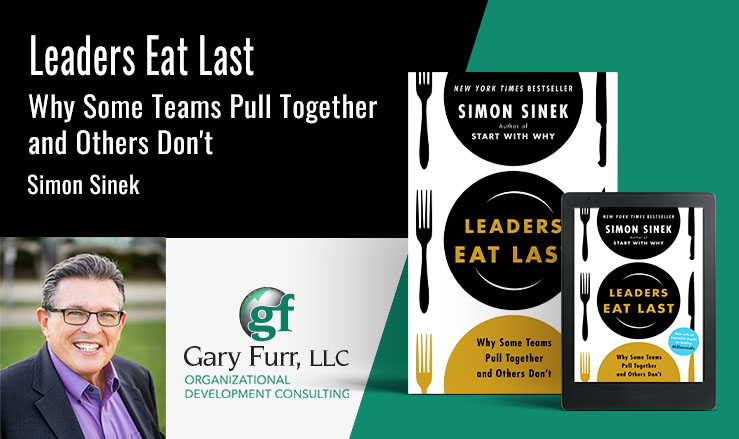
I am currently working with a large company based out of Kansas City, MO, with two operations in Oregon. In helping to lead the management team towards more effective leadership, we are reading Simon Sinek’s book Leaders Eat Last.

We recently discussed chapter 13, Abstraction Kills. In his book, Mr. Sinek describes a situation where an experiment was being conducted in which volunteers were enlisted to administer an electrical shock to individuals they did not know. Unbeknownst to the volunteers of the shock treatments, the individuals who was receiving the shock treatment were the scientist conducting the experiment. The various levels of voltage were listed on each switch were labeled from slight shock, moderate shock, strong shock, very strong shock, intense shock, extremely intense shock, all the way up to danger severe shock. As the volunteer of the shock treatment increased the electrical current, the scientist inside the room would scream in pain and ask to have it stop. They weren’t actually being shocked, but the shock volunteer did not know that. When the individual would try to stop the experiment, they were repeatedly told the experiment must go on.

Mr. Sinek compares this behavior to what occurred during World War II in which crimes against humanity were committed on a massive scale and how would this be possible? “It wasn’t possible for a few warped minds to have effectively committed genocide on such a remarkable scale.” It required the help thousands and perhaps millions of people.”

The most common defense that many Nazis offered after the war for their behavior was “we had no choice, we were just following orders.” They were able to rationalize their behavior because they were told to do so, similar to the volunteer of the experimental shock treatments when the person in charge kept saying the experiment must go on and the volunteer would continue.

I believe there were two other factors at play here. The victimized individuals had no weapons to defend themselves and they lived in great fear. How does this apply to the workplace environment and we as leaders?

As leaders we must understand that we are not in charge of our employees, but they are in our charge, and we must treat them with dignity, kindness, and respect. When we look at our employees as if we are in charge of them, it changes the dynamics. Just like the victimized individuals during World War II had no weapons, our employees have no weapons to defend themselves from tyrannical and harsh leadership other than to leave, which is often not financially feasible. When a leader looks at their leadership style as if they are in charge of their employees the dynamic sets up a negative situation and the employees live in fear. They have no real weapons to defend themselves and live in fear of being let go, which I would venture to say sets up the company up for low morale and a low productivity environment.

As leaders it is our responsibility to take care of those who are in our charge and do what we can do to assure their success. After all, if our employees are engaged and successful, the company will be successful.

Simon Sinek’s book, Leaders Eat Last, is available on Amazon.

--- END POST ---

Introducing Our Latest SME Book: IMPACT

IMPACT: Business Advice for Small and Medium Enterprises

IMPACT: Business Advice for Small and Medium Enterprises
(Certified Global SME Advisor Series 2021 Book 4)

I belong to The Certified SME Global Advisor group. The organization is made up of six consultants from around the world: Dean Robinson and David Oglive from Australia, Phil Symschych and Kim Gerencser from Saskatchewan, Canada, Tim Forest from Florida, Dan Weedin from Washington State and me from Portland, Oregon. We meet monthly on a zoom call and in person once a year for a Mastermind conference where we discuss best practices and how to improve our consulting practices. The idea is that we can continually learn from our peers and up our game. We recently met in Whistler, B.C for our annual conference and it did not disappoint. It was a great learning experience for everyone.

As part of this group, once a quarter we contribute to the publication of a book of business advice for small and medium enterprises. So far we have published seven books; Covid Business Strategies, Crisis Management, Strengthen Your Business, Full Speed Ahead, Acceleration, Traction, The Future of Work, and now Impact our eighth publication.  All available on Amazon.

Impact seeks to advise small, medium, and large companies to help them grow, increase revenues and profits, and provide more value to their customers. This issue focuses on maximizing your impact for your clients, helping them achieve their desired transformations, and getting results. There are ideas on analyzing your entire business, creating alignment, improving the impact of an enterprise resource planning (ERP) system, managing growth, and checking for your unconscious bias. The chapters will help you and your leadership team to maximize your impact, develop and implement powerful and pragmatic strategies in your business so you can generate more revenue and profit, provide more value to your customers, and secure your own financial future.  The best investment you can make as a business owner is in yourself. Learn valuable tips that can help you step up your game.

Available on Amazon

IMPACT: Business Advice for Small and Medium Enterprises 2021 Series Book 4

See more books on the Business Publishing Success Website:

Business Success Publishing


The Authors

Gary Furr is an organizational develop consultant with over 40-years of C-level business experience coupled with an MBA in organizational development. Gary lives in Portland, OR and is the author of It’s Not Hard, It’s Business and Make Your Banker Happy
WEBSITE

Art Koch is a results-oriented business consultant with 20-years of business experience throughout the U.S., Canada, Mexico, South America, and Europe.
WEBSITE

David Ogilvie is an experienced ERP and business consultant who works with manufacturing, warehousing, and distribution businesses in Australia, New Zealand, and the United States.
WEBSITE

Phil Symchych is the president and founder of SME Business Wealth Builder Corporation based in Canada and for 26-years has advised more than 120 privately held small and medium businesses. He is author of the book, The Business Wealth Builder.
WEBSITE

Dan Weedin is an experienced entrepreneur, leader, speaker, and consultant with the goal to safeguard the valuation and legacy for his clients. Dan is the author of Unleashed Leadership and lives in Seattle, WA
WEBSITE

--- END POST ---

The Upside of Uncertainty: A Guide to Finding Possibility in the Unknown

The Upside of Uncertainty Featured Image

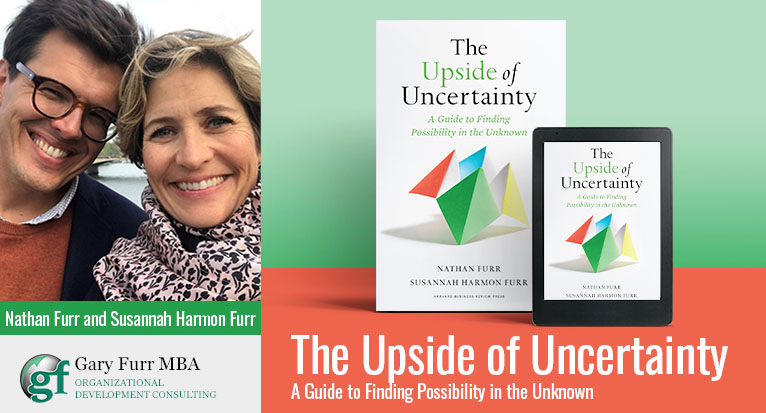
I recently purchased my oldest son’s new book, The Upside of Uncertainty, published by Harvard Business Review Press. I have to be honest and say, it is one of the best books I have read in a long-time, and I read a lot of books. I say this, not because Nathan is my son, but because the book is an excellent read, and I see so much of my own life-long learning experiences exhibited in this book. I’m sure others would as well.

At a recent interview with a journalist, she said, “she was really moved by what was written” and at the end of the interview she said, “it was a love letter to humanity.”

An ex-Notre Dame professor who reads 100 books a year said “this was the best book he’s read in years. “He called it a Love letter to life.”

Here is what the Amazon review of the book says:

This book is a science-backed guide for navigating and thriving through uncertainty—based on interviews and insights from world-renowned leaders, innovators, entrepreneurs, artists, and creatives.

Whether you’re searching for courage to start a new project, change careers, launch a business, develop an idea, or reinvent yourself after a disappointment or life change, you will face uncertainty—that ambiguous and uncomfortable state that often makes us feel confused, anxious, and afraid to act. Though these moments are difficult, they offer opportunities for personal growth, innovation, and creativity.

In The Upside of Uncertainty, INSEAD professor Nathan Furr and entrepreneur Susannah Harmon Furr provide a sweeping guide to embracing uncertainty and transforming it into a force for good. Drawing from hundreds of interviews, along with pioneering research in psychology, innovation, and behavioral economics, Nathan and Susannah provide dozens of tools—including mental models, techniques, and reflections—for seeing the upside of uncertainty, developing a vision for what to do next, and opening ourselves up to new possibilities.

In our fast-paced, ever-changing world, uncertainty is on the rise. We face it every day. But few of us have been taught the techniques to navigate it well. The Upside of Uncertainty provides the inspiration, tools, and strategies you need to thrive through the inevitable plot twists in your life and career.

After I read the part in the book about walking down a path at night in Tuscany illuminated by thousands of fireflies, it made me want to experience this in my lifetime.

Reading the chapter on Don’t Force Machinery I am reminded of a lesson in life that I learned a long-time ago. Most of the time, things don’t happen in the time frame I wanted them to happen in, but they happened in the time frame that they should have happened in.

The book is full of examples of life-long experiences and looking at uncertainty as an opportunity to learn and grow.

The Upside of Uncertainty

Get Your Copy on Amazon

--- END POST ---

Disruption Is Normal

Disruption Is Normal

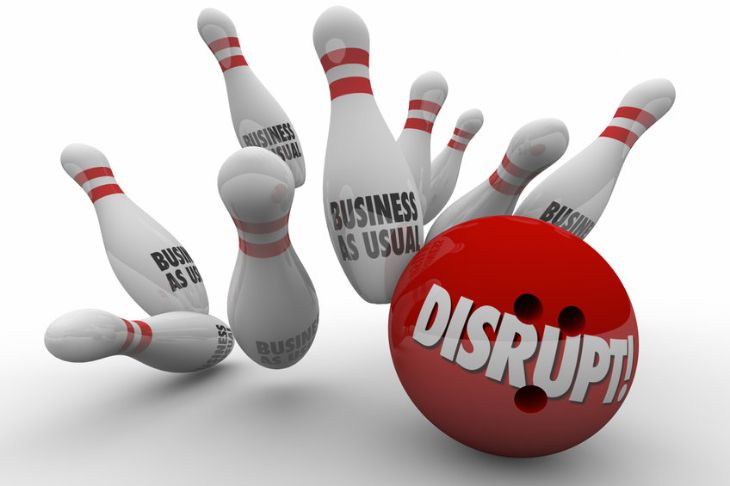
I have heard so many people say they cannot wait for things to get back to normal – meaning pre-pandemic conditions – and I have heard numerous others talking about the new normal. But has there ever been a normal? I do not believe anyone can explain what normal was or will be in the business world.

If you looked at business in terms of a timeline, I believe you would see that there has been a continual pattern of disruption throughout our history here in the United States. Yes, there have been periods of relative calm, but they have often been disrupted; as a result, businesses had to adapt to the new paradigm, which eventually was referred to as “normal.”

Business Disruption Bowling Ball and Pins

Here’s a brief history of disruption in the United States:

  • 1850–1900: Industrial Revolution followed by the Civil War and the completion of the cross-country railway system (which spurred the country into a period of rapid growth)
  • 1900–1950: The age of science and mass production, during which the country experienced the Great Depression and two World Wars
  • 1950–1970: The digital revolution, also known as the third revolution
  • 1973–1975: Energy Crisis – the country experienced an oil embargo
  • 1980: Second Energy Crisis
  • 1981–1982: Double Dip Recession
  • 1990–1991: Savings & Loan Crisis
  • 1995–2001: Tech Bubble
  • September 11, 2001: The attack on the World Trade Center
  • 2002: Stock Market downturn due to over-valued internet stocks, accounting scandals, and a loss of investor confidence
  • 2003: Launching of the Iraq War
  • 2005: Hurricanes Katrina and Rita
  • 2007: Enron collapses
  • 2007–2010: The Great Recession
  • 2020: Worldwide COVID-19 pandemic that disrupted supply chains and business

During every period in between, people described that time as normal, only to have that sense of normalcy disrupted when a new form of normal evolved. With all this disruption in the United States, what really is normal? Can we even define it?

Regardless of a definition, what we do know is history tends to repeat itself, which makes learning lessons from the past particularly valuable.

Throughout the depressions, recessions, dot-com crashes, housing crashes, and pandemics, one thing is true: disruption to the business environment is normal. So, when we talk about the new normal, what are we really talking about? I believe we are talking about the periods of calm between every major disruption. The problem with this cycle is that business owners tend to get complacent when it is calm, but the reality is that those periods of calm will not last.

As history has shown, more disruption is guaranteed to be coming our way.

With this understanding, it is imperative that business owners start preparing their businesses to be adaptable and flexible so that they thrive during these challenging times and the ones to come.

The true normal in business is disruption which highlights the need to be flexible and agile.

Businesses, like human beings, are living breathing entities that must adapt and evolve to survive. Adapting to a constantly changing environment is normal in business.

Remember when it was normal that businesses create a 20-year plan for their future. This recommendation then evolved into a 15-year plan, then a 10-year plan. But planning 10 years out is not realistic or effective in today’s fast-paced business environment.

As a business owner, you must adapt and evolve at a much faster pace than ever before. Five years is even too far out to look ahead and plan; the pace of change will make such planning ineffective. Even three years may be too distant for good planning. Twelve months may just be the new norm.

Accept the fact that what got you to your pre-pandemic state of business may not be what you need to get to the next step in your business progression.

Pre-pandemic business was running smoothly, many businesses were making good money, and it felt like the norm.

For many, the pandemic impact felt like hitting a brick wall going 80 mph. Many business owners had become complacent, thinking that this pre-pandemic environment was normal, and it was going to continue for a very long time.

There is a rude awaking ahead for business owners who believe as soon as the pandemic is over, business will return to what was considered normal. Quite simply, too much has changed for that to be true. The business environment has once again changed, and those who adapt to this change will excel moving forward.

The future of work and what it will look like post- pandemic is anyone’s guess, but every business still needs to adhere to some key business principles, adapting them accordingly, to thrive in the post- pandemic future.

Has Your Strategy Changed?

It is time to rethink your strategy, making sure it is clear how you will add value to the customer and meet customer needs coming out of the pandemic. My definition of strategy: strategy is determining what the customer needs and then meeting that need. Your customers’ needs may have changed and thinking it will be business as usual is a mistake.

How do you determine whether your previous strategy is still effective? By communicating with your customers more often than you probably think is necessary. Inquire about their needs post-pandemic, how their business has changed, and what you can do to meet their new needs. A clear strategy on how you will meet and exceed customer needs is the first step to a thriving post- pandemic business.

Reevaluate Your Vision of the Future

There has always been a need to have a clear vision and direction for your business. It is likely that your previous vision, if you had one, has changed. Use a shorter timeline and think about where you want your business to be in the next 12 months. Base this new vision on the information you obtained from communicating with your customers as well as on the intel you gather about the current business environment.

It’s imperative that every business create a plan of what they want their business to look like in the future. Before we begin any journey, it is important to know where we are starting from.

What is the current state of your business (which has likely changed since March 2020), and what do you want it to look like a year from now?

Looking no further than a year allows you much more flexibility to adjust, adapt, and change with the constantly changing business environment.

Examine Your Core Values

Businesses should continue to articulate and operate from their core values; this has not changed. In fact, in difficult times, it is important to evaluate your core values and determine whether you are operating from a set of core values that is clearly defined and articulated.

Perhaps you have drifted away from your values, and it is time to bring them to the surface and determine whether you still believe and want to operate from that same set of core values.

Upgrade Your Leadership Skills

Leadership is critical now more than ever. The leadership skills you used pre-pandemic may need to be reevaluated, and it may even be necessary to upgrade that skill set to deal with the rapidly changing business environment.

Employees today want — and need — to be engaged and be a part of something bigger than themselves and that provides more meaning in their lives. Whether your business does well or not will come down to effective leadership. You cannot rely on leadership skills you learned 20 or 30 years ago. It is likely time for an upgrade.

Talent Management Is More Critical Now

The current reports coming out in the news say there are many jobs with no one willing to fill them. This is due to several reasons: employees being afraid to come back to work due to COVID; parents not having a source of childcare to return to work; and individuals making easy money on unemployment and government programs, creating less of an incentive to return to the workplace.

All of these factors make leading and managing the workplace environment even more critical. Employers competing for a limited labor pool will resort to offering higher wages, better benefits, and varying work schedules to accommodate the changing face of employment.

The new experience of working from home has also disrupted the traditional business environment. Many employees who were accustomed to coming into the office every day no longer want to do so, creating greater challenges to leading and managing your talented employees. Rethinking the work environment to maximize efficiency and effectiveness is essential to thriving in today’s workplace.

Have You Evaluated Your Marketing and Sales Plans?

The methods for marketing and selling in your business have changed dramatically due in part to the digital revolution. If you have not examined your marketing methods and evaluated their performance recently, then it is time to do so. Doing the same thing over and over and expecting improved results in a new environment is a recipe for slow sales.

Selling must be proactive. You cannot wait for sales to come to you. Go after sales by proactively communicating with your customers. Remember, strategy is determining what the customer needs and then meeting that need. You do that by communicating with your customers, and it is the same with sales.

If you want to sell more, communicate more. If you want to sell less, communicate less.

Focus on Operations

With fewer employees applying for work, and increased wages, businesses need to create more throughput, with the same production cost or less. The way to do that is through efficiencies and mechanization. If you have not value stream mapped or process mapped your business recently, now is the time to do so. Removing waste from your processes and procedures will help your business thrive.

Meeting customer needs in the most efficient and effective manner possible is critical to financial success. Mechanization may be a great method to improve output without increasing labor and even lowering the cost per unit while improving quality.

Financial Management is a Day-to-Day Activity

With every disruption in the business environment comes a disruption to your financial stability. Managing your finances is critical to success. During the pre-pandemic norm, many businesses were making very good revenue, and some became complacent. This business environment has changed that, and if you were not practicing good financial hygiene pre-pandemic, your business is likely feeling those effects. This is a reminder about the value of ongoing financial management, and the way that will help you meet a disruption head on.

Financial numbers drive everything in business, and understanding those numbers is important to your financial success. You cannot run your business by the seat of your pants, or the balance in your checkbook. Intense focus and thorough understanding of your finances is key to your future.

Make Friends with Your Banker and Engage Advisors

It is valuable to have a good relationship with your banker, and that takes being proactive. During good times, people often don’t bother to communicate with their banker as often as they should, and during bad times, business owners will hunker down and communicate even less. This is the wrong approach.

Your banker wants you to be successful and they understand the strain on business when there has been a disruption. Develop your relationship with your banker during the good times, and it will pay off when the bad times come; unfortunately, they always do come at some point.

Enlist advisors to provide an objective, independent, non- emotional, outside-the-box view of your business. Since they work with many companies in many industries, they often see things you cannot see.

Think Building Wealth Rather Than Avoiding Taxes

Although I completely understand the desire to not pay the tax man any more than you have to, but in minimizing your tax burden, you may be creating bigger problems.

To avoid paying taxes, many business owners try to spend their money at the end of the year. This, however, is a short-term strategy that will create a long-term negative impact on your business.

When you are thinking about avoiding taxes, you are not thinking about creating wealth in your business.

Maximizing after-tax profit to build wealth is a much more effective long-term strategy than focusing on short-term tax minimization. Without creating wealth in your business, you will have difficulty getting any kind of bank financing should you need it; or if you decide to sell your business, it will not be as attractive to a potential buyer.

Business wealth will also help you navigate and thrive during an economic disruption. Not having cash reserves in the business and needing to borrow from the bank for either short-term or long-term financing will not be possible if you have been focusing on tax avoidance rather than wealth creation.

future of business and work. If we get lulled into thinking “normal” is going gangbusters, then we are at risk of driving into a brick wall without a seat belt or an airbag.

History shows us the value of being prepared; following fundamental business principles helps us to be prepared. Regardless of what business you are in, the principles are the same and adhering to them leads to success.

For more on this topic: The book, The Future of Work, is a collection of advice from a group of six business advisors and consultants across three continents and four countries who specialize in working with small and medium enterprises. Get your copy on Amazon.


For more information on how to ensure you have a successful business in 2022, reach out to me at 503-312-3145 or email me at garyfurr@garyfurrconsulting.com

You can also visit my website at http://www.garyfurr@garyfurrconsulting.com

Listen to my podcast Turning Complexity into Simplicity®

--- END POST ---

Scroll to Top