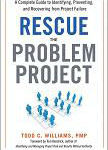
Rescue the Problem Project

Rescue the Problem ProjectRescue the Problem Project

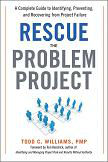
I recently read and would like to highly recommend Todd Williams book, “Rescue the Problem Project”

Todd gives great guidance and sound advice in accurately assessing and dealing with troubled projects. He is an experienced practitioner who has been involved with turning around hundreds of failing projects.

Practical Advice

Todd gives practical advice on how to audit projects, analyze data, and applicable approaches and solutions for those finding themselves with a troubled project that may be over budget, running late or out of control.

Anyone who is involved with running projects needs to read his sound advice to prevent your project from getting into trouble.

http://www.amazon.com/Rescue-Problem-Project-Identifying-Preventing/dp/0814416829/ref=sr_1_1?s=books&ie=UTF8&qid=1415904665&sr=1-1&keywords=rescue+the+problem+project

--- END POST ---

Adopt a Mindset of Optimization

13767085_s

Adopt the Mindset of Optimization

As CEO’s and owners of our companies, we need to elevate our mindset and obsess about getting more from our current resources and efforts. We must ask others and ourselves better questions. We must start to ask ourselves, “How can our businesses get greater results from every action we take, every expenditure we make, every effort we expend, every relationship we have”? We need to avoid the status quo like a deadly virus. We must embrace fully the philosophies that, “good enough never is” and “we can always do better”.

Adopting a Mindset of Optimization is about Leverage

Optimization (also known as leverage) is a mindset of maximizing our results while simultaneously minimizing the amount of time, effort, risk, money, and energy we expend. It’s all about getting greater productivity, performance, profitability and payback from our ideas, assets, knowledge, systems, processes, practices, people and opportunities. Overlook nothing; leverage opportunities are everywhere.

Optimization is about using our minds

Optimization is all about using our minds and limited business resources in new and better ways. It’s about using our creative intelligence as an incredible force to increase our sales, customer satisfaction, profits, quality, etc. Optimization is about freeing ourselves and our organizations from limiting beliefs, the “we’ve always done it this way” attitudes, and established best industry practices. Optimization is searching for opportunities within and without our companies where the application of focus or force will yield substantially multiplied results. For example, if we start using telephone calls to follow-up our direct mail campaigns, we may multiply our sales results by staggering amounts.

Just as a tire jack can lift the tremendous weight of a car for a tire change, so too can the strategy of optimization help us significantly lift our company’s revenues, improve operations, and lighten our daily load. A lever, fulcrum and slight force can lift significant weight if we know how to use these tools. We should learn about leverage so we can begin to elevate and optimize our business results.

Master the Art of Optimization

To master the art of optimization, we need to adopt an opportunity mindset. To leave the status quo behind, we need to ask continually the following types of questions:

What is the best and highest use of our time, talent, and treasures?

What resources are we underutilizing?

How can we maximize our returns/output and minimize our input?

How can we work smarter, not harder?

Which strategies will give us super-sized results?

What processes or departments within our business are under-performing?

What past or current relationships could we more fully leverage (i.e. customers, employees, vendors, suppliers, advisers, etc.)?

What other industries could provide us with some innovative best practices?

Where are the hidden opportunities within our business, our employees, our suppliers/vendors, our business partners, our customer base, our competitors, and our business processes?

How can we get a greater return/payoff using the least amount of money, time, risk, etc.?

How can we be more effective, more productive?

How can we get better every day in every way?

What suggestions from our customers should we pursue first?

If we expand our mind and our leadership potential, our business potential and opportunities expand exponentially. The more we grow as a leader, the more our business grows as a market leader. Think optimization, not status quo.

If you would like to achieve greater freedom, fulfillment and financial returns from your business, please give me a call. I can dramatically improve your individual and organizational effectiveness.

--- END POST ---
Don’t be Scared of Your Business this Halloween

29747764_s

DON’T BE SCARED OF YOUR BUSINESS THIS HALLOWEEN: 5 TRICKS FOR ELIMINATING FEAR

Have you noticed that when Halloween arrives, we tend to look for scarier moments the older we get? When we’re little Halloween means putting on that princess or ghost costume, going door-to-door and getting candy. When we’re a teenager, it’s about pulling pranks as a zombie or vampire. Then, when we get older, we look for a good fright with haunted houses and scary movies.

Just remember, no matter your age, fear should never work its way into your business. Fear will cripple your ability to take action, make improvements and be successful. So if your business is the scariest thing in your life this Halloween, here’s a plan for success to help you conquer your fears:

  1. Set Goals

Setting challenging but achievable and realistic goals is a great way to get your business moving in the right direction. Decide what benchmarks you want to meet next quarter – and next year – and determine how you’re going to measure whether or not you’ve met those goals.

  1. Take Action

Look at the goals you’ve set for yourself or your business. What needs to happen in order for you to meet those goals? Do you need to prospect and network more? Do you need to create a new marketing plan? Do you need to build new business systems? Create an action plan to meet whatever goals you’ve set.

  1. Monitor Results

Every few weeks you need to sit down and look at how your action plan is helping you meet your goals. What’s working? What’s not working? If you are able to meet your goals early, celebrate the success and set a new goal. If you’re not able to meet your goals this time, evaluate what you could be doing differently and make changes.

  1. Make Adjustments

No great plan is set in stone from Day One. If you find that the action plan you’ve created to meet your goals just isn’t getting you any closer to those benchmarks, it’s time to make adjustments! For starters, look at your schedule and see where you’re spending your time. If you are able to free up more time by delegating lower level tasks, you can dedicate more time to meeting your goals.

  1. Take Additional Action

Whether it’s reorganizing your schedule and priorities to focus more on your goals or finding ways to set-up additional meetings with potential clients, sometimes meeting your goals successfully requires taking additional action – or different actions – along the way. Look at what adjustments you decided needed to be made and then take additional action.

Repeat

Maybe you’ve been successful at meeting your goals and conquering your fears or maybe you still have some work to do. Either way, setting new goals, taking action, monitoring results, making adjustments and then taking additional action will always help you make improvements.

If you’re having trouble with any or all of these steps, consider giving me a call.

--- END POST ---

Adopt a Big-Picture Perspective

“The best plans are straightforward documents that spell out the who, what, where, why and how much.”-Paula 11983650_sNelson

Be an Effective Leader

To be an effective CEO and leader, we must adopt a big-picture perspective. As a leader it’s important that we don’t over complicate our businesses. Keep it simple and straightforward. Simplicity allows for clarity of focus and focus allows for superior performance.

Unnecessary Complexity

I have seen many businesses that built in unnecessary complexity. The longer they are in business the more complexity gets built into the organization, slowing down processes and having a negative affect on productivity.

Leadership Process

As owner or CEO, we are solely responsible for the company’s leadership process (direction, strategy, focus, goals, accountability) and the business development process (building a systems-based business that is self-managing, self-improving, and nearly runs itself). As such, there are only a handful of additional major processes we need to ensure are in place, well documented, and working smoothly and optimally: marketing, selling, operations (customer fulfillment), customer service, and back-office functions.

Remember to think long term, see the bigger picture and then be proactive. Adopt a big-picture perspective.

--- END POST ---

Leadership, the link in the chain

11155838_sEffective Leadership helps to strengthen the links in the organizational chain

Leadership and People Management

Recently I conducted a workshop on people management. In preparing for the workshop I came across a diagram of how our employees affect our business results. Basically it described how employee beliefs will affect employee attitudes and actions. Those employee attitudes and actions then have a significant effect on every interaction said employee’s have with our customers and clients, which leads to our customer/clients beliefs about our company. These customer/client beliefs intern lead to customer/client actions and in the end to our actual business results.

When you think about it this way, we can really see how important our employee beliefs about our company’s effects our business results. Negative beliefs can have a dramatic effect on the organizations results.

If we step back from this equation and take a hard look, we can see that our employee beliefs are most often the result of leadership within our organizations.

 When good things happen in a business it is because of good leadership and when bad things happen it’s usually due to poor leadership.

Our leadership ability for better or worse, always determines our effectiveness and potential impact on or organization.

In order to effectively manage other people, we must first effectively manage ourselves.

 I like to describe business as links of chain all linked together.

Each link represents an important function within the business. Strategy, finance and accounting, marketing, sales, HR, production, operations, inventory control, etc. A weak link in any one of the major functions makes the entire chain weak. And a weak chain cannot perform at its optimum capacity without problems.

Effective leadership helps to ensure each link is as strong as possible and working together in unison.

How strong are the links in your organization?

If you are in need of leadership training and development as an owner or CEO, or some of your team members are in need of coaching and training, don’t wait until one of the links in the chain weakens and eventually breaks, give me a call. I can help.

--- END POST ---

Enthusiasm

8109793_s

“Enthusiasm is contagious. Be a carrier.”-Susan Rabin
Great leaders live their lives and run their businesses with ENTHUSIASM!

Legendary Leaders have Enthusiasm

When people think of legendary football coaches, they nearly always mention Vince Lombardi. He said to his team, “You are to have confidence in me and enthusiasm for my system. Hereafter, I want you to think of only three things: your home, your religion, and the Green Bay Packers. Let enthusiasm take hold of you.” He drilled one message into his players before every game. “If you aren’t fired with enthusiasm, you will be fired with enthusiasm.”

Everyone Likes Excitement

When people bubble with personal energy, others like being around them. Henry Ford built a giant automotive empire, and he knew what it took to produce results. “Enthusiasm is at the bottom of all progress! With it, there is accomplishment,” said Ford. “Without it, there are only alibis.”

Mark Twain was once asked the reason for his success. He replied, “I was born excited.” Tom Watson, founder of IBM, said, “The great accomplishments of man have resulted from the transmission of ideas and enthusiasm.” Zig Ziglar, author and a premier motivational speaker, says, “For every sale you miss because you’re too enthusiastic, you will miss a hundred because you’re not enthusiastic enough.”

Jim Valvano, the great basketball coach for the North Carolina State Wolfpack, who died after fighting a long, courageous battle against the cancer in his body, remained enthusiastic to the day of his death. Valvano said, “I urge all of you, all of you, to enjoy your life, the precious moments you have. To spend each day with some laughter and some thought, to get your emotions going. To be enthusiastic every day.”

Choose to be Enthusiastic

When we choose to add enthusiasm to our lives, people immediately recognize it and often comment on it. When we’re enthusiastic, our attitude is affected. Enthusiasm is contagious. It’s difficult to remain neutral or indifferent in the presence of a positive thinker. Our goal should be to make enthusiasm a total and permanent part of everything we do!

 Our leadership and other strengths are not worth much if we are not able to achieve leverage and results through other people. Without question, our enthusiasm will help us achieve such leverage and results.

--- END POST ---

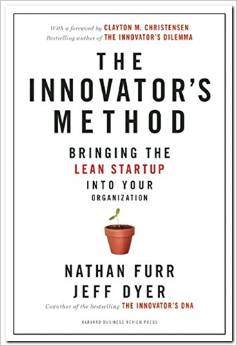
“The Innovator’s Method: Bringing the Lean Start-Up Into Your Organization”

Unknown

“The Innovator’s Method”

by Dr. Nathan Furr and Jeff Dyer shows you the methods that the best innovators use to conceive, test, and validate ideas before implementing them. Developed through research on world-class innovators such as Google, Tesla, Amazon, and Regeneron,  this process helps take the risk out of innovation and offers an additional perspective on the role of a leader: high uncertainty problems require different management principles than low uncertainty problems.

Have you ever come up with an idea for a new product or service but didn’t take any action because you thought it would be too risky?

Or at work, have you had what you thought could be a big idea for your company—perhaps changing the way you develop or distribute a product, provide customer service, or hire and train your employees? If you have, but you haven’t known how to take the next step, you need to understand what the authors call the innovator’s method—a set of tools emerging from lean start-up, design thinking, and agile software development that are revolutionizing how new ideas are created, refined, and brought to market.


Tools to help Entrepreneurs

To date these tools have helped entrepreneurs, designers, and software developers manage uncertainty—through cheap and rapid experiments that systematically lower failure rates and risk. But many managers and leaders struggle to apply these powerful tools within their organizations, as they often run counter to traditional managerial thinking and practice.

Authors Nathan Furr and Jeff Dyer wrote this book to address that very problem.

Following the breakout success of The Innovator’s DNA—which Dyer wrote with Hal Gregersen and bestselling author Clay Christensen to provide a framework for generating ideas—this book shows how to make those ideas actually happen, to commercialize them for success.

Based on research

Based on their research inside corporations and successful start-ups, Furr and Dyer developed the innovator’s method, an end-to-end process for creating, refining, and bringing ideas to market. They show when and how to apply the tools of their method, how to adapt them to your business, and how to answer commonly asked questions about the method itself, including: How do we know if this idea is worth pursuing? Have we found the right solution? What is the best business model for this new offering? This book focuses on the “how”—how to test, how to validate, and how to commercialize ideas with the lean, design, and agile techniques successful start-ups use.

Whether you’re launching a start-up, leading an established one, or simply working to get a new product off the ground in an existing company, this book is for you.


--- END POST ---

Ask your employees for input

9725268_sThe greatest compliment that was ever paid me was when one asked me what I thought, and attended to my answer.”-Henry David Thoreau

We should be asking our employees for input

Do you regularly ask your employees for input, to share their thoughts and suggestions? Do you allow them to contribute ideas and then buy into the direction and goals of the company?

Don’t attempt to go it alone

Attempting to go it alone rarely succeeds. In the business world, results have proven again and again that the most powerful decisions that move a company forward are not those of a strong, authoritarian president. Instead they are decisions in which both the employees and management have come together to find a solution.

Sam Walton, founder of Wal-Mart who became one of the richest men in America, believed in hearing what people, especially his employees, had to say. Once he flew his aircraft to Mt. Pleasant, Texas, and parked the plane with instructions to his copilot to meet him one hundred or so miles down the road. He then flagged a Wal-Mart truck and rode the rest of the way to “chat with the driver.” He said, “It seemed like so much fun.” It was also a great learning experience.

Dallas-based Chili’s, one of the nation’s five best-run food service chains, according to Restaurants & Institutions magazine, is another company with a leader who listens to employees. Norman Brinker, Chili’s chairman, believes that responsive communication is the key to good relations with both employees and customers. He also has learned that such communication pays big dividends. Almost 80 percent of Chili’s menu comes from suggestions made by unit managers.

 Seek input from your employees and start listening!

Our leadership and other strengths are not worth much if you are not able to achieve leverage and results through other people. Keep reminding yourself and your management team that the greatest assets of your business are your people!

--- END POST ---

Be a Role Model for Others

14037720_s

“Setting an example is not the main means of influencing others; it is the only  means.”-Claudian

As leader, we must be a Role Model for others!

Know that we set the tone, pace, environment, and personality of our company. By our consistent actions, we establish what the company values and what gets rewarded. We lead by example and to a large extent, shape the culture of our organizations.

In large part, we maintain the culture.

In large part, we maintain the culture by participating in the interviewing, hiring, reviewing and rewarding of our employees. We need to always make time for these critical activities.

Above all, we should try to create a culture where our people feel appreciated and important and where they believe that they can reach their potential – full use of their talents. William James said that “the deepest principle in human nature is the craving to be appreciated.” If we achieve such a supportive and fear-free culture, we will have created a successful company with solid retention of our employees.

Make coming to work enjoyable

Also, make coming to work enjoyable. Identify, celebrate, and remember our companies victories. Capture them in stories that we repeat, especially to new hires.

Our leadership and other strengths are not worth much if we are not able to achieve leverage and results through other people. Keep reminding yourself and your management team that the greatest assets of your business are our people!

--- END POST ---

Eight Marketing Strategies for a Small Budget

15285627_s

“There are no magic wands, no hidden tricks, and no secret handshakes that can bring you immediate success, but with time, energy, and determination you can get there.” – Darren Rowse, founder of ProBlogger

Eight Marketing Strategies for a Small Budget

Everyone knows that building a business takes time and persistence, but it also takes effective marketing.However, most of us don’t have the luxury of starting a business with a six-figure budget. So how do you throw yourself into a solid marketing plan with a teeny marketing budget? Here are some strategies we’ve found work for our clients. Just remember that when you’re spending less money on marketing, you’re likely looking at spending more time to achieve great results.

 Here are Eight Inexpensive Marketing Tips

1) Leverage Relationships:

You certainly have people in your life who will benefit from the success of your business, like your banker, your CPA, your suppliers, your vendors, etc. Determine who would make good informal sales agents for your business by considering who will benefit most from your growth. Once you have that figured out, go to your contacts and ask those people to support your growth efforts through leads, referrals, testimonials, etc.

 2) Work with Current Customers:

Your current customers know that you have a great product or service to offer to the community – and they know people who can benefit from what you’re offering. Ask them for introductions and referrals to other potential buyers or ask them to provide endorsements or testimonials, or see if they’d serve as references. Also, every time you work with customers, ask if there are any needs you haven’t met. There is always more you can do (and charge for.)

 3) Build your Referral Sources:

Take a look at your best referral sources in the last year. Where has most of your business come from? First of all, make sure you thank those people or service providers for helping to build your businesses and then create a strategy to stay in touch with these sources as often as possible. Now consider how you can copy these results. If you’re an estate sale company and your best referrals have come from realtors, how can you meet more realtors?

 4) Make Working with You Easy:

If you’re asking someone to do business with you, consider offering a money-back guarantee. A credible and specific guarantee will bring in much more business than it costs you. If you’re uncomfortable providing a guarantee, consider why. Is there something you need to improve in your system to make your business less risky for customers?

 5) Reach More at Once:

There are only so many hours in the day, so situations where you can influence multiple people at once will serve you well. Consider hosting special events or seminars for customers, referral sources, and prospects. If you can combine your event with people who would make strong strategic partners, you can tap into their networks as well.

 6) Spread the Word:

Even in the Internet age, having a public relations strategy is important. Get to know your local media outlets and reporters and be sure to share stories about changes in your business, especially expansions in staff or services. Get to know the executive directors of the various organizations in your target market.

 7) Use Social Media:

Building social media pages is a slow process, but it’s important to be able to connect with any potential customers on any platform. If you don’t have a Facebook page and a potential customer searches for you on Facebook, how will that look? If you have loyal customers, ask them to write reviews for your Facebook, Google+ and LinkedIn pages. Those are powerful messages to potential customers! You can also use LinkedIn to build your personal referral network by leveraging groups. There’s plenty of free training out there for exactly how to make that work.

 8) Leverage Indirect Competitors:

Are there competitors in your market you wouldn’t necessarily go head-to-head against when looking for customers? Maybe you are in slightly different markets or you serve different populations with a similar service? If you’re a residential painter, can you build a relationship with a commercial painter to let leads flow both ways?

 Do you have low-cost marketing strategies that have worked for you?

If you’re struggling to make strides in marketing – or any aspect of your business – it’s time to see what working with an experienced coach and consultant can do to help you grow your business to the next level.

--- END POST ---

Scroll to Top