Author name: Gary Furr

Operations

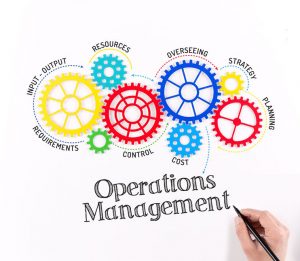
The need for organizations to improve productivity and quality is at an all-time high. With competition increasing exponentially, effective operations management and decision-making can have a major impact on your organization’s success. Operations is at the core of most businesses because it tends to consume the most resources in labor, materials, equipment, energy, and capital to manufacture products and deliver services. We are living in a global economy with competition coming from countries with lower cost of operations. Operations management is essential to gaining a competitive edge.

I worked with a company to improve their ordering and delivery process. When I started with them, I discovered that they did not have any kind of documented process for ordering material produced by a third-party provider. There were no documented procedures on how to process the material received and then deliver the final product to their customer. The current undocumented process was random and changed each day. In order to correct this problem we value-stream mapped how they thought they did it (their current state) and then process mapped each step to discover how they really performed. Once we completed that, they could see why there was chaos within the organization. We redesigned the process to make it significantly more linear and then documented it so they could follow it each and every time. This created a standard process, which generated consistency of operations.


  1. Processes and Procedures: Every organization needs documented processes and procedures to create consistency as to how work gets done. Without documented processes and procedures, there is randomness, which is the enemy of efficiency. A process is made up of a variety of functions and we cannot improve the whole without improving the various parts. Process improvement is necessary to be competitive in the marketplace, and that starts by having well-documented processes and procedures in place.
  2. Standard Work: Creating standard work procedures is the foundation for organizational improvement. Standard work represents the current understanding of the best way or the right way to perform work to create consistent results, eliminating confusion and chaos. If you watch a professional golfer, you will notice that they have a methodical, structured approach that creates consistency within their actions. This is usually the result of considerable time with coaches and trainers to create a standard operating procedure that will generate predictive results. It is the same in business. If we want to generate consistent, predictable results, we need processes and procedures that create standard work.
  3. Capacity: Capacity is the productive capability of the organization to achieve a specific output of products or services within a given period of time. Capacity is typically measured as a quantity of output per unit of time. Capacity planning is critical to an organization’s success. If the company has too much capacity, its inventory levels can rise, or it may underuse its workforce and equipment. If the company has too little capacity, it can lose customers to the competition because of the lack of ability to meet demand. Capacity decisions are important, because increasing capacity usually involves a large capital outlay. Maximizing capacity increases throughput and reduces cost per unit.

Want to improve operational efficiency adding bottom-line profit to your P&L? Give us a call. We are experts in operational efficiency. 503-312-3145

garyfurr@garyfurrconsulting.com

http://www.garyfurrconsulting.com


--- END POST ---

Marketing and Sales

.

In Seth Godin’s book The Purple Cow, he describes the experience of driving with his family through the European countryside and being enthralled by all the brown cows. He noted that their excitement did not last long, however, and he began to wonder what would happen if there were purple cows standing in the field. That would have gotten their attention. That is essentially what your marketing needs to be: a purple cow. What will differentiate you from the competition and make you stand out in the crowd?


  1. Marketing: Marketing is about sowing seeds to capture someone’s attention and get the potential customer to notice you. Your marketing needs to be focused less on your methodology or how you do things and more on why you do what you do and the benefits and results for those who will purchase your product or service. A marketing plan communicates and educates your target audience on the advantages, value, and results of doing business with you. You want to make your potential audience curious about what you have to offer.


  1. Sales Plans: If you want to be effective at selling to the potential customers you attract via marketing, it is necessary to have a plan for engaging the customer on how you will meet their needs. The reason we create plans is to generate consistent results. The larger your organization gets, the more important it is to have a clear, documented sales process to ensure your consistent success. In the current global market, all businesses are fighting harder and working smarter for their share of the market. A well-documented sales plan allows you to execute and create consistent performance. Don’t leave your sales conversation to chance and randomness, have a plan.


  1. Revenue Growth: When a business owner tells me that they have a cash flow problem, I remind them that cash flow is a lagging indicator of marketing and sales.  The cash flow problem indicates something that should have happened but did not—often it reveals a lack of effective marketing and sales. Revenue growth is a proactive activity. You cannot wait for the business to come to you; you must go out and get it. A business owner needs to be proactive in marketing their business to make it stand out, and then actively go after the business. It is no longer possible to sit around and wait for the phone to ring.

If you want to achieve greater success in your marketing and sales increasing top-line revenue and bottom-line profit, give us a call.  503-312-3145

garyfurr@garyfurrconsulting.com

http://www.garyfurrconsulting.com

--- END POST ---

Talent Management

The ability to attract and retain talent is a critical component of success. You cannot do it alone. All successful businesses need good people, and once you have those good people in place you need to be able to retain them. As a business owner, the ability to leverage other people’s time, energy, and talent to grow your company is critical to your success and your growth plans. You can only accomplish this when you have good people. Having highly talented and committed people will help you leverage your business to greater success.  With the demand for highly capable talent being high, it is even more critical than ever that your organization become the employer of choice to attract talent.



Many owners and executives I interact with have never been trained on how to interview and hire talent. Many of these same organizations have no documented onboarding and training programs to retain this talent once hired. They essentially hire warm bodies and throw them into the pool, hoping that they can swim. When they do not swim well, they blame the employee rather than examining their own actions and what part they played in the process.

When I was the COO of a $40 million company with seven locations, we needed to hire top talent in order to perform at the level we had set for ourselves. Whenever we hired someone who did not work out, we always went back to the drawing board and asked some difficult questions to examine what part we played in the candidate not working out. Did we not do a good job interviewing? Did we provide a good onboarding experience and give them the tools to be successful? Did we provide training and support to ensure their success? We always looked in the mirror first to look for our own mistakes and failures in order to improve the process and increase our odds of success.

The process of interviewing, hiring, onboarding, and training is expensive; it is important to get it right. Beyond this, there should a performance improvement and management system in place to assist staff and employees to achieve their goals and encourage greater success within the organization.

  1. Attracting Talent: Is your company the employer of choice in your industry? Do individuals who are working with your competitors seek you out for employment? The business cannot attract talent if your employees are unhappy or feel that they are being treated poorly. The best tool for hiring talent is your employees’ word of mouth telling others how great your company is.
  2. Interviewing, Hiring, Onboarding, and Retaining Talent: Part of the interviewing and hiring process is to have good job descriptions that clearly define the roles and responsibilities for each position. This will benefit both you and your employees. To help ensure success of your new hires, you must have a documented onboarding process with a checklist to make sure it is being completed thoroughly. Doing an effective job interviewing, hiring, and onboarding ensures you will not have to repeat the process again in the near future. If you do a good job interviewing, hiring, and onboarding, you will increase the odds of retaining top talent.
  3. Performance Improvement and Management: We get what we tolerate with employees. The reason employers get average work is because they tolerate average work. Performance improvement and management systems are an ongoing process of meeting with your employees to make sure they understand their roles and responsibilities and they are performing at expected levels. It is an opportunity to show them the opportunities within the organization and help them to be successful, which benefits your organization as well as your employees. The goal of performance management is not to find employees doing things wrong but to assist them in creating even greater success and job satisfaction within your organization.

Interested in learning how to improve your ability to attract, interview, hire and retain top talent? Give us a call. We are experts in business management. 503-312-3145

garyfurr@garyfurrconsulting.com

http://www.garyfurrconsulting.com

--- END POST ---

Make Your Banker Happy | Interview Podcast with Dan Weedin

Make Your Banker Happy Interview Podcast with Dan Weedin

Gary Furr joins Dan Weedin as they discuss Gary Furr’s book, Make Your Banker Happy. Gary and Dan bring expertise as business consultant members of the SME group Small and Medium Enterprises – Certified Global SME Advisors as they discuss forging a successful business relationship with your banker.

Listen to the Podcast

What You Will Learn

  • Why your relationship with your banker is important to your business
  • What changes have happened in big banks in current years
  • What advantages small to mid-market banks offer your business
  • Why you should focus on your numbers and financials
  • Why you should communicate proactively with your banker
  • How to start a relationship with a banker
  • What your banker introduction packet should include
  • Financial strategies and tip for planning for 2021

Dan Weedin interviews his guest, Gary Furr, a world-class consultant from Portland, OR. Gary is an expert in helping businesses increase Top-line Revenue and Bottom-Line Profit to achieve greater success and take their business to a new level. He has written many books, including one titled, “Make Your Banker Happy.” In this episode, Gary shares ideas on how to form a successful banking relationship.

Dan Weedin is an experienced entrepreneur, leader, and award-winning speaker who has a passion for consulting, coaching and mentoring other entrepreneurs and business professionals. He has the rare ability to translate his success in the insurance industry, public speaking, non-profit world, and athletic coaching into applicable and transferable principles that dramatically improve the effectiveness of those business owners and executives he works with.

To learn more, check out and subscribe to both Gary Furr’s and Dan Weedin’s podcasts:

--- END POST ---

Leadership and Your Management Team

The most important aspect of business success is leadership. Peak performance depends on it. Leaders set the direction and then help everyone head in the same direction.

I often run into leaders who are trying to do it all. They usually tell me that no one can do it as well as they can so they figure it is better to just do it themselves. This is a significant problem, because there is no way to grow the company without leveraging their skills. Eventually they become the roadblock to future success because one person can only make so many decisions and solve so many problems. Nothing of any great significance is ever accomplished by one person alone. It always takes others to help create success.

Directly out of college I started working for one of the brothers in a growing company. A year after I started, the brother decided to sell his share in the company and retire. I took over as COO and during that time I worked for the younger brother; that is when I learned about poor leadership. This younger brother treated everyone in a negative manner. I was eventually asked to do something I considered unethical with the employees and I declined and decided it was time for me to move on. My philosophy was that our employees were assets and as such should be treated as assets, and this philosophy was at odds with the owner of this company. I wanted to treat people with respect and kindness while at the same time holding them accountable to their roles and responsibilities, and I believed this could be done in a positive manner.


  1. Organizational Structure: The organizational structure needs to be outlined and understood by everyone in order to create consistent chain of authority and eliminate confusion. Leaders need to make sure they are getting the right people in the right seats to scale their business. Every organization needs a structure to help determine how decisions will be made and to whom staff and employees report to. It should be remembered that a leaders role is to set vision and direction and to help their staff and employees be successful.
  2. Management and Employee Development Plan: All leaders need to have a management and employee development plan in order to bring others up through the organization who can take over key positions as the organization grows. Think of your business like a sports team. Typically in sports the “A” players are on the field until something goes wrong and the team needs to bring someone off the bench to take their place. If there is no one on the bench, it will be nearly impossible for the team to win. It is the same in business: You need to have a bench to draw upon if someone decides to leave or gets sick and can no longer fill their role. This requires planning ahead.
  3. Management Succession Plan: Every business should have discussed and put in place a management succession plan. Who will move up within the organization should the leader decide to retire or move on? Succession planning typically happens in one of four places—the dining room table, the boardroom, the hospital room, or the funeral parlor. The last two are not good options. Organizations need to think about succession before it is time to sell the business and also in case something should happen to ownership. Any type of succession plan takes time, and waiting until a crisis happens is not a plan.

Do you need help in taking your business to the next level? Give us a call, we are experts in business growth. 503-312-3145

http://www.garyfurrconsulting.com

--- END POST ---

Are You Having an Impact on Your Customer?

Is your business organized to meet customer needs effectively and efficiently? Is your management team focused on meeting customer needs? Are you having an impact on the customer? What do they believe about your company? Have you asked them? Your customer beliefs about your company affect their actions which has a direct affect on your revenue. As a business owner, you need to know what your customer believes about your company and your staff.

I had a client who said that he was afraid to call his customers because he was not sure what they thought of the service he was providing. He was essentially waiting for them to call him with an order or a complaint. But wouldn’t it be better to know whether you are making a positive or a negative impression on your customer before they decide to take their business elsewhere?



Unfortunately, my client is not alone in this approach. Many business owners are waiting for their customers to call, but usually customers only call with a problem. Remember: If you are not talking to your customers, your competition probably is.

  1. Focused Communication: The only way to truly know how your customers are feeling about your product or service is to seek them out and talk with them. The process of communicating, inquiring about your service and how you could make it better, will create positive results. Focused communication builds relationships that can provide some grace when there is a problem. Create opportunities for two-way communication with your customers to proactively build those relationships and learn how they think.


  1. Customer Experience: The customer experience is everything. How well do you understand your customers’ experience with your company? Have you ever shopped your own company to discover how they treat the customer? Are you working on making it easier for your customers to do business with you? Revenue growth is an ongoing, proactive activity that requires constant outreach to your clients and customers.


  1. Results: Successful business is all about positive results. Customers care less about how you go about meeting their needs and more about the benefits and results they gain by using your service or product. Are you exceeding your customers’ needs and expectations? In today’s competitive marketplace it is important to delight your customers. Meet needs and solve problems in such a way as to make it unthinkable for them to go elsewhere. The only way to do that is persistent communication with them.

If you need help increasing your customer impact, give us a call. We are experts in business growth. 503-312-3145

http://www.garyfurrconsulting.com

--- END POST ---

Vision and Direction

The first time I visited my client’s two locations in China I immediately recognized the symptoms of the lack of a clear vision and direction. The team was working hard every day without a clear understanding of what the end results should be and why they were doing what they were doing. This made it difficult to hit short-term performance goals. Why? Because, the individuals performing the work need clarity in order to ask better questions and make better decisions when it comes to execution. To achieve superior results in business you have to know where you want to go. Every business requires a clear vision and direction.

  1. Clarity of Direction: Success depends on having clarity of direction. Clarity of where the business is going provides a picture of the future and the opportunity to set the course to get there. Without it the business will meander aimlessly off course and likely will not even meet short-term and long-term performance goals. Every journey starts with a clear vision of where you are currently and where want to go. It is not any different in business. Successful businesses have clarity of direction and a compelling vision for their organization.
  2. Communication: Once the organization has created a clear direction for the future of the company, it must be communicated to everyone within the organization. This gets everyone in the same boat and rowing in the same direction—and the only way to accomplish this is with regular and effective communication. Communicating the vision of the future gives those working within your organization confidence and hope for a brighter future that they can be a part of. It also provides meaning and purpose because most employees want to be a part of something bigger than themselves.
  3. Goals: With a clear vision and direction in place, the business and staff now need goals and action plans to help bridge the gap between the current state and the desired future. Creating a map to guide you from where you are to where you want to go is critical to your success. We create maps by chunking down your vision and direction into 90-day goals and action plans. Goal setting marks your path, and meeting those goals provides ongoing propulsion to power you toward your desired destination.


--- END POST ---

Strategy does not need to be complicated

In graduate school, one of the instructors (a business person, not a professor) told us something I have never forgotten. He said that business was relatively simple and amounts to this: Find a need, fill the need, and collect a check. Then he added: Don’t screw it up in the middle because most business owners screw it up.


As we begin this New Year it would be prudent to re-examine your current strategy and determine if it is still valid and true. Business is continually evolving and changing and the strategy you started 2020 with may not be the same strategy that will generate a successful 2021.

As a business owner, your job is to understand what the customer is trying to accomplish and determine whether you can solve their problem, meet their need, or relieve their pain. The only thing that a business really gets paid for is the results from meeting customer needs.

  1. Find the Need: The heart of good strategy is to find the need, pain, or problem your customer is experiencing. This is what the customer wants resolved. Business success is about solving your customers’ problems or relieving their pain. Very few customers will pay for solving a non-problem. Strategy is the intentional focus and alignment of resources to deliver maximum results and value for your customer. To understand what your customers need requires you to be actively communicating with them. Knowing what problem you are solving and how you will solve it is strategy.
  2. Fill the Need and Collect a Check: Once you the business owner have determined the customers’ need, it is then necessary to organize your company in such a manner to meet the customers’ need in the most efficient and effective manner possible. The only thing you really get paid for are results from meeting needs and solving problems. It is necessary to organize your company to solve the customers’ pain or problems, and this demands flexibility and the ability to meet challenges head on. It may require you to reorganize your organizational chart to ensure you have the right individuals in the right seats creating maximum value for your customers.
  3. Keep It Simple: Strategy can become complicated and difficult to implement if you make it that way. I suggest you avoid making strategy overly complicated so that you do not avoid working on it. Keep it as simple as possible so that anyone in the organization can understand the strategy and your customers can understand it as well.

If would like to discuss developing your strategy for your business to ensure a successful 2021, give us a call. 503-312-3145

http://www.garyfurrconsulting.com


--- END POST ---

Full Speed Ahead!

Full Speed Ahead Business Advice for Small and Medium Enterprises

This has been a very interesting and challenging year for most businesses. The economy was roaring along at breakneck speed and then suddenly it was like driving your car at 80 mph and hitting a brick wall. As a result, it has been some very tough months for many businesses and the owners of those businesses. There are many businesses that will go away, never to return. Some businesses will manage to struggle through and come out on the other side with a new perspective of what the future holds. Other businesses have thrived and continue to thrive even during an economic downturn.

In this fourth issue from Global Business Advisors, we discuss some key areas to ensure your success moving forward:

  • Being accountable
  • Thinking differently
  • Growing your leadership capabilities
  • Enjoying the journey
  • Being open to change and being smart and fast
  • It’s about the people
  • Inventory can be evil and take your business down
  • How can you build wealth in your business

Wherever you are in your business coming out of this pandemic, now is the time to reevaluate your business and create momentum moving forward. It takes greater leverage to get started again, but once you do and you gain momentum, it should be Full Speed Ahead!

Please click here to obtain a free copy of Full Speed Ahead!

Get Your Kindle or Desktop Reference Copy

--- END POST ---

Finish Strong

Finish Strong
Finish Strong for 2020

What you will learn in this podcast:

  • You must examine your vision and goals for 2020. What has gone well and what could you have done differently?
  • You still have time to finish the year strong
  • You must have a positive mindset that you can finish the year strong

 Listen on iTunes

--- END POST ---

Scroll to Top