SME Featured Articles

Persistence and Resilience

Persistence and Resilience

We have all had a couple of very challenging and interesting years with the onset of the Corona virus. We have seen a complete disruption to our lives, business, and the business supply chain.

It is important that we take the virus seriously but not to panic. We must be vigilant and extra careful especially if you are an older adult with underlining health issues.

I don’t want to downplay the seriousness of this pandemic, but it is important in times such as these that we are more creative, innovative, persistent, and resilient than ever before.

In Eric Greitens book entitled Resilience, he states “Resilience is a virtue that enables us to move through hardships and become better. None of us can escape pain, fear or suffering. Yet from pain can come wisdom, from fear can come courage, and from suffering can come strength, if we have the virtue of resilience.”

I am reminded of Viktor Frankl’s book, Man’s Search for Meaning in which he described his experience in a Nazi concentration camp. While he didn’t have as much freedom as his captors, he determined that he had the freedom to choose his response to what was happening to him.

The greatest impact on us, and those around us, is not so much what happens to us, but our response to what happens to us and we have the freedom to choose our responses.

As I observe multiple businesses, some doing very well, some just surviving and many that have just gone away, I am reminded that the key to success has less to do with talent and skill set and more to do with persistence and resilience.

If we can deal with our problems and struggles correctly, they will make us not only stronger individuals but stronger organizations as well. Be vigilant, don’t be scared, remain calm, and take prudent caution, and this too will pass.

Our circle of control is actually very small, and while our circle of influence is somewhat larger than our circle of control, most things are outside both circles. Remain calm, breath, and focus on that which you can control, influence, and work on to make your organization stronger as a result.

If you want to learn more on this topic, you can find the book: Crisis Management for Small and Medium Enterprises, a collection of advice from a group of six business advisors and consultants across three continents and four countries who specialize in working with small and medium enterprises, available on Amazon.

Or reach out to me Gary Furr at:

garyfurr@garyfurrconsulting.com

www.garyfurrconsulting.com

503-312-3145

--- END POST ---

Call Your Banker Before They Call You

Call Your Banker Before They Call You

We have been experiencing some real disruption to the business environment for some time now, whether you are a business doing business overseas or a local business experiencing a reduction of business due to the outbreak of the Coronavirus in 2020.

Your banker is well aware of the current circumstances and how local and international business is being affected. Now would be a good time to proactively communicate with your banker and discuss how this pandemic is affecting your business and what is your plan moving forward to mitigate the disruption to your business and come out on the other side of this as healthy as possible.

Hopefully you have an already established healthy relationship with your banker so that contacting them won’t be unusual. In my research on bankers and what their best customers do well, proactive communication was very high on their list. (see: Make Your Banker Happy, available on Amazon) If you have not communicated with your banker in a while, now would be a good time to do so.

Many business owners tend to hunker down when business is struggling, afraid to deliver the bad news, but this is the exact opposite of what you need to be doing. It is good to remember that bankers take bad news well and take no news poorly. Take the time to have an honest conversation with your banker on what is going well and what is not going well and come with a plan of action on how you will mitigate the impact of what is not going well. Doing so will set you apart from other businesses that are hoping that this will just go away soon, and business will return to normal.

Remember, your banker wants you to be successful, and they have a depth of experience, in good times and bad, and can most likely offer some guidance and assistance to help you navigate the storm. Be proactive and communicate with your banker. Don’t wait for him or her to call you.

If you want to learn more on this topic, you can find the book: Crisis Management for Small and Medium Enterprises, a collection of advice from a group of six business advisors and consultants across three continents and four countries who specialize in working with small and medium enterprises, available on Amazon.

Or reach out to me Gary Fur, call me 503-312-3145 or email me at garyfurr@garyfurrconsulting.com

You can also visit my website at http://www.garyfurr@garyfurrconsulting.com

Listen to my podcast Turning Complexity into Simplicity®

503-312-3145

--- END POST ---

Pay Attention to Your Mindset

Pay Attention to Your Mindset

Business was humming along in one of the longest economic expansions in U.S. history until Covid-19 brought it to a screeching halt. Many businesses were negatively impacted from the rapid shutdown of the country, even those we thought to be immune to effects of an economic crisis, such as the health-care industry struggled.

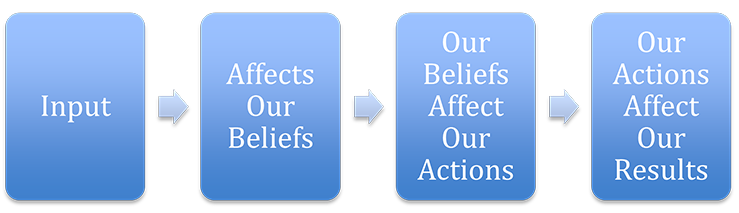
As a business owner, what can you do to ensure that you get off to a successful restart of your business as states reopen? I believe it starts with mindset, which is critical to success now more than ever. The amount of negative news and fear that has been instilled into the world can’t help but cause us some angst. We have all received an overwhelming amount of negative input, which can easily affect our beliefs. Unfortunately, our minds do not distinguish between constructive and destructive input.

Input Beliefs Actions

Mindset is the foundation of all success, and we must ensure that we are programing our mindset for the future we desire. Whatever we allow into our minds occupies our thoughts and can cause stress and anxiety, preventing us from successfully restarting, growing, and sustaining our businesses. Fear can easily take over and keep us from the necessary steps to ensure our success moving forward.

Success can come to us if we intentionally adopt a positive mindset. We have the power within us to change what we believe is possible and that affects what becomes possible. I have met many individuals, including many business owners, who are allowing their past or the current conditions to determine their future. This is tantamount to driving your car looking in the rear-view mirror.

I recommend the following steps:

  1. Stand guard at the door of your mind.
  2. Avoid negative news outlets that stoke fear.
  3. Pay attention to any negative self-talk that you may have become accustomed to repeating without thinking.
  4. Counter negative self-talk with a positive mantra that you repeat twice a day.
  5. Write down some positive supporting statements and repeat them daily.
  6. Focus on the positive, not the negative, and feed and strengthen your mind every single day.
  7. Ask yourself, what you are going to do on a regular basis, to improve your mindset.
  8. Spend time with positive people and avoid negative doomsayers.

We can allow the recent business disruptions to affect our future, or we can take charge of our future success by coming up with a plan to move forward and create the future we want. Success will come to those who are determined to be successful and adopt a positive and purposeful mindset.

If you want to increase top-line revenue and bottom-line profit. Give me a call 503-312-3145 or email me at garyfurr@garyfurrconsulting.com

You can also visit my website at http://www.garyfurr@garyfurrconsulting.com

Listen to my podcast Turning Complexity into Simplicity®

Learn more on this topic, you can find the book, COVID Business Strategies for Small and Medium Enterprises, a collection of advice from a group of six business advisors and consultants across three continents and four countries who specialize in working with small and medium enterprises, available on Amazon.

--- END POST ---

What Is Your Strategy as You Relaunch Your Business?

What Is Your Strategy as You Relaunch Your Business?

Is your strategy for moving forward from the Covid-19 crisis the same strategy you had before the crisis? If so, you may want to reconsider your business strategy going forward with what many are calling the new normal.

The pandemic has caused a major disruption to business as usual. Many businesses were running smoothly and making money, and the current crisis is not unlike driving a car at 60 mph and suddenly crashing into a brick wall. It’s time for some damage control and assessment. While I don’t believe that the car you were driving is totaled, I do believe that business as usual will not get you the results you are looking for. Rather than limping along, trying to get by, we all need to re-evaluate how we deliver value to customers.

Here is my simple definition of strategy:

  • Finding the need that the customer has
  • organizing your business to meet that need in the most efficient and effective manner possible, and then
  • collecting a check

Find a Need Fill a Need Collect a Check

Your customers’ needs may have changed slightly or dramatically since the crisis. The only way to understand what your customers’ current needs are is to communicate with them regularly on how you can help them be successful moving forward.

Focus more on how you can help your customers rather than trying to sell them something. Knowing what problem or pain they are experiencing and then organizing your business to address those pains is good strategy. Remember, this may be slightly or dramatically different than it was before Covid-19.

I run into far too many businesses owners who never call their customers and are running on autopilot. The result of this Covid-19 crisis and the subsequent shutdowns is that business has changed and we need to understand how that has impacted our customers. There is no reason to make this more complicated than that.

Once you have a complete understanding of those needs, you need to make sure you are organized to effectively and efficiently meet those needs. After you have done that, collecting the check is the easy part.

If you want to increase top-line revenue and bottom-line profit. Give me a call 503-312-3145 or email me at garyfurr@garyfurrconsulting.com

You can also visit my website at http://www.garyfurr@garyfurrconsulting.com

Listen to my podcast Turning Complexity into Simplicity®

Learn more on this topic, you can find the book, COVID Business Strategies for Small and Medium Enterprises, a collection of advice from a group of six business advisors and consultants across three continents and four countries who specialize in working with small and medium enterprises, available on Amazon.

--- END POST ---

7 Keys to Turning Your Business Around

7 Keys to Turning Your Business Around

For 22 years, I flew a company airplane with my previous company. Our seven locations were spread out and flying between locations was much quicker than driving. As part of my pilot training, I had to learn how to deal with a stall, a spin, and a nosedive, in case one of these events should ever happen. Learning and remembering these tactics was critical to my survival.

Every business owner knows that business doesn’t always go as planned. They’ve all experienced business stalls, spins, and nosedives. Sometimes businesses get themselves into trouble and can’t see the way out. Recently, I have seen this as businesses try to navigate the current economic slowdown.

One of my roles as a consultant is to help business owners find their way out of a nosedive, righting the business, and returning it to a level flight path. If your business is currently in a nosedive, these seven keys will help you recover:

1. Sometimes business owners are so busy being busy that they don’t stop and look at the big picture.
Stopping may sound counterintuitive, but it’s necessary for seeing and understanding what is happening within your business. You can’t keep doing the same thing and expecting different results.

2. Stop the business from bleeding cash.
A line-item expense analysis is necessary to find the leaks. Approval for expenses over a certain amount should be installed.

3. Create a budget and use it as a tool to compare budget to actual on a weekly basis.
Highlight the variances and ask tough questions to get to the bottom of those variances.

4. Rely on your instruments and data.
As a pilot, I had to be able to read the instruments on the airplane dashboard. These instruments helped to ensure a successful takeoff, flight, and landing.

The instruments on your business dashboard are your P&L and your balance sheet, and they are critical to the survival of your business. They will serve you well if you use them as tools to compare the same period of time such as Q1 2020 to Q1 2019 and 2018. This will help you monitor the progress of your business.

5. Develop line-item metrics.
What is the cost of goods sold as a percentage of revenue? What is each line-item expense as a percentage of gross profit? How do these percentages compare to your very best year ever? Track these percentages on a weekly or monthly basis to develop a trend line to help you ask better questions, in order to make better decisions.

6. Generate a cash flow projection.
Realize that your P&L and balance sheet are lagging indicators. A cash flow projection is the one instrument you can use to look ahead at the movement of cash in and out of the business.

7. Develop a flash report of the critical information you need to better manage your business out of your nosedive.

  • What are the weekly sales and how do they compare to budget?
  • What are the YTD sales and how does that compare to budget?
  • What has been shipped and invoiced this week?
  • What are the current account payables and account receivables?
  • What is the current cash on hand?

These are examples of critical information that can help you steer your business out of trouble.

These seven keys don’t encompass everything you need to get your business back on a level flight path, but they will begin the process of pulling you out of a nosedive.

If you would like to learn more, give me a call 503-312-3145 or email me at garyfurr@garyfurrconsulting.com

You can also visit my website at http://www.garyfurr@garyfurrconsulting.com

Listen to my podcast Turning Complexity into Simplicity®

For more on this topic, you can find the book, Strengthen Your Business, a collection of advice from a group of six business advisors and consultants across three continents and four countries who specialize in working with small and medium enterprises, available on Amazon.

--- END POST ---

5 Keys to Building a Successful Banker Relationship

5 Keys to Building a Successful Banker Relationship

When I was COO of a $40-million company with seven locations, I was responsible for the finance department and learned quickly how important it is to have a good relationship with your banker. Business doesn’t always go as planned, and those are the times that your relationship with your banker can be critical to your future success.

I speak with many business owners, and few ever tell me that they have a solid relationship with their banker. When I ask business owners whether they know their banker, they usually say no, or that they haven’t spoken in a long time. My advice is always the same: Make time to get to know your banker sooner rather than later. If you don’t solidify the relationship when times are good, it will be difficult to do so when times are bad.

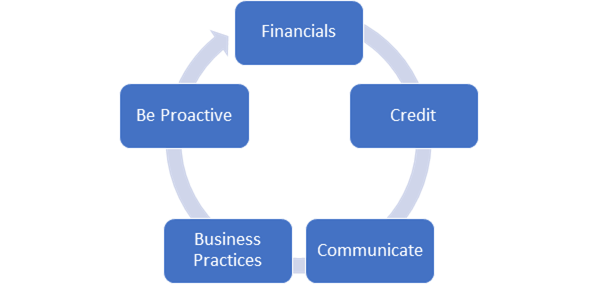
I have surveyed ten small and mid-market bankers on what they look for in their best customers. Their responses fell into these five key areas:
Best Banker Customer Traits

  1. Financials: Bankers want their customers to have a deep understanding of their financials and provide accurate information when asked for it. Bankers understand that the numbers drive everything in your business, and that if you lack a complete understanding of your financials, it is like going to a sporting event and not being able to see the scoreboard. You may think your team is winning, but you are not really sure. As a business owner, you need to understand your P&L and your balance sheet, and I would highly recommend that you develop a cash flow projection as well.
  2. Credit: It is important as a business owner to understand the principles of credit. Bankers like to think of credit from five different angles.
    • Character: In order, for your banker to understand your character, they need to know you as a person. This takes time. Your character involves your past business experience within the industry, credit history, referrals, as well as your standing within the community.
    • Capacity: Do you have the capacity to repay the money you are borrowing? Bankers will perform a debt-to-equity ratio on your financials to help determine your capacity to repay the debt.
    • Capital: What kind of capital do you have invested in the business that will help to reduce the risk to the bank? You must have skin in the game.
    • Collateral: Do you have both business and personal collateral invested in your business? Again, do you have skin in the game?
    • Conditions: What are the current conditions in the economy and your industry? What are the current market trends, and are they trending in your favor?
    • Proactive Communication: This was high on the bankers’ lists of what they are looking for. Regular communication is paramount to any healthy relationship. When times get tough, however, many business owners stop communicating with their banker. That is not a good strategy.
  3.  Good Business Practices: Bankers are looking for businesses run according to solid business practice. If you are shooting from the hip, you will not have a good relationship with your banker. Have a vision of where you are going and a plan of action on how you will get there.
  4. Proactive Approach: If you run your business reactively rather than according to a plan of action, that will be a red flag to your banker. They understand that business doesn’t always go as planned, but the bank wants to see you acting in accordance with a plan that is headed in a clear direction. By taking a positive, proactive approach, you increase your chance of success and reduce the risk to the bank.

Your banker wants to help you succeed, and that’s why they want to see you engage in good business practices. The better you are in these five areas, the more confident your banker will be that your business will be able to weather the storms that come your way.

If you would like to learn more, give me a call 503-312-3145 or email me at garyfurr@garyfurrconsulting.com

You can also visit my website at http://www.garyfurr@garyfurrconsulting.com

Listen to my podcast Turning Complexity into Simplicity®

For more on this topic, you can find the book, Strengthen Your Business, a collection of advice from a group of six business advisors and consultants across three continents and four countries who specialize in working with small and medium enterprises, available on Amazon.

--- END POST ---

Grow Your Leadership to Grow Your Business

Grow Your Leadership to Grow Your Business

Whether a business is doing well or not comes down to leadership. If you want your business to do better in 2022, then you need to become a better leader. Everything within any organization— including yours— rises and falls on leadership.

I recently discussed the concept of leadership with my good friend Lyn Cikara, a leadership coach, before she lost her life to cancer. She was writing a book on leadership, and I asked her why the countless books, seminars, and training sessions on leadership haven’t eliminated the leadership issues within organizations. We concluded that the various personalities within an organization make leadership complex.

Furthermore, many leaders are relying on talent and skills that they learned years ago, while leadership in the 21st Century is different. I also propose that the leadership skills used pre-pandemic are not the same skills needed coming out of the pandemic. The business landscape has changed dramatically, and your leadership skills may need updating so you can lead at a higher level.

A couple of years ago, I was working with a leader of a large organization here in Oregon. The leader had been hired by the company’s headquarters, located on the East coast, to run the Oregon operation. Previously, this individual had been managing his own small business in another state and he had been hired because he had industry knowledge and experience. However, he was currently struggling in his new position trying to manage a much larger organization with multiple locations.

To my surprise, I discovered that he had not done anything to upgrade his leadership skill set since he graduated from college. He was able to run and manage his own small business with his wife and a small group of employees. Now he was trying to lead and manage a much larger company with multiple locations, a direct staff of 15, and 150 employees. He was failing and needed help. He had essentially taken on a role that was beyond his capacity, thinking that because he had managed his own small business, that he could easily manage this much larger organization. Unfortunately, he lacked the leadership skills necessary.

If you are relying on skills and techniques, you learned 20 or 30 years ago, you are most likely falling short. As a leader, you need to be continually developing your ability to lead others. Continuous improvement is not an option if you want to be a successful leader.

John Maxwell’s 21 Irrefutable Laws of Leadership discusses “the law of the lid,” which says that our ability to lead has a lid on it that will determine our overall effectiveness. The lower the leader’s lid, the lower the ability of the organization to rise above that lid. Where is your lid?

If you would like to learn more, give me a call 503-312-3145 or email me at garyfurr@garyfurrconsulting.com

You can also visit my website at http://www.garyfurr@garyfurrconsulting.com

Listen to my podcast Turning Complexity into Simplicity®

For more on this topic, you can find the book, Full Speed Ahead, a collection of advice from a group of six business advisors and consultants across three continents and four countries who specialize in working with small and medium enterprises, available on Amazon.

--- END POST ---

10 Steps to More Effective Leadership

10 Steps to More Effective Leadership

Everything within an organization rises or falls based on leadership. When good things happen in a business, it’s because of good leadership. When things go south in a business, it is usually due to poor leadership. There’s no avoiding the truth: It all comes down to leadership.

So how do you go about becoming a more effective leader? I have outlined 10 steps to effective leadership based on my 40-plus years of C-level business experience and interacting with hundreds of business owners.

STEP 1: CREATE A COMPELLING VISION

As a leader, it is your responsibility to create a dynamic and compelling vision for your organization—a vision that lets everyone in the organization know where the company is headed in the future. A compelling vision is one that employees want to be a part of and are inspired by. This gives them something to look forward to that is bigger than themselves. Your task is to envision the future state of your business and then articulate it in such a way that employees want to invest in getting there.

STEP 2: COMMUNICATION

I have worked with many organizations in which CEOs and owners have a strong vision for the company, but they failed to communicate it to everyone else. Communicating the vision is not a one-time thing and it’s not a sign on the cafeteria wall. Ongoing communication is required in order to gain buy-in from your employees. As a leader, you can’t over communicate the mission and vision of your organization.

STEP 3: LISTEN

People want to know that they have been heard, and this requires genuine listening skills. The key is to listen with the intent to understand, not to reply. Most people listen with the intent to reply, so they really are not listening at all but instead they are thinking of their response to what the other person is trying to say. Listening takes practice so you can allow others to express themselves, without interrupting. I would suggest that as a leader, you always try to speak last, allowing others to express themselves fully, before you engage.

STEP 4: EMPATHY

Better listening leads to greater empathy for the problems facing individuals and teams. When you use empathy, you show that you care. Research has shown that 64 percent of people quit their job because they dislike their boss or employer. Why? Because they don’t feel that their boss or employer cares about them. Developing your listening and empathy skills can reverse this trend. When you take the time to genuinely listen and empathize, you will see your employee attrition rate go down.

STEP 5: BE MORE TRANSPARENT

The members of your organization want to know what is going on within the organization. People sense when information is being hidden; when leadership doesn’t discuss what is going on, the trust level diminishes significantly. Your staff and employees want to be a part of the solution, but they need information to do that. When leadership doesn’t honestly discuss what is happening, staff and employees create their own version of what is going on. More often than not, that version is worse than what is actually happening. Don’t allow misinformation to take over your organization.

Leadership: Elevate Your Dream Team to a Higher Level

STEP 6: GIVE CREDIT WHERE CREDIT IS DUE

Not giving credit to those who deserve it and taking credit yourself creates a toxic environment within the organization. When leaders take credit for what others have done, it creates a culture of animosity and secrecy in which employees will no longer share ideas that could benefit the business. Eventually these employees will go elsewhere—somewhere their ideas are appreciated and where leaders will give them the credit they deserve. The more you give praise and credit for good ideas, the more ideas that will be generated.

STEP 7: BE A COACH

We manage things, and we lead people. Our goal should be to help others achieve success. Good leaders coach their employees to help them meet expectations. Good leaders are engaged in helping their employees to be successful. As a leader, it is your responsibility to evaluate the progress of the individuals in your charge, the progress of various teams, and the progress of the organization, and then help coach them to even greater success. It is your responsibility to encourage others and cheer them on when they face challenges and succeed.

STEP 8: BE CONSISTENT

To have a successful company and maintain the drive and direction toward your vision, you must be consistent with expressing your mission, vision, and values to your employees. You have to repeat these foundational principles multiple times. In fact, you must repeat them so many times that your employees grow sick of hearing about them. Then, you will know that you have gotten the message across. Unfortunately, in many organizations, employees know that a communication’s push on mission and values never really leads to changed behavior. So, they think, this too will pass. If you are going to go to the trouble of creating a compelling vision or a new direction, you must be consistent in discussing it with your employees, and you have to show up every day and lead congruently with that message.

STEP 9: CONTINUOUS IMPROVEMENT

Leadership means continually upgrading your skill set. Chances are you learned to be a leader from someone that you worked for, whether good or bad. Chances are you learned these leadership skills early in your career and have not made any significant effort to upgrade and develop new skill sets. But leaders cannot rely on leadership skills learned even just a decade or two ago. To be effective, you must continue to grow and develop all of your skill sets. If you want your business to change, you must change. Be a great leader and get on the path of continuous improvement.

STEP 10: PUT YOUR EGO ASIDE

One of the best things you can do is put your ego aside and accept responsibility for how the business is doing. A real leader doesn’t pass the blame off to others and refuse to take responsibility. When a leader does that, it’s disheartening. Everyone knows that isn’t leadership. Again, whether a business is doing well or not comes down to you as a leader.

Accept the fact that you have made mistakes and ask your employees for help in correcting those mistakes. You can even ask for help in becoming a better leader. Leaders who put ego aside and accept responsibility when things go wrong and give credit to those who deserve it when things go right will gain the loyalty and respect of employees.

Learn these ten steps to more effective leadership, practice them continually, and watch as your employees grow and excel under your leadership and guidance.

If you would like to learn more, give me a call 503-312-3145 or email me at garyfurr@garyfurrconsulting.com

You can also visit my website at http://www.garyfurr@garyfurrconsulting.com

Listen to my podcast Turning Complexity into Simplicity®

For more on this topic, you can find the book, Full Speed Ahead, a collection of advice from a group of six business advisors and consultants across three continents and four countries who specialize in working with small and medium enterprises, available on Amazon.

--- END POST ---

Creating a Successful Business in 2022

Creating a Successful Business in 2022

Since moving to downtown Portland, Oregon, a few years ago, I’ve enjoyed watching some very tall buildings being built. I noticed how the construction crews dig a deep hole and pour a lot of concrete that is reinforced with steel rebar and other structural supporting devices. I’ve been amazed by how much work goes into the foundation before the visible structure of the building is begun. Of course, I realized that a solid foundational structure was necessary to build a stable building, but I hadn’t realized the investment of time and resources that goes into that solid foundation.

Like a tall building, a strong business that will weather storms needs a solid foundation. But unlike a building, where the foundation is designed to last for the life of the building, a business foundation needs to be continually examined for cracks that might create an unstable situation. These cracks in the foundation of a business are often caused by not adhering to the basic fundamentals of business success. These cracks start off small and then tend to grow with neglect and time.

Here are seven fundamentals that every business should adhere to in order to maintain a strong foundation.

Strategy

It is critical to your business success to develop and communicate your strategy. It is also important to continue to examine your business strategy to determine if it is relevant in the current business environment. The business strategy you created for your business when you started may not be as effective in today’s fast-moving and evolving business environment. A business is a living and breathing entity that must evolve and change with time as well as environmental, governmental, and economic conditions. These outside forces beat on the business, like rain, sleet, and snow do on a building. Without a dynamic business strategy to weather the storms of constant change in business, your business will struggle and could decline.

I define strategy as finding the need of your customer and then organizing your business to meet that need in the most efficient and effective way possible. Due to the various events affecting business today, it is important to determine whether your business strategy is still important to your customers today. To do so, you must be communicating with them—often. Too many business owners go along conducting their business as usual without reaching out to their customers to see if they are truly meeting their needs and solving their problems. Then these same business owners are surprised when they lose that customer to the competition who has been communicating with them. The best advice is to keep your strategy simple and to communicate with your customers often.

Find the need > Fill the need > Collect the check

Create a vision of your future

I have seen many organizations that have not clearly defined their vision or direction for the company; when this happens, the employees generally come up with their own version. More often than not, the employee version is different than where the owners of the company want to go. A strong business foundation has a clear vision of the future. This clarity is critical to your success. The most successful businesses that I have encountered have a strong and compelling vision for their organization. They know where the organization is going and have planned for their future success. They do not leave it to chance.

Without a clear direction for your organization, it will never arrive where you want to be in the future. It’s the same as a journey. If you don’t know where you want to travel to, then it’s hard to get there.

Start by deciding where you want your business to be three years from right now. What do you want the organization to look like? How big will it be? How much revenue will you generate? What will be your net profit? How big will your market share be?

It’s good to ask yourself a lot of questions about how you envision your business to look in the future. Then work backwards from there. If you want your business to be in a certain position three-years from now, where would you need to be in two years? Working backwards again, where do you need to be a year from now in order to put you on the path for your two-year and three-year vision of the future.

Business Vision Goals

Communicate your strategy and vision

In order to get everyone in your organization pointed in the same direction, you must clearly communicate the vision of the organization. It does the organization no good to keep the vision confidential only for the executive team. The number one reason employees don’t share in a company’s vision is that they don’t know what it is.

Your vision must be shared with everyone. How else will we get everyone heading in the same direction? Most important, employees want to be a part of something that is bigger than themselves, and a clearly articulated, compelling vision can give them what they are looking for.

Create a plan of action

A plan of action is necessary to avoid two common problems. One common problem is that a year seems like a long time, so you wait to get started on achieving your one-year vision. The alternative problem is that achieving your vision seems overwhelming, so you might procrastinate starting.

This is why you need a plan to bridge the gap between your current state and your desired future. You can chunk your one-year vision down into a plan of action called 90-day goals. To accomplish your one-year vision, each person needs 90-day goals. Creating a dynamic vision for the future of the organization is like putting everyone in the same boat, on the same river, and the 90-day goals get everyone paddling in the same direction.

Pay attention to your numbers

The numbers drive everything in your business. Without a complete understanding of the numbers, you cannot effectively evaluate how your business is doing.

I flew an airplane for a number of years and to ensure a safe and successful flight, I had to pay attention to the instruments on the dash of the airplane. It wasn’t wise to fly by the seat of my pants and simply hope that everything would work out. The instruments meant life or death in an airplane and knowing how to read them and what they meant was critical to survival.

Unfortunately, many business owners are not paying close attention to the instruments on their business dashboard—the profit and loss statement, balance sheet, and cash flow projection. It is imperative to know and understand your numbers and to take a deep dive into what they mean. Too many business owners rely solely on their profit and loss statement to determine how their business is doing, but that instrument is a lagging indicator. Usually by the time you get the results it’s too late to make any changes. Your cash flow projection is one instrument on your dashboard that looks ahead.

Marketing and sales generate cash

In my experience, if a business is having a cash flow problem, it’s tied to a lack of effective marketing and sales. That’s because cash flow is a lagging indicator of your marketing and sales efforts. Recently, I was working with a business that was losing money every year and operating on a marketing and sales system that had been installed many years before, when all they had to do was answer the phone when a customer called. They were making little effort to market their business and made no effort to reach out to their customers. When we shifted their focus to proactive marketing and sales, their cash flow improved significantly.

Marketing is about capturing your customers’ attention. Your marketing needs to be focused less on your mythology or how you do things and more on why you do it and the benefits and results for those who will purchase your product or service. As a business owner, you need to create a marketing plan that will get you noticed by your target audience.

Once you have attracted your potential customer to your business, you need to get them to buy your product or service. This is where your strategy really starts to pay off. If your strategy has been to find your customers’ needs or wants and you have organized your business to meet those needs or wants in the most efficient and effective way possible, then the selling stage should be much easier.

If you want to be highly effective at selling to your potential customers, it is necessary to have a sales plan for how to engage and lead the customer through the sales process. If you want consistent results with selling, then create and document an effective sales plan that can be followed by anyone doing the selling.

Revenue growth should not be left to chance

It’s simply amazing how many business owners leave their revenue growth to chance. What do I mean? I mean that far too many business owners do not approach their customers or potential customers proactively. Instead, they react—by waiting for the customer to call them. You cannot wait for the business to come to you; you must go and get it.

Communicate with your customers more times than you think you should. If you are not communicating with your customers, your competition is. Be proactive by reaching out and building the relationship with your customer, asking how you can better meet their needs. Show interest and a desire to help them to be successful.

There are many opportunities to improve your business success. These are just a few of the basics. Your business success is up to you. Now is the time get back on track.

For more information on how to create a successful business in 2022, reach out to me at 503-312-3145 or email me at garyfurr@garyfurrconsulting.com

You can also visit my website at http://www.garyfurr@garyfurrconsulting.com

Listen to my podcast Turning Complexity into Simplicity®

For more on this topic, you can find the book, Acceleration!, a collection of advice from a group of six business advisors and consultants across three continents and four countries who specialize in working with small and medium enterprises, available on Amazon.

--- END POST ---

Shut Up, I’m Landing the Plane

Shut Up, I’m Landing the Plane

In my former career as an executive, I also flew a company airplane to get from one location to another in a timely manner. Although I liked the time savings, but I was a reluctant pilot at first. Thanks to the help of an amazing and patient flight instructor, however, I acquired the necessary skills and logged many hours of flying time. There are many similarities between flying an airplane and successfully running a business. Here are seven key steps to pilot your business to greater success.

Clarity of Direction

All flights start by knowing where you want to land the plane on the other end of your trip. Without a destination in mind, how can a flight be successful?

It is the same in your business. You need to know where you want the business to be at a specific point in time, such as December 31, 2022. If you don’t know where you want to be, you are unlikely to arrive at your destination or you won’t know it when you get there. It would be similar to just taking the plane out for a joy ride and coming back to the place where I started. Meandering is not a successful business strategy.

Fly your business forward

Have a Plan

Any lengthy flight requires a flight plan. This is where I would sit down with an aeronautical map and plot my course to ensure that I wouldn’t get off track and end up somewhere other than where I wanted to be. This usually resulted in marking out landmarks to use as checkpoints along the way to ensure I stayed on course and didn’t venture too far off the main flightpath. Whenever I flew to eastern Oregon, I had to be sure not to stray into U.S. military airspace around Boardman. This is where my plan kept me safe.

In business, we can set 90-day goals to ensure we are on the correct path and don’t venture too far away from our vision and direction. Your 90-day goals are checkpoints that will help you and your employees to stay on track.

Pre-flight the Airplane

Before every flight, it is the pilot’s responsibility to do a pre-flight check of the airplane to ensure that everything is operational. This is one of the most critical aspects of flying. I know an individual who crashed his airplane…twice…as a result of not pre-flighting the plane before he took off.

This is similar to doing a systems check of your business to make sure everything is working according to plan. Is your marketing plan in place and working? What about your sales plan? Is the accounting department keeping up with the data entry, accounts payables, and accounts receivables? Are you measuring and monitoring your key performance indicators (“KPIs”) for your business? All of the various aspects of your business, need to work together in harmony, to create a successful and sustainable future. Pre-flighting your business protects you from unexpected outcomes.

Fuel

This is an area that seems to get pilots in trouble the most. Many private plane crashes are due to pilot error, and the most common problem is fuel. Either they run out of fuel, or the fuel is contaminated. When the pilot does a fuel check, he plugs a device into a small outlet in the bottom of the fuel tank to dip the tank in order to see if there is any water, which is heavier than fuel, in the tank. Water in your fuel can cause you to have major engine problems and potentially crash the plane.

The second check is to turn on the power and look at the fuel gauges. What do they read—full, half full?

Smart pilots take this one step further and don’t trust their fuel gauges, so they get on a ladder and dip a measuring device designed for the type of aircraft they are flying into the top of the tank to measure the actual amount of fuel in the tank.

The fuel in your business is cash flow. Without sufficient cash flow your business is going to crash and burn. Are you tracking the movement of cash in and out of your business with a cash flow projection? Are you measuring the daily, weekly, and monthly cash reports? Cash is critical to your success just like fuel is critical to flying an airplane.

Take-off

Taking off requires a tremendous amount of power to generate enough lift to get the air flowing across the wings. But once you have enough speed, it’s easy to get lift and gain altitude.

In your business you can get lift and altitude by ensuring everyone is headed in the same direction, working for the same common vision, and focused on their 90-day goals. Clarity of direction and goals give you the lift you need to gain greater success in your business.

Flying

I have always considered flying the easy part. Once you have executed all the steps necessary to have a safe flight and taken off, flying the aircraft is relatively easy. But as a pilot, you can’t let down your guard. You must be on the lookout for other planes in your area that may not see you. As a business owner, you need to be looking out for anything that might impede your business success, such as your competition or government or environmental regulations.

One of the most critical aspects of flying is paying attention to the instruments on your dashboard. Reading and understanding those instruments is critical to survival. The instruments on the dashboard of your business are the profit and loss statement (P&L), balance sheet, and cash flow projection. These are your business instruments that help you determine whether your business is on track to be successful or not. It would be foolish to fly and not pay attention to your instruments, and it’s just as foolish to run a business without keeping an eye on these financial instruments.

While you are flying on a straight and level path toward the destination you have previously determined, you may need to adjust your course because there are other factors at play that could potentially push you off course, such as a crosswind. A crosswind may require you to make a course correction, which involves turning the yoke of the airplane in the direction you want to go. But if you let go of the yoke, the airplane will spin back in the direction it was previously headed due to momentum. To overcome that momentum, you must keep pressure on the yoke until you are once again in straight and level flight.

In business you must keep the pressure on the business yoke to ensure that everyone continues to head in the direction you have outlined and do not go back to business as usual. If you don’t keep some light pressure on the yoke of your business, individuals within your company will tend to go back to what they are most comfortable with, which may not be the direction you intend to go. That’s just human nature. You can keep pressure on the yoke by holding individuals accountable to the vision and their 90-day goals.

“Shut up, I’m landing the airplane”

For me and most pilots, landing the airplane is the most difficult part. You are basically trying to slow the airplane down and time the landing just right so that just as the wheels touch down, the airplane stalls. This means you have slowed the airplane down enough that you no longer have any lift, and the plane can’t fly any more. It is essentially a controlled crash. Landing required tremendous concentration and focus, and I would ask my passengers to not talk while I was landing the plane. Sometimes I would have to ask more than once.

In business many employees are being constantly distracted, costing you productivity and money. As a society we are addicted to distraction and the dopamine charge we get from all the electronic devices demanding our attention.

It takes a lot of concentration and intense focus for your business to achieve the level of success you are looking for. According to statistics, every time someone gets distracted it takes 23 minutes to get refocused. If someone is distracted multiple times a day, hours of productivity are lost. In an airplane, it only takes a few seconds of distraction to turn a great flight into a disaster.

We know the stakes are high for a pilot flying a plane, but a successful and sustainable business is a high-stakes effort too. If you want to gain greater success and increase top-line revenue and bottom-line profit, apply these seven steps with the professional discipline of a veteran pilot.

For more information on how to create a successful business in 2022, reach out to me at 503-312-3145 or email me at garyfurr@garyfurrconsulting.com

You can also visit my website at http://www.garyfurr@garyfurrconsulting.com

Listen to my podcast Turning Complexity into Simplicity®

For more on this topic, you can find the book, Acceleration!, a collection of advice from a group of six business advisors and consultants across three continents and four countries who specialize in working with small and medium enterprises, available on Amazon.

--- END POST ---

Scroll to Top