SME Featured Articles

When the Banker Called

When the Banker Called

Through my consulting turnaround work, I have relationships with many bankers, and often they call me to help their clients. Bankers want you to succeed, and this transcript of a recent phone call with a banker demonstrates that.

Banker: Hey Gary, I have a potential project for you.

Gary: How bad is it?

Banker: It’s bad, really bad. They have lost money for multiple years in a row and the only reason they actually showed a profit this year is they received substantial funds from the Federal Paycheck Protection Program (PPP).

Gary: Well, we can’t plan on that going forward, can we?

Banker: No, that’s not sustainable, and they don’t have a good plan on how to turn things around. The bank is about to put them in special assets because of their financial position. We can’t loan them any more money.

Gary: Are they open to receiving input and guidance?

Banker: It’s a family business and the son, daughters, and granddaughters are open to input, but the founding father and head of the company is in denial that anything is really wrong, even though they have lost money for a few years in a row now. The dad will be a tough nut to crack. He has a lot of excuses as to why they are where they are. He’s very old school and thinks they just need to put their heads down and work harder.

Gary: Well apparently the pain to remain the same is tolerable. When the situation becomes highly painful, they might be interested in enduring the pain to change. It usually takes a crisis to get people out of their comfort zone. People always hope that it will get better this year or next year, but hope is not a good strategy. They need a plan. Would you like me to meet with them?

Banker: That would be great, they really need your help.

And with that, the call ended, and I set up a meeting with the family.

When I met the family, I discovered that they were barely getting by, surviving on a shoestring. They had no fundamental business principles in place to improve their top-line revenue and bottom-line performance. They had been successful in the past and they were banking on that success to carry them forward, but the business environment had changed, and they were stuck in their old way of doing business.

The patriarch of the family was still in denial and felt they would pull themselves out of it. He thought the reason they were in this position was due to a series of bad decisions.

The son was working six days a week, fifty-two weeks a year, had recently gone through a very tough divorce, couldn’t remember when he’d last had a vacation, and was asking himself whether he really wanted this for his life. In private, he confessed to me that he didn’t want to live his father’s life of working seven days a week for the rest of his life. The son’s daughter, who was in line to take over the business, confessed that she didn’t want her father’s life. I asked them what their banker told them they should do, and they replied that the banker said they should call me.

As part of my engagement process, I conduct a discovery phase that usually lasts four weeks, in which I interview staff and employees, make observations, and have the owners fill out my business assessment, which covers 16 different areas of the business. Once owners have filled out the assessment and come to the last question—what thoughts or impressions have you had as you’ve answered these questions?—their usual answer is, “We have a lot of work to get done.”

The unfolding process as I meet with individual staff members is always fascinating. There is the story that the owners tell when you first meet them, and then there is the story that you get from meeting and interviewing the staff and employees. That is how it goes, and this experience was no different. I asked the owners if their employees knew what was going on in the business and they said no, they had not shared this with the employees. But the employees told me they had a pretty good idea that the company was in trouble, and they were worried about their future. Even though ownership had not talked about the condition of the company, everyone knew. When leaders don’t communicate, employees usually imagine something even worse than what is going on.

In the course of my discovery phase, I learned that this company wasn’t abiding by some basic business principles that help businesses stay on track and succeed. While this business was doing a few things right that had worked for them in the past, they were doing so many things wrong it was no wonder they were not making money. Let’s look at some of the fundamental business principles that every business should pay attention to in order to follow the path of success.

Strategy

Have a clear strategy as to how you will meet customer needs, eliminate their pain, and provide them what they are looking for. I have always defined strategy as finding the customer’s need and providing tremendous value in filling it. The only effective way to know what the customer needs or wants is to be communicating with them. This is particularly necessary as we emerge from this pandemic, which has disrupted the business environment and supply chain in a dramatic way. Your pre-pandemic strategy may not be the same strategy you need post-pandemic, and the only way to determine that is to be communicating with your customers. Once you have found the need—and usually that need or pain point needs to be more like a shark bite than a mosquito bite—the next step is to organize your company in a manner that will meet that particular need in the most efficient and effective manner possible.

If you are communicating with your customers and you’ve organized your business to meet their need, then the easy part is to work really hard not to screw it up in between—and then collect your check. Business success is about solving your customers problems or relieving their pain.

Find the need > Fill the need > Collect the check

Vision and Direction

This is one of the most common problems I see in business, the lack of a vision or clear direction. Business owners are so busy being busy that they do not take the time to stop and determine where they want the business to be in the future. The problem is that when you do not determine your direction, circumstances outside of you and the business usually determine the direction. Without vision, the business is like a rudderless ship being blown in whatever direction the wind is blowing.

Successful businesses have a clear vision and communicate that to everyone within the organization. The company I was visiting had no clear vision of where they were going. All they knew was to put their heads down and work harder and hope that things would work out.

The son was tired of working harder and was questioning his future. Their staff and employees had no idea where the company was going, other than they were trying to stay afloat. Every day they came to work to do their job uninspired about what they were doing and why. The interesting thing was that this company was vital to people’s lives and the local economy because they provided fresh food to the local market. This is a pretty important part of our economy, and they were missing the opportunity to get their employees excited about what they were doing, why they were doing it, what it provided for people, and where the company was headed.

People want to be a part of something bigger than themselves, something that gets them excited about coming to work and making a difference. But without a clearly articulated vision and direction, it is just another job.

Have a Plan

Without a clear vision, you are unlikely to have a plan of action to bridge the gap between where you are and where you want to be. No vision equals no goals on how to get to where you want to go.

Having a plan or a map helps you to see the most efficient route, and it keeps you on course. You can’t just make the plan and forget it. You need to refer to it to stay on track.

The business environment is changing constantly, and we need to continually make course corrections to create a successful future state. When I used to fly an airplane, I would set the coordinates of where I wanted to go, but if I did not check my location and refer to my map, I could easily get off course due to crosswinds or other factors. It is the same in business.

Here is another factor to consider: Your banker will be much more willing to work with you when you have a plan. This is true even if you are in trouble. If your banker knows you have a well-thought-out plan of action on how you will turn things around, they are more likely to work with you.

Reevaluate > Vision and direction > Plan of action > Results > Repeat

Leadership

One of the most important aspects of business is leadership. Peak performance depends on it. Leaders set the direction and then help everyone head in the same direction. If a business is doing well or not doing well, it often comes down to leadership.

The problem in this case was that the son was told he was in charge but was not really in charge. His father the patriarch was ultimately in charge and the son continually had to go to him in order to make decisions. The son after years of being under the direction of the father and often being told how bad some of his decisions were, was gun shy to make any decisions about the business without consulting his father first. There is no way to grow the company under this scenario.

The father had become a roadblock towards progress. The son had a number of ideas on how to improve the business and to implement mechanization to help streamline operations, but without his father’s blessing he was stuck trying to just put his head down and work harder.

The lack of a clearly defined organizational structure eliminated a key to success in business, a consistent chain of authority. Every organization needs a structure to help determine how decisions will be made and to whom staff and employees report to.

Marketing and Sales

Marketing is about getting noticed and capturing someone’s attention. Usually if a company is having a cash flow problem, it is a marketing and sales problem. The two go hand in hand in order to generate positive cash flow.

Marketing is too often focused on the company’s mythology and how the company does things rather the benefits and results of what is being provided. It is important to have a marketing plan that communicates and educates your target audience on the advantages, value, and results of doing business with you.

The company had no marketing plan in place. They were relying on the customer base that had always done business with them and made no effort to bring in any new customers even though they had recently lost a substantial account. The attitude was that it was unfortunate, but nothing could be done about it. This passive attitude is one of the reasons this whole scenario was a train wreck in progress.

When it came to sales, the company waited for their customers to call them with their needs. They made no real effort to reach out and communicate with customers.

When a business doesn’t communicate with their customers on a consistent basis, they have no real understanding of the impact they are having on their customers. They may think their customers are happy, but they really don’t know until a customer quits doing business with them as had recently happened to this business.

When I saw that they made no effort to communicate with their customer unless the customer called, and were missing a sales plan, I realized the train was coming off the tracks.

Revenue growth needs to be a proactive activity. We can’t wait for the customers to call us.

The business environment has changed and if you aren’t calling your customers, your competition most likely is.

Waiting for your customers to call you to make a sale puts you at a disadvantage to your competitors; they are calling your customers to get that business away from you. To sell to your current customer base and attract others with your marketing efforts, you need a plan for communicating how you will meet customer needs or eliminate their pain.

The larger your organization gets, the more important it is to have a clear, documented sales process to ensure you’re consistently generating revenue, leading to your success.

Marketing > Sales > Revenue > Repeat

Operations

Operations is at the core of most businesses because it consumes the most resources in terms of labor, materials, equipment, energy, and capital investment. In a global economy, competition from other countries can make it extremely difficult. Examining your operations and looking for ways to streamline your processes and procedures is essential to gaining a competitive advantage.

It’s surprising that I have found that companies that have been in business for a very long time often do not take the time to examine their current way of manufacturing and look for ways to create more linear flow or efficiency gains. Far too often, there are no documented processes and procedures on how work gets done, which generates confusion, randomness, chaos, and inefficiency.

Every organization needs documented processes and procedures to create consistency. Once streamlined and documented, you can create standard work procedures, which are the foundation of organizational improvement.

Financial Management

The numbers drive everything in your business. Without a complete understanding of them, you cannot effectively evaluate how your business is doing. The company did not have a good understanding of their numbers, and the owners had trouble reading their financial statements. They were not producing or following a budget. They did not produce a cash flow analysis and they did not spend time reviewing their financials on a regular basis. The family member who was acting as the bookkeeper took over the role from another family member but had no formal accounting background and was struggling.

You don’t need an accounting degree or to be an accountant to take care of your books, but you do need basic accounting knowledge. Doing business without understanding your numbers is a bit like flying an airplane without paying attention to the instruments.

The instruments on the dashboard of your business are the profit and loss statement (P&L), balance sheet, and cash flow projection. Understanding these instruments is critical to your business success. You can’t leave the financial management of your business to chance, hoping things will work out. That’s a surefire way to crash.

Succession Planning

My mentor and the leader of my Mastermind group, Phil Symchych, has said that succession planning tends to happen in one of four places: the board room, the kitchen table, the hospital room, or the funeral parlor. The last two are not good places for succession planning.

The company had no succession plan in place. The patriarch was approaching 80 years old, his son was questioning if this was the life he wanted, and his daughter (the next in line to take over the business) didn’t want to live the life that her father was living. And even though she was thought to be the next in line, nothing had been discussed or decided as to the path they should take. The company had no plan to prepare the daughter for her eventual position as head of the company.

Having a succession plan does not mean that you are planning on selling your business right away or passing it on to a new generation immediately. It does mean that you are planning for the future of your business should anything happen prematurely to anyone in ownership. Succession planning takes time, and it cannot be done effectively in crisis. It often takes two or three years to create a solid succession plan. Succession planning forces you to take a hard look at your business; it has benefits for the future but also the present.

Going It Alone

Banker: How’s it going on that potential project?

Gary: The assessment went well, and I provided them with a game plan on how to move the company forward. But they have stalled on making a decision to hire me. The son and other family members see real value, but the dad still thinks they can fix it themselves.

Banker: That’s really too bad. They need your help.

My business assessment covers sixteen critical areas, and I’ve only discussed a handful here. The list above represents the key areas that were lacking in the company I was evaluating, and it is a good place to start if you are looking at your own business. That company did not move forward after I provided them with the assessment and plan of action. They were busy being busy, and the patriarch felt that they could fix the problem themselves. Of course, if they could have, they would have already done so.

Don’t make the same mistake. You can’t fix your situation by using the same behavior and tools you have been using. With a return to business fundamentals, you can improve your top-line revenue and bottom-line performance.

For more information on how to ensure you have a successful business, reach out to me at 503-312-3145 or email me at garyfurr@garyfurrconsulting.com

You can also visit my website at http://www.garyfurr@garyfurrconsulting.com

Listen to my podcast Turning Complexity into Simplicity®

For more on this topic, you can find the book, Traction, a collection of advice from a group of six business advisors and consultants across three continents and four countries who specialize in working with small and medium enterprises, available on Amazon.

--- END POST ---

Leadership Lessons from the Kitchen

Leadership Lessons from the Kitchen

Growing up, both my parents worked and were careful with money. When I started driving, I made a deal with my parents that I would prepare dinner five nights a week in exchange for them paying for my car insurance. I started with simple meals, and as I got better at cooking, I increased my repertoire. This is how my lifelong love of cooking got its start, and along the way I have learned a number of things about cooking that have taught me lessons about leadership.

Business leadership and cooking skills

Who Am I Cooking For?

Who’s coming to dinner? This is one of the most important questions I can ask, because my goal as a cook is to please my dinner guests. That means I need to know about my guests and what they like. In business, we need to know our customers and what they are looking for, which leads to our strategy. Strategy is an intentional focus on meeting customers’ needs or eliminating their pain.

If I can prepare a meal that would have my guest asking for seconds or wondering when they’ll receive their next invitation, I will have a loyal following. In business, if we meet the customers’ needs, solve their problems or eliminate their pain, they will keep coming back for more of what we have to offer. Keep your strategy simple. Find the need and then organize your business to meet those needs. This principle applies in the kitchen as well. What would my guest love? When I try to overthink or over-complicate the meal, it usually doesn’t turn out well.

What Do I Want the Dish to Look Like?

Food can have a powerful visual impact. Therefore, I envision what I want to serve. As Stephen Covey said in his Seven Habits of Highly Effective People, begin with the end in mind. Before I begin preparing the meal, I need to have a clear vision of what it will be like when I finish preparing it. Often when I am looking at cookbooks, I find a picture of a meal that looks amazing and I think, wow, I would like to cook that. It’s a vision of my end result. It helps when I leave the cookbook open to the picture and work toward making my meal look just like that.

In business success often depends on having a vision or clarity of direction. It is the leader’s responsibility to articulate the vision of the future for the company. Without a clear vision or direction, the business will tend to meander off course and will likely not even meet its short-term or long-term performance goals. Every journey starts with a clear vision of where you currently are and where you want to go. I always know what I’m cooking before I get out the pots and pans.

Plan ahead before you begin

Develop Your Cooking Skills

I didn’t become a good cook through osmosis. I developed my skills over time, by taking classes, reading cookbooks, and watching cooking shows. One of my favorite things to do when going out to eat at a restaurant is to sit at the chef’s counter and watch the experts at work. I have learned so much about cooking simply by watching other cooks. To become a better cook myself, I am constantly trying to upgrade and improve my skill set. I can’t depend on the skills I learned as teenager making dinner for my parents. To be a better cook, I have to work at getting better.

If you are relying on leadership skills that you learned twenty or thirty years ago, you will not be as successful as you could be. In his book The 21 Irrefutable Laws of Leadership, John Maxell discusses the concept of the Law of the Lid. He says our own leadership ability determines our level of effectiveness. If you have done nothing to upgrade your skill set as a leader, or to learn from other great leaders, you are getting in the way of your organization’s success. If you want your organization to get better, then you need to get better. To become a better leader, take a proactive approach to your own self development in this area. The best investment you could ever make is in your own self-improvement.

There are so many opportunities available to us today to improve our leadership skills that there are no excuses that justify being a poor leader. Opportunities to learn exist at the touch of our fingers. Great leaders tend to be lifelong learners, and it’s the same for great chefs.

Planning Ahead

Great meals don’t just happen. They require planning. I plan to make sure I have all the right ingredients and tools necessary to go from start to finish without interruptions or that terrible moment when I realize that I forgot a key ingredient. My planning breaks the preparation and cooking process into manageable pieces. Next, I write down a schedule by working backwards to think through how long it takes to prep and how long it needs to cook so that all the dishes will exit the oven or the stove at the right time.

This is critical: I prep all the ingredients ahead of time so once I start cooking, all I need to do is add the ingredient that has already been measured and is ready to go. I don’t have to stop in the middle of the cooking process to prepare another ingredient. For me, this leads to success—delicious meals and delighted guests.

Great results and delighted customers

Successful leaders don’t leave results to chance. They plan ahead. A successful leader will create a plan of action that will allow the organization to bridge the gap between where they are now, their current state, and where they want to be, their future state.

All successful businesses have a plan, which is why they are successful. A great leader will make sure they have thought through everything they need in order to execute the vision. They will provide guidance and direction to the team and make sure they have the skills, tools, and ingredients to be successful.

I recommend breaking a vision down into ninety-day goals. Just as I map out the prep time and cooking time to ensure a successful meal, the smart leader will break down the timeline between their current state and their future state into manageable pieces.

A one-year vision can be broken down into ninety-day goals for the entire team. This keeps everyone on the same page, doing their part to work toward the collective goal.

Execution

This is where the rubber meets the road, or the spatula meets the pan. We must be able to execute on the plan. The most important aspect of cooking once I have done all the prep work is to execute the plan in the order it was designed to be prepared, so that the flavors will have the appropriate time to meld with each other, the meal will not be over- or under-cooked, and the end result will be exactly as I envisioned it. This means I have to execute.

This is the point where I typically do not allow anyone in the kitchen with me, because if I am not focusing on what I am doing, the end result will be less than desired, and my guests may not be interested in returning the next time I invite them for dinner!

Business demands excellence in execution. We must deliver to our customers/ clients what they expected to receive, in the condition they envisioned it, and at the time they expected to receive it.

I have seen companies do a great job with strategy, vision, and goal setting, with the right people in the right seats with the right tools to get their job done, and still stumble on execution.

This lack of execution causes customers/clients to look elsewhere the next time. Ultimately, it’s execution that brings my guests back for another meal.

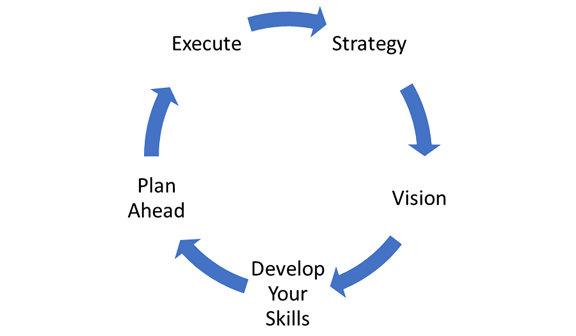
Strategy > Vision > Develop your skills > Plan ahead > Execute > Repeat

Neither cooks nor business leaders can fly by the seat of their pants and hope that it will all turn out in the end. In today’s fast-paced business environment, we need to be continually learning, growing, and developing our knowledge and skill sets in order to achieve the level of success we desire for our organizations. Like great cooks, great leaders put in the effort to become better at their craft.

For more information on how to create a successful business and improve your leadership skills in 2022, reach out to me at 503-312-3145 or email me at garyfurr@garyfurrconsulting.com

You can also visit my website at http://www.garyfurr@garyfurrconsulting.com

Listen to my podcast Turning Complexity into Simplicity®

For more on this topic, you can find the book, Traction, a collection of advice from a group of six business advisors and consultants across three continents and four countries who specialize in working with small and medium enterprises, available on Amazon.

--- END POST ---

Work Environments and Adaptation Due to a Pandemic

Work Environments and Adaptation Due to a Pandemic

Recently, I was visiting with a friend who has been working at home since the pandemic started, and I asked how he liked it and whether he planned to continue.

To my surprise, he said he could not wait to get back to the office. He had the typical Zoom fatigue, but he was also tired of being home with the kids not in school and struggled with all the distractions of domestic responsibilities. As a result, he was working late into the night just to stay caught up.

Man working at his desk on laptop in office

At first, he thought it was great. There was no more commuting, he could hang out in his shorts and t-shirt, and have a leisurely start to the day. What he ended up finding was he missed his colleagues and the social interaction, not to mention the occasional happy hours after work.

The thought of remote work initially seemed like a panacea for many people, although working from home is not a new concept. If we go back in time, our country was made up primarily of individuals working as hunters and farmers, and they sold their products from their homes or within their local communities. Often for these craftsmen, the workspace was combined with their living space.
It was during the Industrial Revolution when factories started sprouting up across the country that laborers, including women, were required to travel to a location to exercise their trade craft. Skilled workers relocated out of the home and community to factories where they worked scheduled hours. This became the norm.

In 1979, IBM did a trial run with five employees, allowing them to work from home, and by 1983 they had 2,000 remote employees. Twitter was the first company to allow its employees to work from home permanently.

It seems that due to the pandemic, business has made a drastic swing to the remote workforce. The pendulum has swung quite far from being in your seat at the office. In my experience, extreme swings one way or the other rarely sustain themselves; eventually an equilibrium is reached somewhere in the middle. We will see a hybrid work experience for many employees going forward.

There is a buzz in the air that working from home will become the new norm, but it comes with its own set of issues.

The sudden change that the pandemic brought created a challenge for leaders and managers who were used to determining productivity by seeing employees in seats at the office. How do you maintain your company culture and work ethic when you can’t see your employees in their offices or cubicles working?

For many leaders, this new work environment has proven difficult to get used to. It’s not easy to manage what you can’t see.

The logistics of leading and managing a remote workforce, and the question of whether the same workforce will be returning to the office is on the minds of most owners and leaders. James Dimon, with JP Morgan Chase, was quoted in the May 24, 2021, edition of the Wall Street Journal saying, “Remote work doesn’t work well for those who want to hustle.” Goldman Sachs CEO David Solomon called remote work an “…aberration that they are going to correct soon.”

In many companies there appears to be a stigma associated with those who choose to work from home. Even ambitious and productive employees may be negatively affected if they are not seen in the office; they may be overlooked for recognition and even for promotions.

Many employees are anxious to get back to the office and interact with their colleagues on a more personal basis. They miss the creativity and spontaneous collaboration that comes with physical proximity. But many others no longer want to go to the office.

Some businesses are offering cash rewards and incentives for employees who return to the office. The CoStar Group in Washington D.C. has enticed their employees by randomly awarding $10,000 in cash prizes to an employee every workday. They are also offering all- expense paid trips to Barbados. According to an article in the Wall Street Journal (May 3, 2021), other employers are offering office slippers, gift cards, and free food and drinks.

Whether your employees return to the office full-time, work from home full-time, or opt for a hybrid situation, there are some underlying principles that are necessary to lead and manage this new work environment. Putting these principles into practice will help you ensure that employees continue to be engaged and productive.

Vision and Purpose

To keep employees focused, they need to understand the vision and purpose of the company. Where is the company going and why is it in business? This was necessary when all your employees were coming into the office daily, but it’s even more critical now. They need a clearly articulated vision of what the future looks like, how the company is making a difference, and what part they play in achieving that vision and purpose.

Mission and vision are often posted on the walls of the office for all to see. With a remote workforce a deliberate effort to make communication a priority is necessary – to not lose sight of where the company is headed. It helps remote employees remain clear about the purpose of their efforts.

Roles and Responsibilities

Employees need to know what is expected of them no matter what location they are working from. A recent Gallup poll found that only six in ten workers know what their employer wants from them, meaning 40 percent of our workforce has no idea what is expected of them. This is an enormous leadership and management issue that needs to be resolved wherever your employees are located. Without daily face-to-face interactions, it’s easy to lose sight of what is expected of you. Clear roles, responsibilities, and expectations must be communicated on an ongoing basis.

Goals

To achieve the company’s vision and mission, employees need clear goals. With remote teams, collaborative goal setting is critical to getting everyone involved. This increases accountability, especially when employees know and understand their colleagues’ goals as well.
With remote or hybrid work systems in place, it is imperative that leaders and managers challenge and hold their employees to a high standard of success, not unlike what they did when everyone was working in the office. This may require more frequent check-in than was required when all employees were on site.

Teamwork

Working in teams to create engagement, collaboration, and accountability has been, and will always be, a key factor in an organization’s success. With the amount of social isolation that comes for many with a work-from- home environment, being part of a team is essential to not only business success but also mental and emotional well-being.

Zoom is helpful for keeping teams connected, but onsite meetings with follow-up in-person collaboration likely offers more.

It is far too easy for a remote employee to become disconnected from the office and their colleagues.

Nothing of any great significance ever happens alone – it always takes people working together toward a common vision and purpose.
Bringing people together beyond the regularly scheduled Zoom call will be important for a company’s continued success.

Productivity

How do leaders and managers measure productivity with a workforce that they can no longer see? Leaders and managers have often equated productivity with employees in their seats. They used drop-in visits to gauge output and engagement.

Some companies have started using software tools to track workers’ behavior, such as log-in time and number of keystrokes. But many employees find this intrusive, and it raises the issue of trust. For that reason, tracking the number of hours an employee is logged on to their remote access computer is no longer a good measure of productivity.

Beginning with the end in mind, a Steven Covey principle, may be the best approach. An employer needs to decide what outcomes they are seeking and then determine what the best path is to achieve those outcomes, keeping productivity in mind.

Culture

If the culture of the organization prior to remote work was one of high trust and high productivity, there is no reason to think that would change based on where the employee is located. If the culture was not operating in a high-trust, high-productivity mode prior to the onset of remote work, then that has probably not changed either.

Whether in the office or remotely, leaders and managers still have a responsibility for creating the conditions and culture that support productivity.

This often involves giving employees the tools they need to perform their work, removing the barriers to success, and providing feedback, guidance, and support. This is no different than before. The main difference is not the performance measurement tools utilized, but simply the location where employees are performing their work.

Getting employees back to the office may continue to be difficult. This is where another culture shift may need to take place. With employers such as JP Morgan Chase and Goldman Sachs trying to get their employees back to the office, we may start seeing pushback that will require companies to rethink their positions and consider hybrid options for the returning workforce.

According to Gallup Research (April 27, 2021), “The preference for working remotely accelerated the concept of hybrid teams to an extreme during 2020.” Clearly a one-size-fits-all approach will not work with the desire of so many employees to have the option to work remotely. Companies trying to hire new staff may run into difficulty if they do not offer some type of remote work option.

Trust

When we work with staff and employees directly, we establish a level of trust that they will perform to our expectations, and we can see that on a day-to-day basis.

But remote work changes the equation. How do we trust that our employees are working when we can’t see them?
Creating a culture where employees are trusted to do what they have been asked to do has to be an ongoing responsibility of leaders and managers, and it starts with having a clear vision and direction, establishing clear roles, defining responsibilities and expectations, presenting transparent goals, and building great teamwork.

After that discussion with my friend, I have had discussions with many others working from home since the pandemic started. Most say they love not having to commute, but everyone admitted that it has been difficult to establish a routine that is productive.

They are too easily distracted with domestic responsibilities at home, and they miss the social interactions with their colleagues. All of those who I spoke with said they would prefer a hybrid system, rather than having to go back to the office full-time.

For leaders and managers, the remote work environment creates some challenges that require advanced leadership skills. By focusing on the fundamentals discussed here, leaders can meet this challenge if they are flexible and sincerely interested in their employees’ success. After all, employee success creates business success.

For more on this topic:  The book, The Future of Work, is a collection of advice from a group of six business advisors and consultants across three continents and four countries who specialize in working with small and medium enterprises. Get your copy on Amazon.


For more information on how to ensure you have a successful business, reach out to me at 503-312-3145 or email me at garyfurr@garyfurrconsulting.com

You can also visit my website at http://www.garyfurr@garyfurrconsulting.com

Listen to my podcast Turning Complexity into Simplicity®

--- END POST ---

Disruption Is Normal

Disruption Is Normal

I have heard so many people say they cannot wait for things to get back to normal – meaning pre-pandemic conditions – and I have heard numerous others talking about the new normal. But has there ever been a normal? I do not believe anyone can explain what normal was or will be in the business world.

If you looked at business in terms of a timeline, I believe you would see that there has been a continual pattern of disruption throughout our history here in the United States. Yes, there have been periods of relative calm, but they have often been disrupted; as a result, businesses had to adapt to the new paradigm, which eventually was referred to as “normal.”

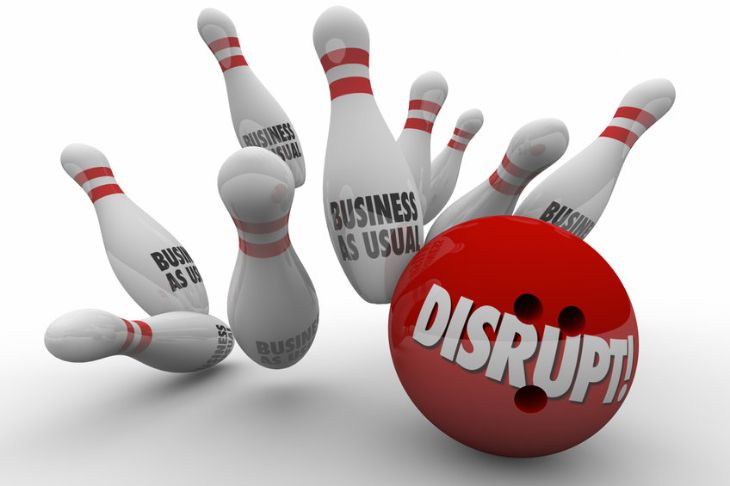
Business Disruption Bowling Ball and Pins

Here’s a brief history of disruption in the United States:

  • 1850–1900: Industrial Revolution followed by the Civil War and the completion of the cross-country railway system (which spurred the country into a period of rapid growth)
  • 1900–1950: The age of science and mass production, during which the country experienced the Great Depression and two World Wars
  • 1950–1970: The digital revolution, also known as the third revolution
  • 1973–1975: Energy Crisis – the country experienced an oil embargo
  • 1980: Second Energy Crisis
  • 1981–1982: Double Dip Recession
  • 1990–1991: Savings & Loan Crisis
  • 1995–2001: Tech Bubble
  • September 11, 2001: The attack on the World Trade Center
  • 2002: Stock Market downturn due to over-valued internet stocks, accounting scandals, and a loss of investor confidence
  • 2003: Launching of the Iraq War
  • 2005: Hurricanes Katrina and Rita
  • 2007: Enron collapses
  • 2007–2010: The Great Recession
  • 2020: Worldwide COVID-19 pandemic that disrupted supply chains and business

During every period in between, people described that time as normal, only to have that sense of normalcy disrupted when a new form of normal evolved. With all this disruption in the United States, what really is normal? Can we even define it?

Regardless of a definition, what we do know is history tends to repeat itself, which makes learning lessons from the past particularly valuable.

Throughout the depressions, recessions, dot-com crashes, housing crashes, and pandemics, one thing is true: disruption to the business environment is normal. So, when we talk about the new normal, what are we really talking about? I believe we are talking about the periods of calm between every major disruption. The problem with this cycle is that business owners tend to get complacent when it is calm, but the reality is that those periods of calm will not last.

As history has shown, more disruption is guaranteed to be coming our way.

With this understanding, it is imperative that business owners start preparing their businesses to be adaptable and flexible so that they thrive during these challenging times and the ones to come.

The true normal in business is disruption which highlights the need to be flexible and agile.

Businesses, like human beings, are living breathing entities that must adapt and evolve to survive. Adapting to a constantly changing environment is normal in business.

Remember when it was normal that businesses create a 20-year plan for their future. This recommendation then evolved into a 15-year plan, then a 10-year plan. But planning 10 years out is not realistic or effective in today’s fast-paced business environment.

As a business owner, you must adapt and evolve at a much faster pace than ever before. Five years is even too far out to look ahead and plan; the pace of change will make such planning ineffective. Even three years may be too distant for good planning. Twelve months may just be the new norm.

Accept the fact that what got you to your pre-pandemic state of business may not be what you need to get to the next step in your business progression.

Pre-pandemic business was running smoothly, many businesses were making good money, and it felt like the norm.

For many, the pandemic impact felt like hitting a brick wall going 80 mph. Many business owners had become complacent, thinking that this pre-pandemic environment was normal, and it was going to continue for a very long time.

There is a rude awaking ahead for business owners who believe as soon as the pandemic is over, business will return to what was considered normal. Quite simply, too much has changed for that to be true. The business environment has once again changed, and those who adapt to this change will excel moving forward.

The future of work and what it will look like post- pandemic is anyone’s guess, but every business still needs to adhere to some key business principles, adapting them accordingly, to thrive in the post- pandemic future.

Has Your Strategy Changed?

It is time to rethink your strategy, making sure it is clear how you will add value to the customer and meet customer needs coming out of the pandemic. My definition of strategy: strategy is determining what the customer needs and then meeting that need. Your customers’ needs may have changed and thinking it will be business as usual is a mistake.

How do you determine whether your previous strategy is still effective? By communicating with your customers more often than you probably think is necessary. Inquire about their needs post-pandemic, how their business has changed, and what you can do to meet their new needs. A clear strategy on how you will meet and exceed customer needs is the first step to a thriving post- pandemic business.

Reevaluate Your Vision of the Future

There has always been a need to have a clear vision and direction for your business. It is likely that your previous vision, if you had one, has changed. Use a shorter timeline and think about where you want your business to be in the next 12 months. Base this new vision on the information you obtained from communicating with your customers as well as on the intel you gather about the current business environment.

It’s imperative that every business create a plan of what they want their business to look like in the future. Before we begin any journey, it is important to know where we are starting from.

What is the current state of your business (which has likely changed since March 2020), and what do you want it to look like a year from now?

Looking no further than a year allows you much more flexibility to adjust, adapt, and change with the constantly changing business environment.

Examine Your Core Values

Businesses should continue to articulate and operate from their core values; this has not changed. In fact, in difficult times, it is important to evaluate your core values and determine whether you are operating from a set of core values that is clearly defined and articulated.

Perhaps you have drifted away from your values, and it is time to bring them to the surface and determine whether you still believe and want to operate from that same set of core values.

Upgrade Your Leadership Skills

Leadership is critical now more than ever. The leadership skills you used pre-pandemic may need to be reevaluated, and it may even be necessary to upgrade that skill set to deal with the rapidly changing business environment.

Employees today want — and need — to be engaged and be a part of something bigger than themselves and that provides more meaning in their lives. Whether your business does well or not will come down to effective leadership. You cannot rely on leadership skills you learned 20 or 30 years ago. It is likely time for an upgrade.

Talent Management Is More Critical Now

The current reports coming out in the news say there are many jobs with no one willing to fill them. This is due to several reasons: employees being afraid to come back to work due to COVID; parents not having a source of childcare to return to work; and individuals making easy money on unemployment and government programs, creating less of an incentive to return to the workplace.

All of these factors make leading and managing the workplace environment even more critical. Employers competing for a limited labor pool will resort to offering higher wages, better benefits, and varying work schedules to accommodate the changing face of employment.

The new experience of working from home has also disrupted the traditional business environment. Many employees who were accustomed to coming into the office every day no longer want to do so, creating greater challenges to leading and managing your talented employees. Rethinking the work environment to maximize efficiency and effectiveness is essential to thriving in today’s workplace.

Have You Evaluated Your Marketing and Sales Plans?

The methods for marketing and selling in your business have changed dramatically due in part to the digital revolution. If you have not examined your marketing methods and evaluated their performance recently, then it is time to do so. Doing the same thing over and over and expecting improved results in a new environment is a recipe for slow sales.

Selling must be proactive. You cannot wait for sales to come to you. Go after sales by proactively communicating with your customers. Remember, strategy is determining what the customer needs and then meeting that need. You do that by communicating with your customers, and it is the same with sales.

If you want to sell more, communicate more. If you want to sell less, communicate less.

Focus on Operations

With fewer employees applying for work, and increased wages, businesses need to create more throughput, with the same production cost or less. The way to do that is through efficiencies and mechanization. If you have not value stream mapped or process mapped your business recently, now is the time to do so. Removing waste from your processes and procedures will help your business thrive.

Meeting customer needs in the most efficient and effective manner possible is critical to financial success. Mechanization may be a great method to improve output without increasing labor and even lowering the cost per unit while improving quality.

Financial Management is a Day-to-Day Activity

With every disruption in the business environment comes a disruption to your financial stability. Managing your finances is critical to success. During the pre-pandemic norm, many businesses were making very good revenue, and some became complacent. This business environment has changed that, and if you were not practicing good financial hygiene pre-pandemic, your business is likely feeling those effects. This is a reminder about the value of ongoing financial management, and the way that will help you meet a disruption head on.

Financial numbers drive everything in business, and understanding those numbers is important to your financial success. You cannot run your business by the seat of your pants, or the balance in your checkbook. Intense focus and thorough understanding of your finances is key to your future.

Make Friends with Your Banker and Engage Advisors

It is valuable to have a good relationship with your banker, and that takes being proactive. During good times, people often don’t bother to communicate with their banker as often as they should, and during bad times, business owners will hunker down and communicate even less. This is the wrong approach.

Your banker wants you to be successful and they understand the strain on business when there has been a disruption. Develop your relationship with your banker during the good times, and it will pay off when the bad times come; unfortunately, they always do come at some point.

Enlist advisors to provide an objective, independent, non- emotional, outside-the-box view of your business. Since they work with many companies in many industries, they often see things you cannot see.

Think Building Wealth Rather Than Avoiding Taxes

Although I completely understand the desire to not pay the tax man any more than you have to, but in minimizing your tax burden, you may be creating bigger problems.

To avoid paying taxes, many business owners try to spend their money at the end of the year. This, however, is a short-term strategy that will create a long-term negative impact on your business.

When you are thinking about avoiding taxes, you are not thinking about creating wealth in your business.

Maximizing after-tax profit to build wealth is a much more effective long-term strategy than focusing on short-term tax minimization. Without creating wealth in your business, you will have difficulty getting any kind of bank financing should you need it; or if you decide to sell your business, it will not be as attractive to a potential buyer.

Business wealth will also help you navigate and thrive during an economic disruption. Not having cash reserves in the business and needing to borrow from the bank for either short-term or long-term financing will not be possible if you have been focusing on tax avoidance rather than wealth creation.

future of business and work. If we get lulled into thinking “normal” is going gangbusters, then we are at risk of driving into a brick wall without a seat belt or an airbag.

History shows us the value of being prepared; following fundamental business principles helps us to be prepared. Regardless of what business you are in, the principles are the same and adhering to them leads to success.

For more on this topic: The book, The Future of Work, is a collection of advice from a group of six business advisors and consultants across three continents and four countries who specialize in working with small and medium enterprises. Get your copy on Amazon.


For more information on how to ensure you have a successful business in 2022, reach out to me at 503-312-3145 or email me at garyfurr@garyfurrconsulting.com

You can also visit my website at http://www.garyfurr@garyfurrconsulting.com

Listen to my podcast Turning Complexity into Simplicity®

--- END POST ---

Scroll to Top